
Inicio > Sociedad y ciencias sociales > Educación pedagogía > Persisters and Opportunists in an Assemblage of Coral-Reef Starfish
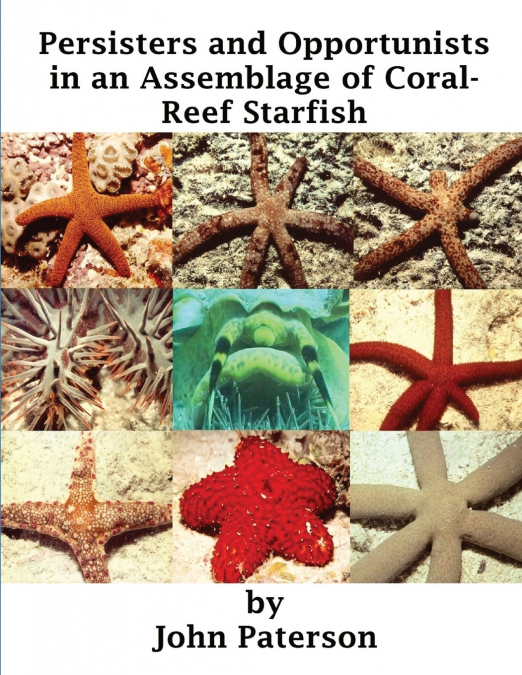
Persisters and Opportunists in an Assemblage of Coral-Reef Starfish

Persisters and Opportunists in an Assemblage of Coral-Reef Starfish

John Paterson

21,13 €
IVA incluido
Disponible
Editorial:
Charonia Research
Año de edición:
2023
Materia
Educación pedagogía
ISBN:
9780645782448
21,13 €
IVA incluido
Disponible

Selecciona una librería:

  • Librería Samer Atenea
  • Librería Aciertas (Toledo)
  • Kálamo Books
  • Librería Perelló (Valencia)
  • Librería Elías (Asturias)
  • Donde los libros
  • Librería Kolima (Madrid)
  • Librería Proteo (Málaga)

A thesis submitted according to the requirements for the degree of Doctor of Philosophy in the University of Queensland.December, 1994.Coral reefs seem to defy many of the paradigms which characterize less complex biological communities. While there is general agreement that the biota of coral reefs exhibit high species diversity, some authors have characterized coral reef assemblages by selecting species with high population densities (Sale, 1974; 1976; 1977; 1984; Sale and Dybdahl, 1975; Connell, 1978). Other authors have included rarer species (Kohn, 1959; 1968; Den Boer, 1971; Grassle, 1973) and Endean and Cameron (1990 a) have emphasized the importance of the role of these rarer species and stated that rarity is virtually ignored in most ecological models of the coral reef ecosystem. They suggest that our understanding of coral-reef ecology is influenced strongly by the constraints of many of the analytical tools being used in reef studies. As a result they believe that most analyses have dealt primarily with species that are sufficiently numerous to provide statistically satisfactory numbers of records and that most studies have excluded rare species which, in fact comprise the majority of coral-reef species.The complexity of coral reef ecosystems is not surprising given the great length of time that these ecosystems have been in existence. While the shallow water distribution of coral reefs has varied with the alternation of glacial and interglacial periods (Hays, Imbrie and Shackleton, 1976), in their broad biological form, coral reefs have existed since the Precambrian and reefs similar to present reefs have existed for around 50 million years (Newell, 1972). While stating that there is no general rule for coral-reef organisms, Endean and Cameron (1990 a) have suggested that the attribute of persistence possessed by most of the rarer species characterizes the majority of coral-reef species and is responsible for both structuring and perpetuating this ecosystem. They regard the coral reef ecosystem as being an ordered and predictable system. However, other authors (Sale, 1977; 1991; Connell, 1978) have different views.

Artículos relacionados

  • Beekeeping At The End Of The Earth
    Mark David Leech
    Beekeeping at the End of the Earth, an essential read for learning about beekeeping in a cool temperate climate with a focus on Tasmania our island home.  One hundred beekeepers one hundred different ways to keep bees.Beekeeping At The End Of The Earth is a practical insight into cool climate beekeeping with a focus on Tasmania, our island home.Richly illustrated with unique di...
    Disponible

    45,16 €

  • Be the One for Kids
    Ryan Sheehy
    One person can make a difference.That person can be you. “I want to show others that one person can make the difference in a child’s life. I want all educators, parents, coaches, and everyone in between to know they have power to Be the One for Kids.” —Ryan Sheehy If you ever feel like you’re all alone or think that no one gets you, just imagine how your students feel. Kids wan...
    Disponible

    27,99 €

  • Handbook of Research on E-Learning Standards and Interoperability
    As the e-learning industry continues to expand and the methods and tools necessary to create and maintain content and infrastructure applications become more complicated, there is an inherent need for these applications to interoperate and exchange data in order to better support the needs of learners and educators. Handbook of Research on E-Learning Standards and Interoperabil...
    Disponible

    348,32 €

  • Teaching in the Knowledge Society
    Antonio Cartelli
    ...
    Disponible

    112,08 €

  • Enhancing Learning Through Human Computer Interaction
    Elspeth McKay
    ...
    Disponible

    216,52 €

  • Learning Objects for Instruction
    Pamela Taylor Northrup
    ...
    Disponible

    125,22 €

Otros libros del autor

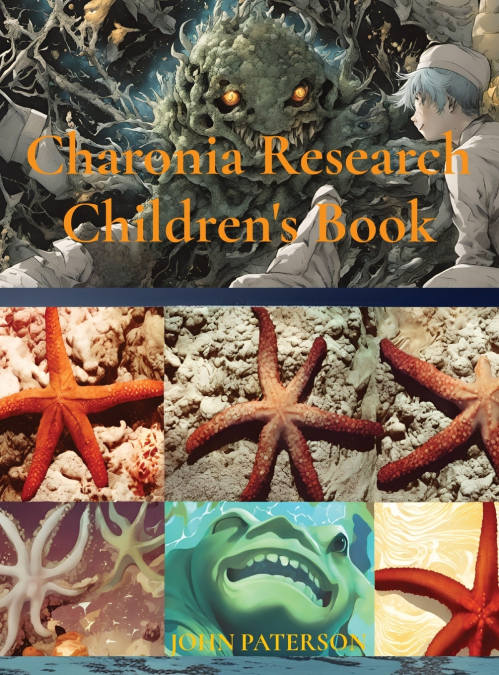
  • Charonia Research Children’s Book
    John Paterson
    This book includes the four short stories: Don’t Blame Me, What We Like To Eat, Dan The Diver Joins STEM Club, and Dan The Diver And SCUBA.'Don’t blame me,' said the little boy. 'The problem with our oceans is that they’re huge.''That’s what I’ve been telling them for 60 years,' said Paddy the Starfish.'I’m just a baby, so don’t blame me' said Junior to Bubbles the slug. 'The p...
    Disponible

    26,07 €

  • Don’t Blame Me
    John Paterson
    'Don’t blame me,' said the little boy. 'The problem with our oceans is that they’re huge.''That’s what I’ve been telling them for 60 years,' said Paddy the Starfish.'I’m just a baby, so don’t blame me' said Junior to Bubbles the slug. 'The problem is up there'.'Something must have changed, but what was it?' said Angel Fish. 'I suspect lots of things'.'I know that you’re talking...
    Disponible

    19,81 €

  • Dan the Diver joins STEM Club
    John Paterson
    Legend has it that Dan the Diver was born in a giant clam shell many years ago when, along with trochus and tritons, these shells were being collected in large numbers and someone needed to speak up for them. We now know that babies aren’t born in shells.His mother had told him stories about a boat called the Northern Star and its days in the trochus fishing industry. It roamed...
    Disponible

    19,81 €

  • What we like to eat
    John Paterson
    Prey PreferenceIt all depends on what we like to eat or maybe not.'I’m going to put all you starfish in a cage with Triton and see which species get eaten,' said Dan the Diver. 'That should tell us its prey preference. What could possibly go wrong?''It all depends on what we like to eat,' said Triton 'but remember that these starfish are poisonous, so leave them for me. One is ...
    Disponible

    19,81 €

  • Don’t Blame Me
    John Paterson
    'Don’t blame me,' said the little boy. 'The problem with our oceans is that they’re huge.''That’s what I’ve been telling them for 60 years,' said Paddy the Starfish.'I’m just a baby, so don’t blame me' said Junior to Bubbles the slug. 'The problem is up there'.'Something must have changed, but what was it?' said Angel Fish. 'I suspect lots of things'.'I know that you’re talking...
    Disponible

    19,35 €

  • The Giant Triton
    John Paterson
    The giant triton (Charonia tritonis) is a beautiful shell and a well-known predator of the crown-of-thorns starfish (Acanthaster planci). In many parts of the third world, it is still being collected in large numbers and sold to tourists as ornaments. As you admire the beautiful shell, spare a thought for the hungry mollusc that died. And don’t forget, they live on starfish.Man...
    Disponible

    17,58 €