Inicio > Sociedad y ciencias sociales > Educación pedagogía > Organización y gestión educativa > Pathways to Institutional Improvement with Information Technology in Educational Management
Pathways to Institutional Improvement with Information Technology in Educational Management

Pathways to Institutional Improvement with Information Technology in Educational Management

Alex Fung / C. J. Patrick Nolan / Ifip Tc 3 / Wg 3 7 International Working C

133,08 €
IVA incluido
Consulta disponibilidad
Editorial:
Springer Nature B.V.
Año de edición:
2001
Materia
Organización y gestión educativa
ISBN:
9780792374930

Selecciona una librería:

  • Librería Samer Atenea
  • Librería Aciertas (Toledo)
  • Kálamo Books
  • Librería Perelló (Valencia)
  • Librería Elías (Asturias)
  • Donde los libros
  • Librería Kolima (Madrid)
  • Librería Proteo (Málaga)

New Zealand schools have experienced unprecedented change during the lastdecade. Radicalrestructuringoftheframeworksforbothcurriculumand qualificationsfollowedamovementtowards self-managementin 1989. The curriculum framework, consisting of seven essential learning areas, has been progressively introduced with completionnotexpecteduntil 2002. Thenew Qualifications Framework, based on unit standards, was launched in 1994. The introduction of unit standards signalled an emphatic movement towards the use of internal assessment for awarding qualifications at the seniorsecondaryschoollevel. Eachcoursehadunitstandardsdefined,which described the outcomes and the performance criteria that would be used to determine whether or not the standard had been achieved. Approximately five to eight standards would be used for each full year course and each standard had a number of credits associated with it. The plan, which has since been modified, was for these credits to contribute to a National Certificate of Educational Achievement, at years 12 and 13, and other, subject specific, National Certificates. Secondary schools were faced with the task of recording and reporting 1 unit standardresults to theNew Zealand Qualifications Authority . This, by itself, was not a major issue as the significant suppliers of CSIS had modules availablewhichsatisfiedthis need. Atthistimeamodelwasbeingpresented to school audiences demonstrating how the recording, reporting and evaluation ofassessment data, relating to the curriculumframework, could be relatively straight forward IF there was a common assessment ’currency’ across the school. This model was converted into software form for demonstration purposes.

Artículos relacionados

  • Walking the Law and History
    Michelle Janene
    The companion student workbook for the Bible curriculum of Walking the Law and History Genesis. Students will participate in deep Bible study of the creation of the world, the foundations of the Christian faith, and the formation of the Jewish nation.  ...
    Disponible

    9,81 €

  • Reforming Education for the Real World
    George P Waldheim
    Education, as we know it in America, is too often characterized as living in a world by itself; unaccountable and unimproved--so different from the Real World.  Year after year 'Band-Aid' attempts are initiated to improve education and again, year after year, those attempts only produce marginal improvement--if any.  Thus, our international ranking is still depicted as 'mediocr...
    Disponible

    12,21 €

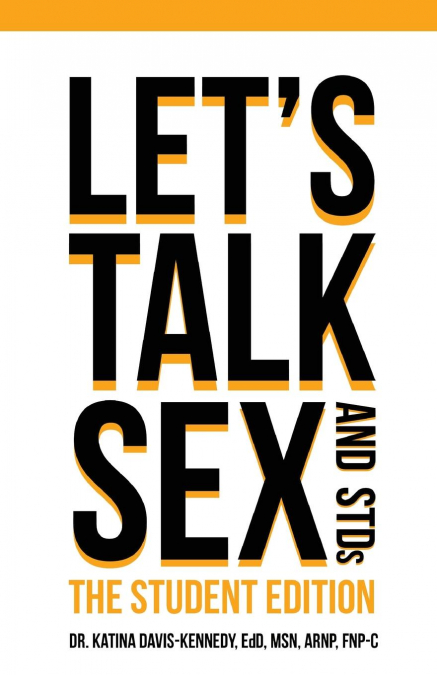
  • Let’s Talk Sex & STDs
    Dr. Katina Davis-Kennedy / DrKatina Davis-Kennedy
    There comes a time when every person has to learn about sex; typically, students learn within their middle school years about sex education. Unfortunately, by then they have been influenced by others with the wrong information, or have heard rumors that are mostly untrue. Let's Talk Sex and STDs: The Student Edition is here to lay all of the misleading information and stori...
    Disponible

    25,31 €

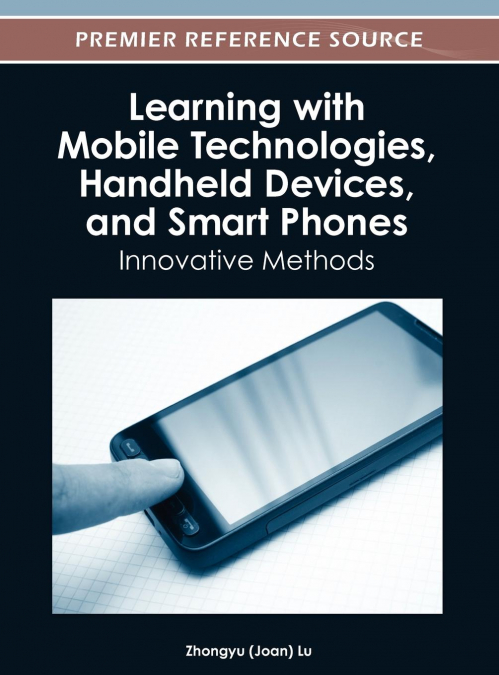
  • Learning with Mobile Technologies, Handheld Devices, and Smart Phones
    Mobile Learning is a new trend in pedagogical communities. It matches the speed of fast moving methodologies in pedagogical world. The theories of activity-based learning, problem-based learning, work-based learning, and opinion-based learning, learner-centered learning, and so forth, can be integrated with these tiny handheld devices. Students and teachers communicate effectiv...
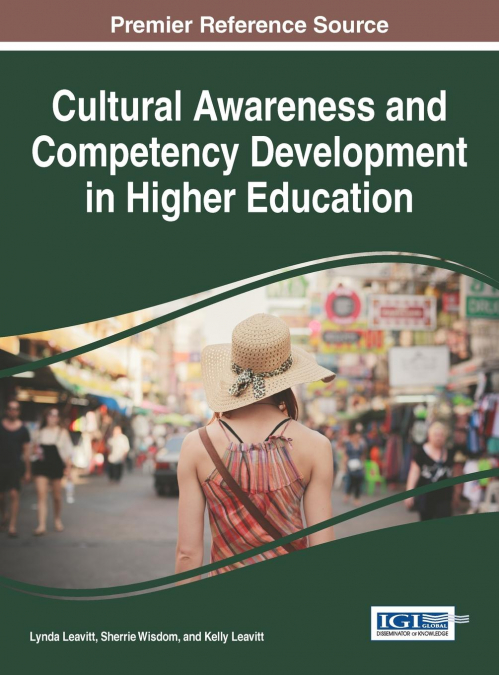
  • Cultural Awareness and Competency Development in Higher Education
    As the world becomes more globalized, student populations in university settings will continue to grow in diversity. To ensure students develop the cultural competence to adapt to new environments, universities and colleges must develop policies and programs to aid in the progression of cultural acceptance and understanding. Cultural Awareness and Competency Development in High...
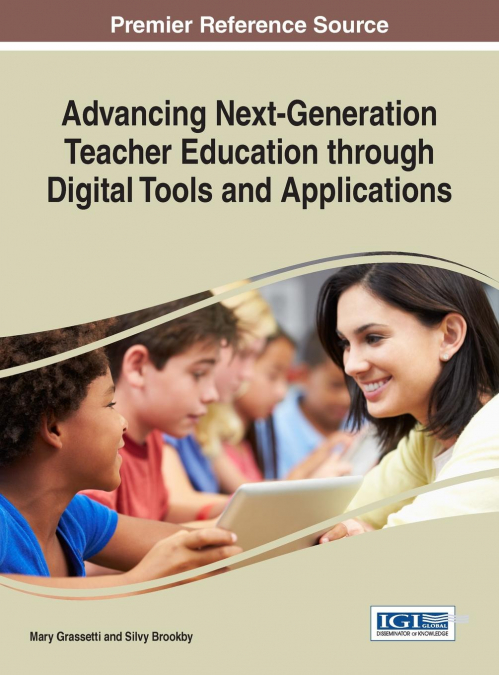
  • Advancing Next-Generation Teacher Education through Digital Tools and Applications
    The implementation of the Common Core State Standards program has spearheaded many changes within the education field. As this initiative is ultimately designed to optimize student performance and success, it is critical that teacher education programs and technological tools being utilized in classrooms align with Common Core State Standards. Advancing Next-Generation Teacher ...