
Inicio > Artes > Artes: aspectos generales > Painterly Perspective and Piety
Painterly Perspective and Piety

Painterly Perspective and Piety

John F. Moffitt

71,67 €
IVA incluido
Disponible
Editorial:
McFarland and Company, Inc.
Año de edición:
2008
Materia
Artes: aspectos generales
ISBN:
9780786435050
71,67 €
IVA incluido
Disponible

Selecciona una librería:

  • Librería Samer Atenea
  • Librería Aciertas (Toledo)
  • Kálamo Books
  • Librería Perelló (Valencia)
  • Librería Elías (Asturias)
  • Donde los libros
  • Librería Kolima (Madrid)
  • Librería Proteo (Málaga)

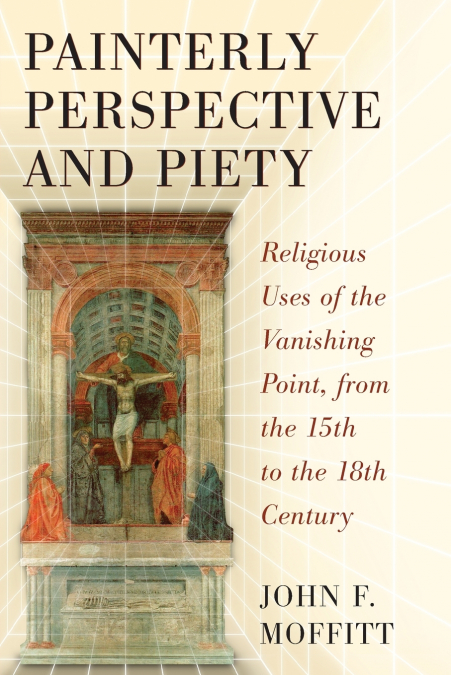
While the Renaissance is generally perceived to be a secular movement, the majority of large artworks executed in 15th century Italy were from ecclesiastical commissions. Because of the nature of primarily basilica-plan churches, a parishioner’s view was directed by the diminishing parallel lines formed by the walls of the structure. Appearing to converge upon a mutual point, this resulted in an artistic phenomenon known as the vanishing point. As applied to ecclesiastical artwork, the Catholic Vanishing Point (CVP) was deliberately situated upon or aligned with a given object--such as the Eucharist wafer or Host, the head of Christ or the womb of the Virgin Mary--possessing great symbolic significance in Roman liturgy. Masaccio’s fresco painting of the Trinity (circa 1427) in the Florentine church of Santa Maria Novella, analyzed in physical and symbolic detail, provides the first illustration of a consistently employed linear perspective within an ecclesiastical setting. Leonardo’s Last Supper, Venaziano’s St. Lucy Altarpiece, and Tome’s Transparente illustrate the continuation of this use of liturgical perspective.
Artículos relacionados

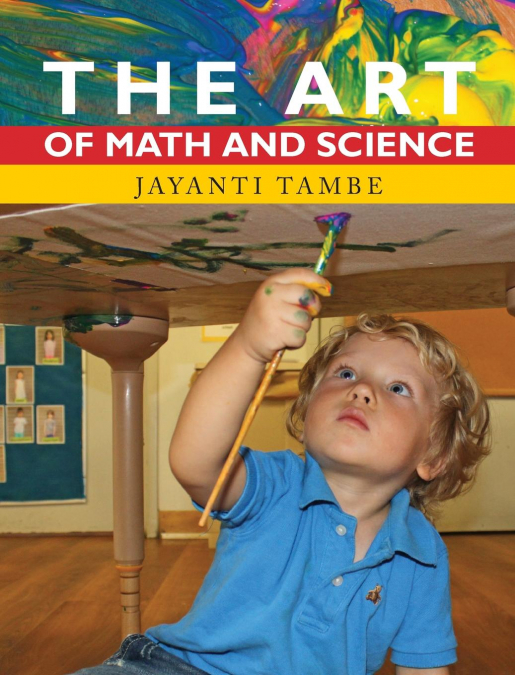
  • The Art of Math and Science
    Jayanti Tambe
    The Art of Math and Science guides teachers to introduce masterpiece art to young children, so they can tell you about “paints with hidden floats” and ask questions like, “When painting the Sistine Chapel, do you think Michelangelo had many headaches?”This book helps parents and educators look at the subject through the prism of mathematical and scientific experiences. This boo...
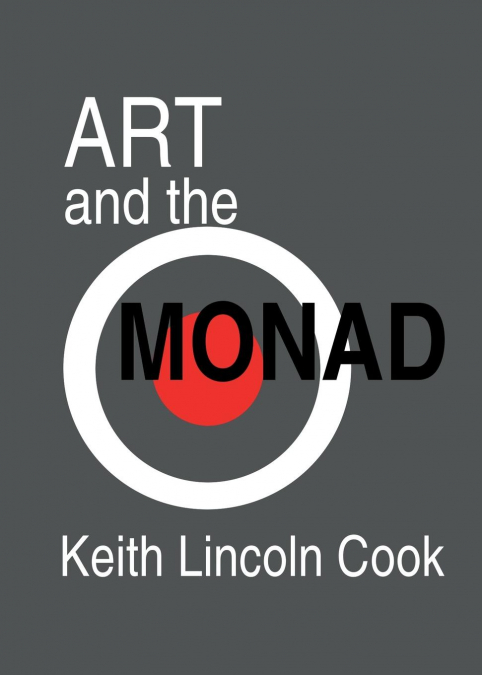
  • Art and the Monad
    Keith Lincoln Cook
    Keith Lincoln Cook's essay centres on his diagram of the monad: a circular diagram, showing the relationship between external stimuli, the intellect and the emotions. Although everyone should be able to freely respond to the vast amount of external stimuli collected by the senses, many people will block off their responses, collecting the stimuli in the band of intellect an...
    Disponible

    6,17 €

  • Slow Down
    Todd Webb
    Color everything and color nothing on your path to mindfulness with this playful coloring book!Packed with just enough to keep you entertained in the present moment, SLOW DOWN is sure to become your go-to meditation guide as you color your way to a calmer, less stressful life. With simple illustrations and inspirational text it makes a great gift! "Art's purpose is to sober...
    Disponible

    12,17 €

  • Raising the Eyebrow
    Lauren Golden
    A lavish festschrift to John Onians with contributions by 28 distinguished academics. Any summary as to the direction of these contributions is, perhaps, best left to Martin Kemp and his affectionate preface, “Above all, he (John Onians) reminds us of the researchers’, writers’ and teachers’ true mission, that is the need to be radical in both asking and answering questions, an...
    Disponible

    182,20 €

  • Projective Processes and Neuroscience in Art and Design
    Rachel Zuanon
    Recent advances in neuroscience suggest that the human brain is particularly well-suited to design things: concepts, tools, languages and places. Current research even indicates that the human brain may indeed have evolved to be creative, to imagine new ideas, to put them into practice, and to critically analyze their results. Projective Processes and Neuroscience in Art and De...
  • Book of Jupiter
    Leo Valenzuela
    Book of Jupiter: Gone to Uranus is a work of imagination and fantasy by Leo Valenzuela. Explore a variety of unique creatures with interesting dialogue which included a few step tutorials on how to draw his style of work. 3 ...
    Disponible

    24,25 €

Otros libros del autor

  • The Enthroned Corpse of Charlemagne
    John F. Moffitt
    The corpse of Charlemagne was found in the year 1000 by the emperor Otto III, nearly two centuries after it had been hastily interred. All those present marveled at the corpse’s striking appearance, for the revered emperor looked as though he were still living. Fully clothed in ceremonial garb and wearing his imperial crown, Charlemagne was found seated upright on a gilded c...
    Disponible

    57,41 €

  • Our Lady of Guadalupe
    John F. Moffitt
    According to legend, on December 8, 1531, the Virgin Mary appeared to the newly Christianized Juan Diego on the Mexican hill of Tepeyacac. As proof of her divine visit, she miraculously imprinted her image upon his mantle. That image, known as Our Lady of Guadalupe, has become a symbol of national consciousness in Mexico and a talisman for Mexican Americans. Yet its notable ...
    Disponible

    42,67 €

  • Caravaggio in Context
    John F. Moffitt
    Michelangelo Merisi da Caravaggio (1571-1610) has long been recognized as one of the great innovators in the history of art. Through detailed analysis of paintings from his early Roman period, 1594-1602, this study now situates his art firmly within both its humanistic and its scientific context. Here, both his revolutionary painterly techniques--pronounced naturalism and dr...
    Disponible

    73,30 €