
Inicio > Derecho > Teoría general del derecho > Os usos sociais do conceito jurídico de escravatura em África
Os usos sociais do conceito jurídico de escravatura em África

Os usos sociais do conceito jurídico de escravatura em África

Ismaïla Sané

75,95 €
IVA incluido
Disponible
Editorial:
KS OmniScriptum Publishing
Año de edición:
2026
Materia
Teoría general del derecho
ISBN:
9786209504716
75,95 €
IVA incluido
Disponible

Selecciona una librería:

  • Librería Samer Atenea

  • Kálamo Books
  • Librería Elías (Asturias)
  • Librería Kolima (Madrid)
  • Librería Proteo (Málaga)

Como dizia CHEBEL (M): A escravatura é o facto humano mais comum no mundo. Esta característica universal da escravatura não deve, no entanto, ocultar as particularidades tanto na sua prática como no seu uso conceptual, ora cultural, ora jurídico, que variam de uma sociedade para outra, de uma nação para outra, enfim, de uma classe étnica ou racial para outra, no tempo e no espaço africanos. O próprio termo escravatura (ou escravo) não é fixo. Define-se no tempo e no espaço. No tempo, tende-se a fazer a diferença entre a escravatura clássica, definida como uma escravatura essencialmente de tráfico ou o direito de propriedade e direitos conexos exercidos sobre o escravo; e a escravatura moderna reconhecida sob outras formas, nomeadamente pela exploração exacerbada, uma dominação em condições servil inumanas como critérios básicos. No espaço, existe uma definição internacional de origem convencional, por exemplo: a escravatura é o estado de uma pessoa que se encontra sob a dependência absoluta de um senhor que tem a possibilidade de a utilizar como um bem material.

Artículos relacionados

  • EU General Data Protection Regulation (GDPR)
    IT Governance Privacy Team
    An in-depth guide to complying with the EU GDPR.Now in its second edition, EU GDPR – An Implementation and Compliance Guide is a clear and comprehensive guide to this new data protection law, providing a detailed commentary on the Regulation, and setting out the obligations of data  processors and controllers in clear and comprehensible terms.Read this book to learn: How the ...
    Disponible

    33,34 €

  • Banking Laws and Regulations in Nigeria
    Bello Mohammed Magaji
    Banking Law and Regulations in Nigeria: Selected Themes essentially deals with the laid down rules or code of conduct meant to control and set standards for banking business. Indeed, the main aim of the ongoing banking reforms in Nigeria, started in 2004, is to ensure banks’ conformity to the laid down banking rules and regulations. The eleven-chapter book contains vital and ri...
    Disponible

    46,32 €

  • States and the Interpretation of Treaties
    Dimitris Liakopoulos
    States and the Interpretation of Treaties opens with a provocative reconsideration of a debate on the subject of comparative international legal obligations by the United Nations’s International Law Commission. In this book, distinguished Tufts University legal scholar Dimitris Liakopoulos identifies and explores relevant considerations in the work of the Commission and offers ...
  • The role of customs in international treaties
    Dimitris Liakopoulos
    The Role of Customs in International Treaties concentrates on issues of friction between member states of the United Nations. In view of the role played by the United Nations in resolving international disputes, Dimitris Liakopoulos hypothesizes that 'practical guides' based on custom often catalyze the positions taken by states, courts, scholars, and other actors, constituting...
  • Debtor protection in American and European Union bankruptcy law
    Dimitris Liakopoulos
    In Debtor Protection in American and European Union Bankruptcy Law, international law scholar Dimitris Liakopulos raises a delicate issue at the foundations of the modern banking system by analyzing US bankruptcy law with a focus on the concept of automatic stay. His work identifies legal sources and authorities having repercussions in terms of operational protection. It then e...
  • Capital punishment in American courts
    James Biser Whisker / Kevin Spiker
    In the 400 years since the first known execution was carried out for treason in Virginia, American jurisdictions have debated both the appropriateness and methods of capital punishment. Over that time, courts have placed varying restrictions on its application, excluding categories of citizens (for example the insane or the underaged) and evaluating and excluding methods of exe...

Otros libros del autor

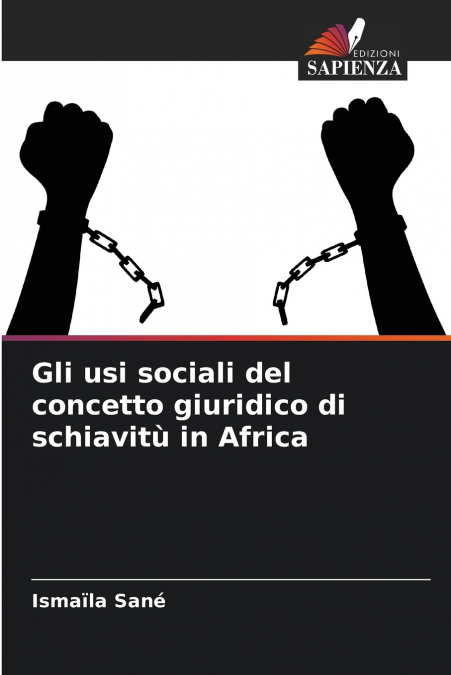
  • Gli usi sociali del concetto giuridico di schiavitù in Africa
    Ismaïla Sané
    Come affermava CHEBEL (M): La schiavitù è il fatto umano più diffuso al mondo. Questo attributo universale della schiavitù non deve tuttavia oscurare le peculiarità sia nella sua pratica che nell’uso concettuale, talvolta culturale talvolta giuridico, che varia da una società all’altra, da una nazione all’altra, insomma da una classe etnica o razziale all’altra nel tempo e nell...
    Disponible

    75,95 €

  • Społeczne zastosowania pojęcia prawnego niewolnictwa w Afryce
    Ismaïla Sané
    Jak powiedział CHEBEL (M): „Niewolnictwo jest zjawiskiem najbardziej rozpowszechnionym na świecie'. Ta uniwersalna cecha niewolnictwa nie powinna jednak przesłaniać specyfiki zarówno w praktyce, jak i w ujęciu koncepcyjnym, czasem kulturowym, czasem prawnym, różniącym się w zależności od społeczeństwa, narodu, a w skrócie - grupy etnicznej lub rasowej w czasie i przestrzeni afr...
    Disponible

    75,95 €

  • Die sozialen Verwendungsweisen des Rechtsbegriffs der Sklaverei in Afrika
    Ismaïla Sané
    Wie CHEBEL (M) sagte: „Die Sklaverei ist das am weitesten verbreitete menschliche Phänomen der Welt'. Diese universelle Eigenschaft der Sklaverei darf jedoch nicht über die Besonderheiten hinwegtäuschen, die sowohl in ihrer Praxis als auch in ihrer konzeptionellen Verwendung, mal kulturell, mal rechtlich, von einer Gesellschaft zur anderen, von einer Nation zur anderen, kurz ge...
    Disponible

    76,01 €

  • The Social Uses of the Legal Concept of Slavery in Africa
    Ismaïla Sané
    As CHEBEL (M) said: 'Slavery is the most widespread human phenomenon in the world.' However, this universal attribute of slavery should not obscure the particularities of its practice and its conceptual use, both cultural and legal, which vary from one society to another, from one nation to another, and, in short, from one ethnic or racial group to another across Africa in term...
    Disponible

    75,95 €