
Inicio > > Informática: cuestiones generales > Organizational Principles for Multi-Agent Architectures
Organizational Principles for Multi-Agent Architectures

Organizational Principles for Multi-Agent Architectures

Chris van Aart

85,08 €
IVA incluido
Disponible
Editorial:
Springer Nature B.V.
Año de edición:
2004
Materia
Informática: cuestiones generales
ISBN:
9783764372132
85,08 €
IVA incluido
Disponible

Selecciona una librería:

  • Librería Samer Atenea
  • Librería Aciertas (Toledo)
  • Kálamo Books
  • Librería Perelló (Valencia)
  • Librería Elías (Asturias)
  • Donde los libros
  • Librería Kolima (Madrid)
  • Librería Proteo (Málaga)

1. 1 Background In this work, we develop a framework for the design of multi-agent systems inspired by (human) organizational principles. Organizations are complex entities formed to ov- come various limitations of individual agencies, such as cognitive, physical, temporal and institutional limitations. There is a parallel between the complexity of organizations and multi-agent systems. Therefore, we explore the use of concepts, methods and techniques from human organizational design as architectural principles for multi-agent systems. Three research lines are presented: organizational modeling and coordination, interop- ability and agent models. Organizational modeling and coordination are concerned with how resources (i. e. agents) can be identi?ed and related to each other. In order to have agents cooperate, several issues of interoperability have to be addressed. Agent models deal with the design of individual intelligent software agents, taking into account typical features of agent intelligence. Every (human) activity raises two challenges: division of labor and coordi- tion [Mintzberg, 1993]. Division of labor is the decomposition of work (or goals) into various distinct tasks. Coordination refers to managing relations between these tasks to carry out the work. The patterns of division of labor, responsibilities (people who do the work), clustering of responsibilities into units and coordination between units can be de?ned by organizational structures [Galbraith, 1973]. The design of an organization should cover how one or more actors are engaged in one or more tasks, where knowledge, capabilities and resources are distributed.

Artículos relacionados

  • Interview with Jeffery Khoury, Bringing Telemedicine to the People
    Richard G Lowe Jr
    Did you know you can consult with a medical specialist over your smartphone from the comfort of your own home? Imagine speaking to a highly-trained and accredited doctor about whatever is ailing you from virtually anywhere in the world.Thanks to a young entrepreneur named Jeffery Khoury, you can get the advice you need from a pool of medical specialists without waiting in a doc...
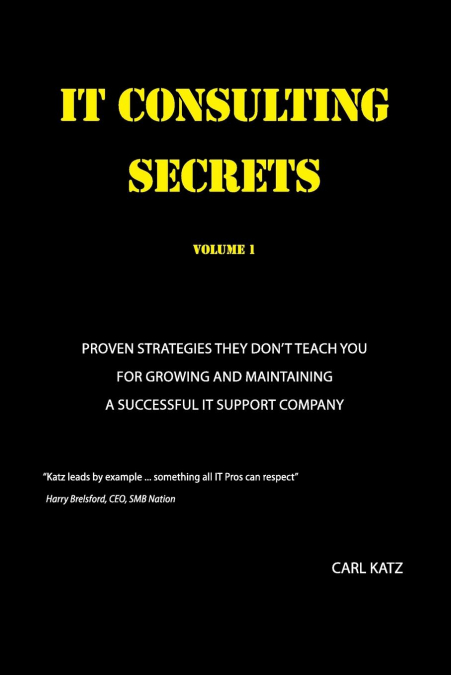
  • IT Consulting Secrets
    Carl A Katz
    This book is for IT consultants of all experience levels and the content is relevant to any IT support business model from managed services (MSP) to break/fix. The author has methodically compiled these strategies and this information from over sixteen years of experience working in the IT support field at the small and medium sized business and enterprise levels. ...
    Disponible

    29,41 €

  • Modeling, Analysis, and Applications in Metaheuristic Computing
    Peng-Yeng Yin
    The engineering and business problems the world faces today have become more impenetrable and unstructured, making the design of a satisfactory problem-specific algorithm nontrivial. Modeling, Analysis, and Applications in Metaheuristic Computing: Advancements and Trends is a collection of the latest developments, models, and applications within the transdisciplinary fields rel...
  • Knowledge Management and Drivers of Innovation in Services Industries
    Knowledge Management is concerned with all aspects of eliciting, acquiring, modelling, and managing knowledge. Application of knowledge resources successfully helps the organization to deliver creative products and services. Especially in service business, service job experience and information about the customer, as well as the installed site equipment, are key factors to deli...
  • Current Trends and Future Practices for Digital Literacy and Competence
    Antonio Cartelli
    Being a digital citizen has transformed from a process of familiarizing ones’ self with terminology and techniques to a full-time responsibility in the hands of any who want to stay abreast of the latest technological change in their respective field. Current Trends and Future Practices for Digital Literacy and Competence offers a look at the latest research within digital lite...
  • Human Rights and Risks in the Digital Era
    Globalization, along with its digital and information communication technology counterparts, including the Internet and cyberspace, may signify a whole new era for human rights, characterized by new tensions, challenges, and risks for human rights, as well as new opportunities. Human Rights and Risks in the Digital Era: Globalization and the Effects of Information Technologies ...