 Librería Samer Atenea
 Kálamo Books
 Librería Elías (Asturias)
 Librería Kolima (Madrid)
 Librería Proteo (Málaga)
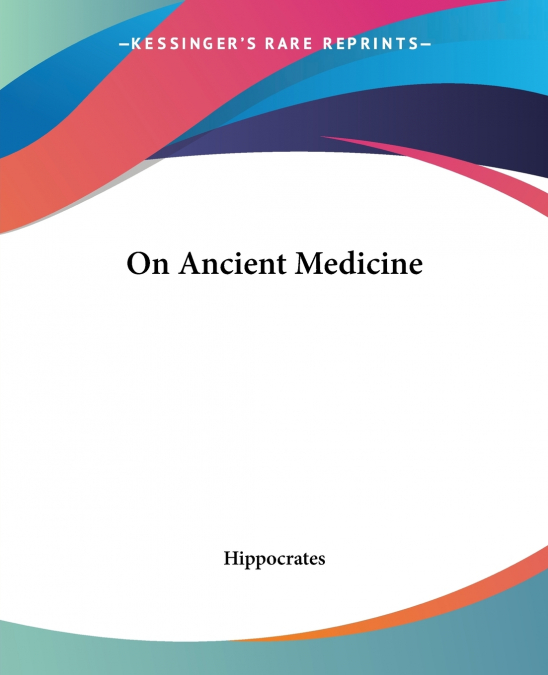
On Ancient Medicine is a collection of medical treatises written by the ancient Greek physician Hippocrates, who is widely regarded as the father of modern medicine. The book is a comprehensive guide to the principles and practices of medicine as they were understood in ancient Greece, and it covers a wide range of topics, including anatomy, physiology, diagnosis, treatment, and prevention of disease.The book is divided into two parts, with the first part focusing on the theoretical aspects of medicine, and the second part dealing with practical applications. In the first part, Hippocrates discusses the four humors, which were believed to be the basic constituents of the human body, and how they influenced health and disease. He also discusses the importance of diet, exercise, and hygiene in maintaining good health.In the second part, Hippocrates provides detailed descriptions of various diseases and their symptoms, as well as their causes and treatments. He also discusses the importance of observation and diagnosis, and stresses the importance of treating the whole person rather than just the symptoms of a disease.On Ancient Medicine is a landmark work in the history of medicine, and it has had a profound influence on the development of medical science and practice. It is a testament to the wisdom and insight of one of the greatest medical minds of all time, and it remains an essential reference for anyone interested in the history of medicine or the principles of medical practice.What other object, then, had he in view who is called a physician, and is admitted to be a practitioner of the art, who found out the regimen and diet befitting the sick, than he who originally found out and prepared for all mankind that kind of food which we all now use, in place of the former savage and brutish mode of living? To me it appears that the mode is the same, and the discovery of a similar nature. The one sought to abstract those things which the constitution of man cannot digest, because of their wildness and intemperature, and the other those things which are beyond the powers of the affection in which any one may happen to be laid up. Now, how does the one differ from the other, except that the latter admits of greater variety, and requires more application, whereas the former was the commencement of the process?This scarce antiquarian book is a facsimile reprint of the old original and may contain some imperfections such as library marks and notations. Because we believe this work is culturally important, we have made it available as part of our commitment for protecting, preserving, and promoting the world’s literature in affordable, high quality, modern editions, that are true to their original work.