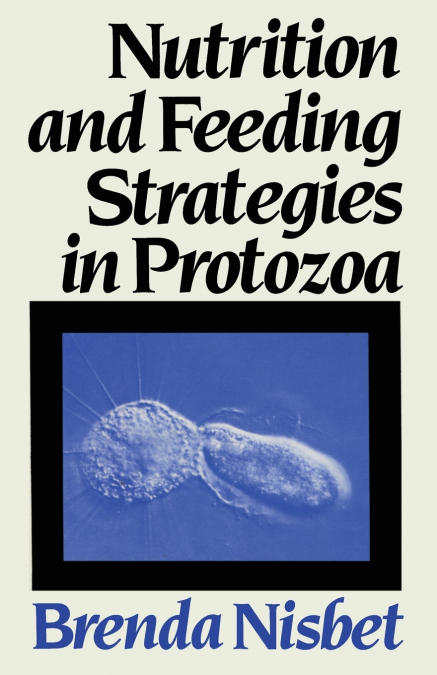

Nutrition and Feeding Strategies in Protozoa

Nutrition and Feeding Strategies in Protozoa

Brenda Nisbet

66,28 €
IVA incluido
Disponible
Editorial:
Springer Nature B.V.
Año de edición:
2012
Materia
Zoología y ciencias animales
ISBN:
9789401165570
66,28 €
IVA incluido
Disponible

Selecciona una librería:

  • Librería Samer Atenea
  • Librería Aciertas (Toledo)
  • Kálamo Books
  • Librería Perelló (Valencia)
  • Librería Elías (Asturias)
  • Donde los libros
  • Librería Kolima (Madrid)
  • Librería Proteo (Málaga)

1 Modern biologists describe protozoa as microscopic eukaryotic organ­ isms with a capacity for establishing themselves in almost every con­ ceivable habitat provided it contains moisture in some form. In 1674 at the time when Antony von Leeuwenhoek was making his first observations of ’very small animalcules’ in Berkelse Mere near his home town of Delft, this concept of the ubiquity of protozoa would have been difficult to comprehend. Leeuwenhoek’s curiosity later led him to examine the body fluids, gut contents and excreta of different animals and to describe ’an inconceivably great company of living animalcules, and these of divers sorts and sizes’. Here were early des­ criptions of parasitic protozoa, species which later came to be recog­ nized as Opalina, Giardia, Trichomonas and others. Following his pioneering work in the field of microscopic observation, knowledge of protozoa has accumulated at an accelerating pace. Some 30,000 living species have been identified, and an equal number of fossil species, from habitats which range from the ocean waters to the exuvial fluid of insects. The study of protozoan nutrition is a particularly interesting aspect of this expanding field of zoology. What kind of nourishment do protozoa need, how do they acqlire it, and what influence do the answers to these two questions havE on where protozoa live? The need to determine what hId of food protozoa are utilizing in their environment is desirable in al ecological studies involving micro­ organisms of aquatic communities.
Artículos relacionados

  • Animaltown
    Urban space constitutes a place where people and animals live together in close proximity with each other, creating changing landscapes of co-existence, conflict, mutual dependencies and exploitation. The medieval animals found in the articles of Animaltown: Beasts in Medieval Urban Space, appear in text and image, as well as archaeological find materials in the form of butcher...
    Disponible

    109,24 €

  • Pleasurable Kingdom
    Jonathan Balcombe
    Pleasurable Kingdom presents new evidence that animals--like humans--enjoy themselves. From birds to baboons, insects to iguanas, animals feel good thanks to play, sex, touch, food, anticipation, comfort, aesthetics, and more. Combining rigorous evidence, elegant argument and amusing anecdotes, leading animal behavior researcher Jonathan Balcombe shows that the possibility of p...
    Disponible

    18,96 €

  • SECOND NATURE
    Jonathan Balcombe
    ...
    Disponible

    16,52 €

  • Experimental Zoology
    Manisha R Gejage / Ramesh M Gejage
    The goal of the book is to present the practical knowledge of Zoology. Animal diversity, venomous and non-venomous snakes, study of birds, brain of fowl and hyoid apparatus, sclerotic plates, pecten and collumella of fowl, scales of fishes, biochemical tests, activity of salivary amylase, estimation of total protein and lipid, DNA isolation and estimation of uric acid are given...
  • TOXICOLOGY
    M A SUBRAMANIAN
    In an era defined by burgeoning human populations, rampant industrialization, cutting-edge technological progress, and expanding urban landscapes, the integrity of our natural environment faces unprecedented challenges. The relentless march of progress has ushered in a flood of chemicals, seeping into the very fabric of our ecosystems and posing insidious threats to biological ...
    Disponible

    23,69 €

  • Leaders in Animal Behavior
    Donald Dewsbury / Lee Drickamer
    ...
    Disponible

    64,68 €