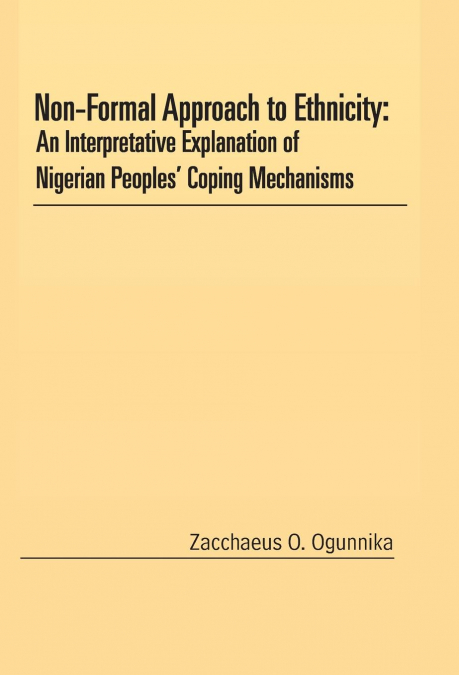
Non-Formal Approach to Ethnicity

Non-Formal Approach to Ethnicity

Zacchaeus O. Ogunnika / Zacchaeus OOgunnika

28,11 €
IVA incluido
Consulta disponibilidad
Editorial:
Trafford Publishing
Año de edición:
2013
Materia
Estudios étnicos
ISBN:
9781466996748

Selecciona una librería:

  • Librería Samer Atenea
  • Librería Aciertas (Toledo)
  • Kálamo Books
  • Librería Perelló (Valencia)
  • Librería Elías (Asturias)
  • Donde los libros
  • Librería Kolima (Madrid)
  • Librería Proteo (Málaga)

This book, written by one of the foremost researchers in this field, represents one of the intellectual efforts on the explanation of the inter-ethnic phenomenon. The author went into the critique of the whole phenomenon and approached his frame of meaning from the actor’s side. That is why the book is subtitled 'The peoples’ non-formal mechanisms'. The author is phenomenological in his approach and believes that the real meaning of any event should be based on the experience of the actors. He combined the pessimism of the ethnomethodologists with the realism of the phenomenologist. The result of this is an essay which is considered as being nearest to the true situation of inter-ethnic relations in Nigeria more than that of its predecessors. The book therefore reports the behaviors of Nigerians in actual situations. How different ethnicities ’pass’ and ’behave’ as if they are one. The book heavily relied on the W.I Thomas dictum which says that if man defines a situation as real, they are real in their consequences. The consequences of 'mutual deception and strategic interactions' mentioned in the book become real as they produce the real tools and mechanisms for tension management in a multi ethnic society.The author dwells a lot on economic spheres where he identified for the first time in inter-ethnic relations literature, a phenomenon he refers to as 'market groups'. This group unlike its counterpart, the economic associations, is informal, enduring and based on proper inter-ethnic understanding. The market group members declare their allegiance to the sarki of their commodity who may not necessarily be a member of their ethnic group. Different ethnic group members were united by the commodity they sold in the market. The commodity to dictate their interaction style rather than ethnic or primordial emotional attachments. One cannot do but remember Marx’s idea on Fetishism of commodities in the section. Commodities assume and dominate the social psychology of the individuals and place ethnicity in the secondary position.The role of modern formal education in forging inter-ethnic unity in Nigeria as reported in the book is also very illuminating. The unity of curricula and subjecting the students to take the same West African Senior School Certificate Examination all over Nigeria regardless of the students’ state of origin or ethnic orientation contributes to the nipping of the inter-ethnic distrust in the bud. Another important thing one may think of is the problem of unity schools. To make this more effective more student exchanges should take place and the numbers of the unity schools should increase to give the young population an opportunity to practice the non-formal management mechanisms in their formative years.

Artículos relacionados

  • Barack Obama
    Ben Arogundade
    Dramatic and startling — The GuardianWitness Barack Obama as you’ve never seen him before — as feminist, communist, fashion model, Jew, Muslim terrorist, Messiah, Superman, George Washington, President Roosevelt, Julius Caesar and Hindu deity Lord Shiva.Obama: 101 Best Covers shows America’s ex-president in all these guises and more, on the front pages of the world’s leading pr...
  • Boxing in Black and White
    Andrew Lindsay
    Professional sports in America offer numerous examples of equal opportunity and broken down racial barriers. These developments call for pride and celebration. Yet skin color continues to have an influence in how Americans experience sport. From Al Campanis’ statement about the under-representation of blacks in baseball front offices to the almost exclusively white ownership...
    Disponible

    42,71 €

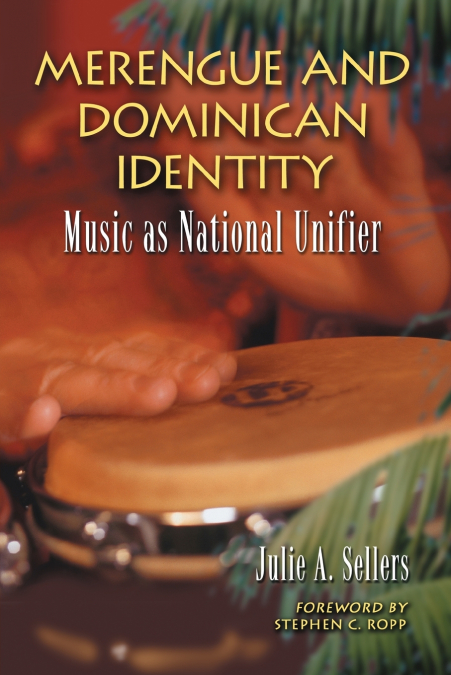
  • Merengue and Dominican Identity
    Julie A. Sellers
    The merengue is internationally recognized as the Dominican Republic’s national dance. It is an integral and unifying element of Dominican identity both within that nation and among emigrants abroad. Although Dominicans often make the claim that merengue has always been in their blood, the dance is relatively young, and its popularity among Dominicans of all social classes a...
    Disponible

    42,81 €

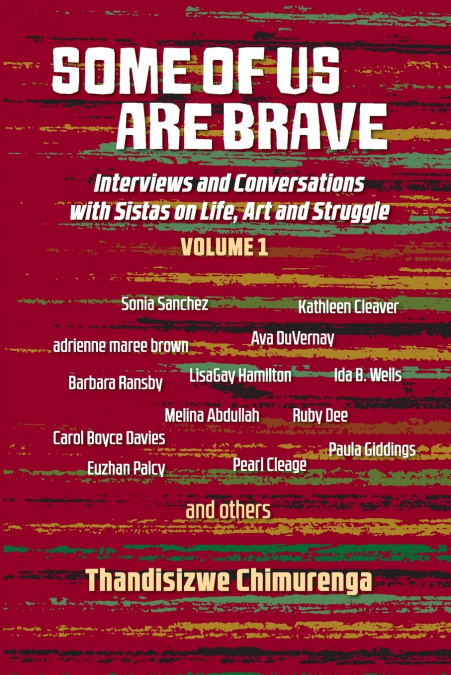
  • Some Of Us Are Brave (Vol 1)
    Thandisizwe Chimurenga
    A society born of white supremacy and patriarchy must, by definition, ignore the voices of Black women. We know that unfortunately, such an attitude will also naturally seep into every stratum of that societyPart of the contribution to correct that was the centering and airing of Black women’s voices through Some of Us Are Brave: A Black Women’s Radio Program that aired on Paci...
    Disponible

    23,12 €

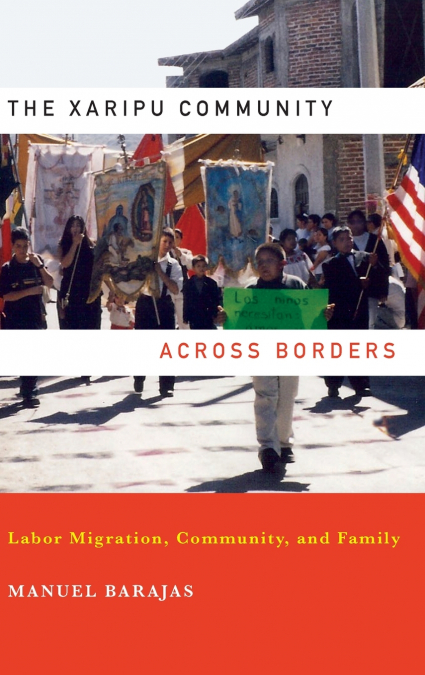
  • The Xaripu Community across Borders
    Manuel Barajas
    The Xaripu Community across Borders presents the first cross-national, comparative study that examines a Mexican-origin community’s experience with international migration and transnationalism. ...
  • Immigration and the Border
    Contributors address immigration and border politics and policies, focusing on the fourth wave of immigration and the lives of Mexican and Latino immigrants. ...

Otros libros del autor

  • Non-Formal Approach to Ethnicity
    Zacchaeus O. Ogunnika / Zacchaeus OOgunnika
    This book, written by one of the foremost researchers in this field, represents one of the intellectual efforts on the explanation of the inter-ethnic phenomenon. The author went into the critique of the whole phenomenon and approached his frame of meaning from the actor’s side. That is why the book is subtitled 'The peoples’ non-formal mechanisms'. The author is phenomenologic...
    Disponible

    19,71 €