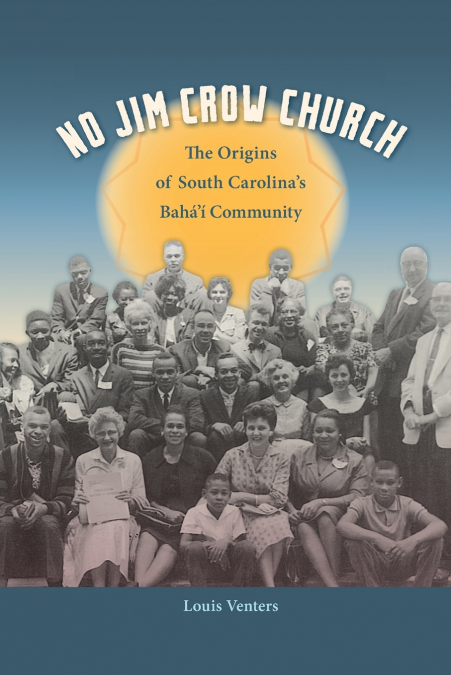

No Jim Crow Church

No Jim Crow Church

Louis Venters

39,45 €
IVA incluido
Disponible
Editorial:
Longleaf Services on behalf of U of Florida Press
Año de edición:
2016
Materia
Historia de América
ISBN:
9780813054070
39,45 €
IVA incluido
Disponible

Selecciona una librería:

  • Librería Samer Atenea

  • Kálamo Books
  • Librería Elías (Asturias)
  • Librería Kolima (Madrid)
  • Librería Proteo (Málaga)

'A richly detailed study of the rise of the Bahá’í Faith in South Carolina. There isn’t another study out there even remotely like this one.'--Paul Harvey, coauthor of The Color of Christ: The Son of God and the Saga of Race in America'A pioneering study of how and why the Bahá’í Faith became the second largest religious community in South Carolina. Carefully researched, the story told here fills a significant gap in our knowledge of South Carolina’s rich and diverse religious history.'--Charles H. Lippy, coauthor of Religion in Contemporary AmericaThe emergence of a cohesive interracial fellowship in Jim Crow-era South Carolina was unlikely and dangerous. However, members of the Bahá’í Faith in the Palmetto State rejected segregation, broke away from religious orthodoxy, and defied the odds, eventually becoming the state’s largest religious minority.The religion, which emphasizes the spiritual unity of all humankind, arrived in the United States from the Middle East at the end of the nineteenth century via urban areas in the Northeast and Midwest. Expatriate South Carolinians converted and when they returned home, they brought their newfound religion with them. Despite frequently being the targets of intimidation, and even violence, by neighbors, the Ku Klux Klan, law enforcement agencies, government officials, and conservative clergymen, the Bahá’ís remained resolute in their faith and their commitment to an interracial spiritual democracy. In the latter half of the twentieth century, their numbers continued to grow, from several hundred to over twenty thousand.In No Jim Crow Church, Louis Venters traces the history of South Carolina’s Bahá’í community from its early origins through the civil rights era and presents an organizational, social, and intellectual history of the movement. He relates developments within the community to changes in society at large, with particular attention to race relations and the civil rights struggle. Venters argues that the Bahá’ís in South Carolina represented a significant, sustained, spiritually-based challenge to the ideology and structures of white male Protestant supremacy, while exploring how the emergence of the Bahá’í Faith in the Deep South played a role in the cultural and structural evolution of the religion.

Artículos relacionados

  • Pan-Africanism and Education
    Kenneth J. King / Kenneth JKing
    This is an analysis of the complex links between Black America and Africa in the period of 1880 to 1945. It examines an extended white attempt to pattern politics and education in colonial Africa upon the example of the U.S. South. This export of United States race relations to Africa was resisted by Black intellectuals in the United States and many of the early nationalists in...
    Disponible

    24,60 €

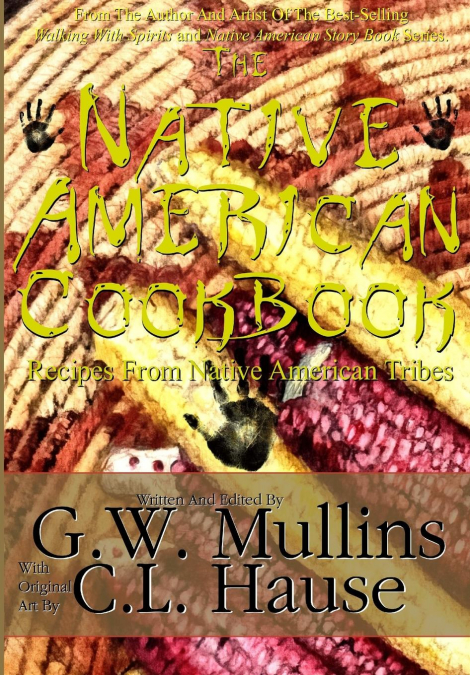
  • The Native American Cookbook Recipes From Native American Tribes
    G.W. Mullins
    Light Of The Moon Publishing along with Author G.W. Mullins and Illustrator / Artist C.L. Hause have joined together to explore Native American Indian Cooking.  More than just a cookbook, this Native American recipe collection offers a look into a forgotten past.  'The Native American Cookbook Recipes From Native American Tribes,' offers a large collection of recipes from and i...
  • A Public Spirit
    George H. Atkinson
    George Henry Atkinson (1819-89) was a son of New England who arrived in the Oregon Territory in 1848, sent by the American Home Missionary Society. Although his commission from the Society specified that his work was to be ecclesiastical and educational, he took an approach to that assignment which went well beyond his mandate. Well-informed and energetic, he made an impact on ...
    Disponible

    10,45 €

  • North Carolina Women of the Confederacy
    Lucy London Anderson
    Long out of print, this volume of recollections, stories, and verse provides a glimpse of women's lives on the home front-and sometimes in the thick of battle-during the War between the States. Nearly fifty years after the American Civil War, Lucy Worth London Anderson (Mrs. John Huske Anderson) of Fayetteville, N.C., compiled one of the first memorial collections honoring the...
    Disponible

    17,20 €

  • Freedom by a Thread
    Freedom by a Thread: The History of Quilombos in Brazil brings together some of the best scholars in the world working on the history of quilombos (maroon societies) in Brazil from a variety of perspectives and approaches. Over 40 percent of the total volume of captive Africans arrived in Brazil during a 400-year period of legal and contraband transatlantic slaving. If slavery ...
    Disponible

    36,71 €

  • Nashville Baseball History
    Bill Traughber
    Nashville is a Big League city despite never having been home to a major league team. From the Civil War era, to star-studded exhibitions, to outstanding Negro Leagues teams, to some of the great minor league franchises of all time, few cities have as rich a baseball tradition as Nashville, Tennessee.Nashville sports historian Bill Traughber, who has been writing about baseball...
    Disponible

    13,15 €