Neuroanatomical Techniques

Neuroanatomical Techniques


132,77 €
IVA incluido
Disponible
Editorial:
Springer Nature B.V.
Año de edición:
2011
Materia
Zoología y ciencias animales
ISBN:
9781461260202
132,77 €
IVA incluido
Disponible

Selecciona una librería:

  • Librería Samer Atenea
  • Librería Aciertas (Toledo)
  • Kálamo Books
  • Librería Perelló (Valencia)
  • Librería Elías (Asturias)
  • Donde los libros
  • Librería Kolima (Madrid)
  • Librería Proteo (Málaga)

Most neurobiological research is performed on vertebrates, and it is only natural that most texts describing neuroanatomical methods refer almost exclusively to this Phylum. Nevertheless, in recent years insects have been studied intensively and are becoming even more popular in some areas of research. They have advantages over vertebrates with respect to studying genetics of neuronal development and with respect to studying many aspects of integration by uniquely identifiable nerve cells. Insect central nervous system is characterized by its compactness and the rather large number of nerve cells in a structure so small. But despite their size, parts of the insect eNS bear structural comparisons with parts of vertebrate eNS. This applies particularly to the organization of the thoracic ganglia (and spinal cord), to the insect and vertebrate visual sys­ tems and, possibly, to parts of the olfactory neuropils. The neurons that make up these areas in insects are often large enough to be impaled by microelectrodes and can be injected with dyes. Added to advantages of using a small eNS, into which the sensory periphery is precisely mapped, are the many aspects of insect behaviour whose components can be quan­ titized and which may find both structural and functional correlates within clearly defined regions of neuropil. Together, these various features make the insect eNS a rewarding object for study. This volume is the first of two that describe both classic and recent methods for neuroanatomical research on insect eNS.
Artículos relacionados

  • Animaltown
    Urban space constitutes a place where people and animals live together in close proximity with each other, creating changing landscapes of co-existence, conflict, mutual dependencies and exploitation. The medieval animals found in the articles of Animaltown: Beasts in Medieval Urban Space, appear in text and image, as well as archaeological find materials in the form of butcher...
    Disponible

    109,24 €

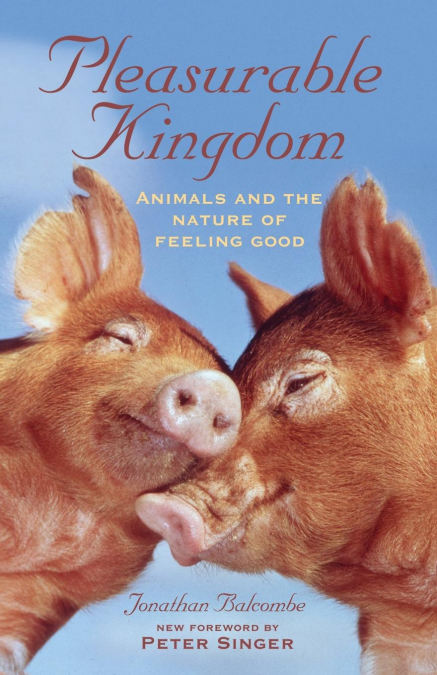
  • Pleasurable Kingdom
    Jonathan Balcombe
    Pleasurable Kingdom presents new evidence that animals--like humans--enjoy themselves. From birds to baboons, insects to iguanas, animals feel good thanks to play, sex, touch, food, anticipation, comfort, aesthetics, and more. Combining rigorous evidence, elegant argument and amusing anecdotes, leading animal behavior researcher Jonathan Balcombe shows that the possibility of p...
    Disponible

    18,96 €

  • SECOND NATURE
    Jonathan Balcombe
    ...
    Disponible

    16,52 €

  • Experimental Zoology
    Manisha R Gejage / Ramesh M Gejage
    The goal of the book is to present the practical knowledge of Zoology. Animal diversity, venomous and non-venomous snakes, study of birds, brain of fowl and hyoid apparatus, sclerotic plates, pecten and collumella of fowl, scales of fishes, biochemical tests, activity of salivary amylase, estimation of total protein and lipid, DNA isolation and estimation of uric acid are given...
  • TOXICOLOGY
    M A SUBRAMANIAN
    In an era defined by burgeoning human populations, rampant industrialization, cutting-edge technological progress, and expanding urban landscapes, the integrity of our natural environment faces unprecedented challenges. The relentless march of progress has ushered in a flood of chemicals, seeping into the very fabric of our ecosystems and posing insidious threats to biological ...
    Disponible

    23,69 €

  • Leaders in Animal Behavior
    Donald Dewsbury / Lee Drickamer
    ...
    Disponible

    64,68 €