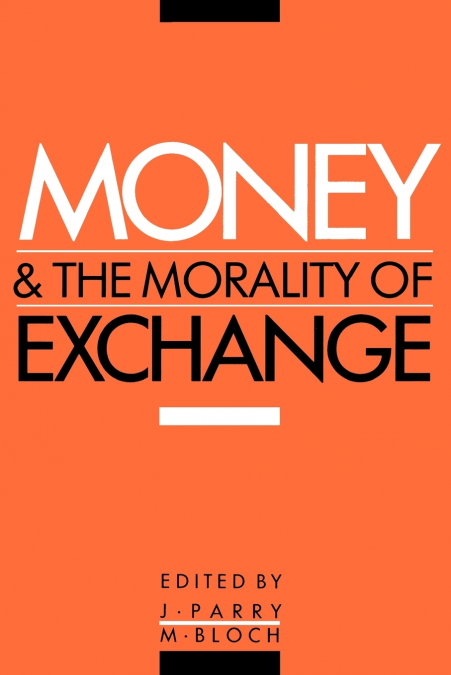

Money and the Morality of Exchange

Money and the Morality of Exchange

Money and the Morality of Exchange


38,23 €
IVA incluido
Disponible
Editorial:
Cambridge University Press
Año de edición:
1989
Materia
Economía internacional
ISBN:
9780521367745
38,23 €
IVA incluido
Disponible

Selecciona una librería:

  • Librería Samer Atenea
  • Librería Aciertas (Toledo)
  • Kálamo Books
  • Librería Perelló (Valencia)
  • Librería Elías (Asturias)
  • Donde los libros
  • Librería Kolima (Madrid)
  • Librería Proteo (Málaga)

This volume deals with the way in which money is symbolically represented in a range of different cultures, from South and South-east Asia, Africa and South America. It is also concerned with the moral evaluation of monetary and commercial exchanges as against exchanges of other kinds. The essays cast radical doubt on many Western assumptions about money: that it is the acid which corrodes community, depersonalises human relationships, and reduces differences of quality to those of mere quantity; that it is the instrument of man’s freedom, and so on. Rather than supporting the proposition that money produces easily specifiable changes in world view, the emphasis here is on the way in which existing world views and economic systems give rise to particular ways of representing money. But this highly relativistic conclusion is qualified once we shift the focus from money to the system of exchange as a whole. One rather general pattern that then begins to emerge is of two separate but related transactional orders, the majority of systems making some ideological space for relatively impersonal, competitive and individual acquisitive activity. This implies that even in a non-monetary economy these features are likely to exist within a certain sphere of activity, and that it is therefore misleading to attribute them to money. By so doing, a contrast within cultures is turned into a contrast between cultures, thereby reinforcing the notion that money itself has the power to transform the nature of social relationships.
Artículos relacionados

  • Regional Economic Integration and the Global Financial System
    Engin Sorhun / Hasan Dinçer / Unit Hacioglu
    In theory, regionalism and globalization are intended to be viewed as two separate concepts. However, as long as the approaches complement each other, considering these paradigms in tandem can have significantly positive effects on the overall status of the world economy. Regional Economic Integration and the Global Financial System addresses recent trends in regional integrati...
  • Handbook of Research on Impacts of International Business and Political Affairs on the Global Economy
    The growth of global commerce depends on many different factors and strategies in order for multinational corporations to efficiently compete and thrive in the international marketplace. In addition to business strategies, corporations must also be aware of political affairs that may impact their global economic status. The Handbook of Research on Impacts of International Busin...
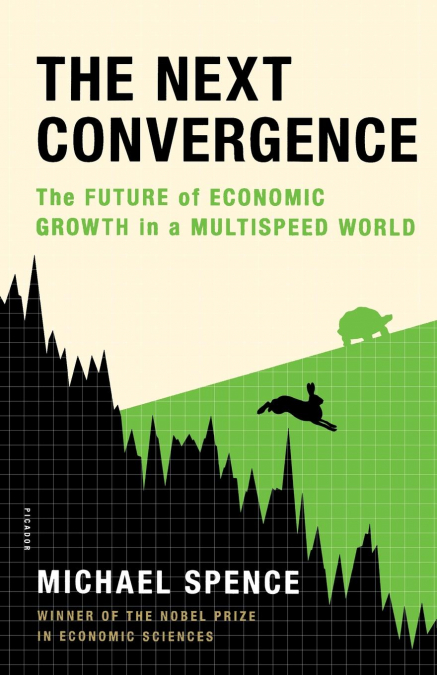
  • NEXT CONVERGENCE
    MICHAEL SPENCE
    ...
    Disponible

    17,21 €

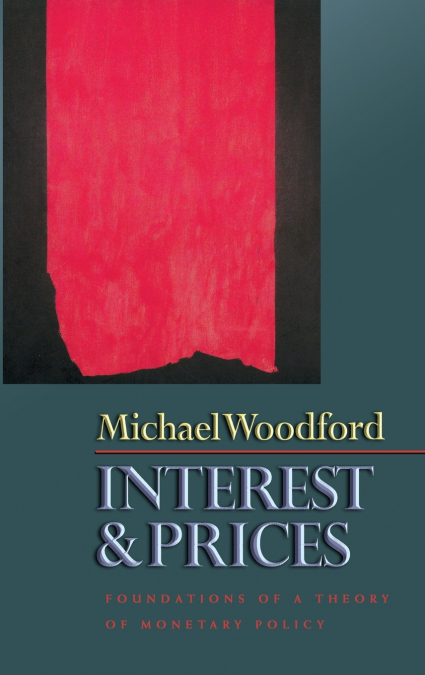
  • Interest and Prices
    Michael Woodford
    With the collapse of the Bretton Woods system, any pretense of a connection of the world’s currencies to any real commodity has been abandoned. Yet since the 1980s, most central banks have abandoned money-growth targets as practical guidelines for monetary policy as well. How then can pure 'fiat' currencies be managed so as to create confidence in the stability of national unit...
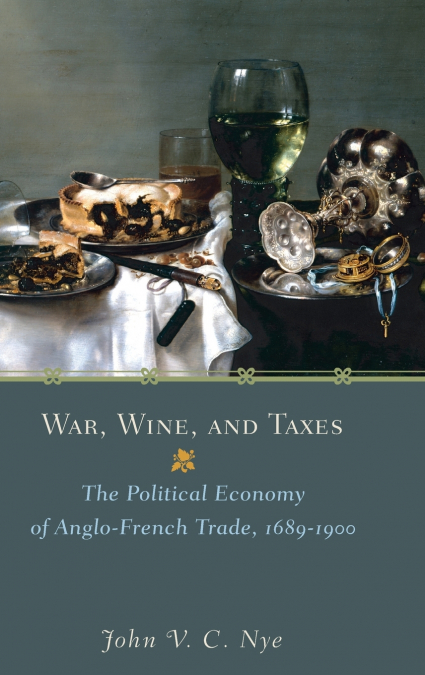
  • War, Wine, and Taxes
    John V.C. Nye
    In War, Wine, and Taxes, John Nye debunks the myth that Britain was a free-trade nation during and after the industrial revolution, by revealing how the British used tariffs-notably on French wine-as a mercantilist tool to politically weaken France and to respond to pressure from local brewers and others. The book reveals that Britain did not transform smoothly from a mercantil...
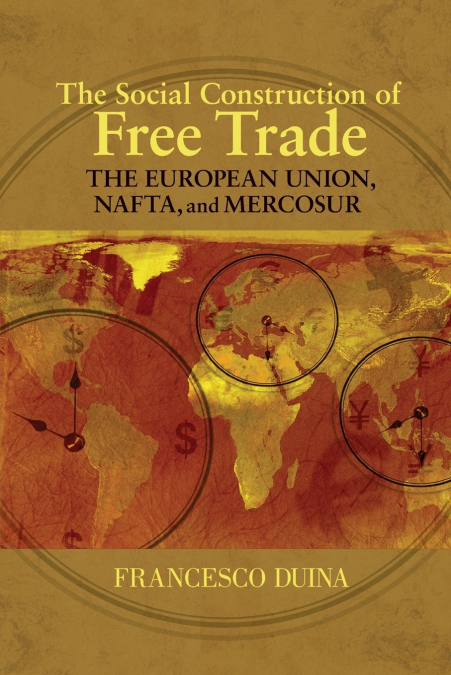
  • The Social Construction of Free Trade
    Francesco Duina
    This book offers a compelling new interpretation of the proliferation of regional trade agreements (RTAs) at the end of the twentieth century. Challenging the widespread assumption that RTAs should be seen as fundamentally similar economic initiatives to pursue free trade, Francesco Duina proposes that the world is reorganizing itself into regions that are highly distinctive an...
    Disponible

    54,25 €