Inicio > > Redes y comunicaciones informáticas > Modyfikacja protokołów LEACH i LCM opartych na klastrach w sieciach WSN
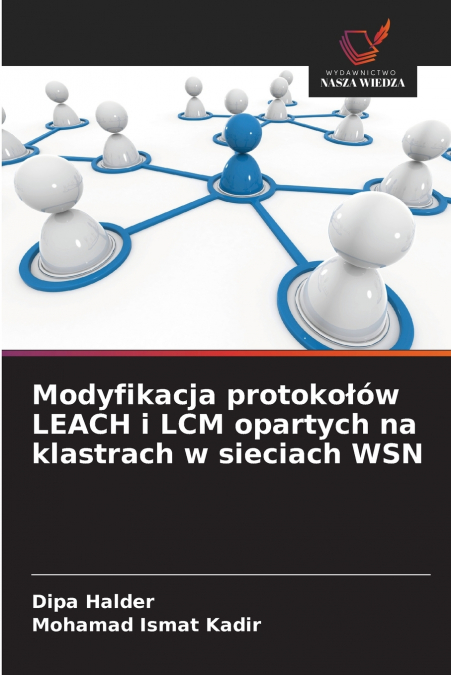
Modyfikacja protokołów LEACH i LCM opartych na klastrach w sieciach WSN

Modyfikacja protokołów LEACH i LCM opartych na klastrach w sieciach WSN

Dipa Halder / Mohamad Ismat Kadir

53,60 €
IVA incluido
Disponible
Editorial:
KS OmniScriptum Publishing
Año de edición:
2025
Materia
Redes y comunicaciones informáticas
ISBN:
9786208938482
53,60 €
IVA incluido
Disponible

Selecciona una librería:

  • Librería Samer Atenea
  • Librería Aciertas (Toledo)
  • Kálamo Books
  • Librería Perelló (Valencia)
  • Librería Elías (Asturias)
  • Donde los libros
  • Librería Kolima (Madrid)
  • Librería Proteo (Málaga)

Redukcja zużycia energii jest głównym problemem protokołów routingu. W niniejszej pracy rozszerzyliśmy dwa protokoły routingu oparte na klastrach w celu poprawy żywotności systemu bezprzewodowej sieci czujników. Dwa protokoły badane w niniejszej pracy to: Low-Energy Adaptive Clustering Hierarchy (LEACH) oraz Link Aware Clustering Mechanism. Protokół LEACH nie uwzględnia pozostałej energii węzłów podczas wybierania głowy klastra (CH). Ponieważ wybór CH ma charakter probabilistyczny, węzeł o bardzo niskim poziomie energii ma duże szanse na zostanie CH. Gdy ten węzeł przestaje działać, cały klaster przestaje funkcjonować. Dlatego podczas wybierania CH uwzględniamy pozostałą energię węzłów. Ustaliliśmy z góry próg, który musi zostać osiągnięty podczas wybierania CH. Jest to próg dotyczący pozostałej energii węzłów. Z wyników naszych symulacji jasno wynika, że czas życia protokołu Extended-LEACH jest dłuższy niż w przypadku protokołu LEACH. Jego węzły działają 100 razy dłużej niż w przypadku protokołu LEACH. W niniejszej pracy staramy się ulepszyć metodę LCM (metoda klastrowania uwzględniająca połączenia). W naszych badaniach dążymy do wdrożenia różnych węzłów w różnych miejscach. Nasze symulacje pokazują, że węzły oddalone od stacji bazowej (BS) działają dłużej.
Artículos relacionados

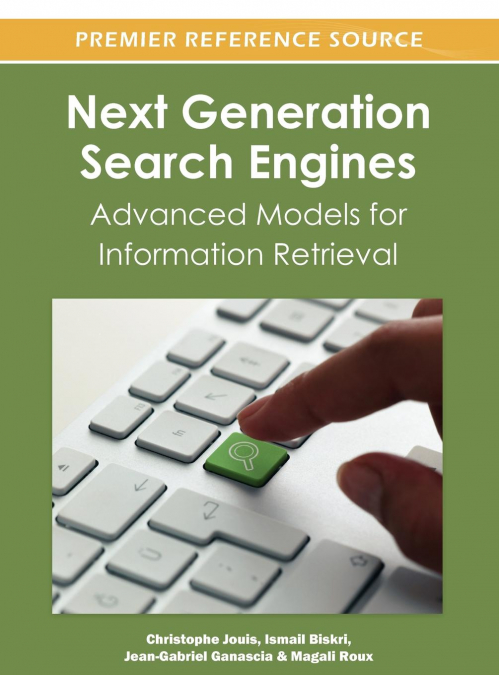
  • Next Generation Search Engines
    Recent technological progress in computer science, Web technologies, and the constantly evolving information available on the Internet has drastically changed the landscape of search and access to information. Current search engines employ advanced techniques involving machine learning, social networks, and semantic analysis. Next Generation Search Engines: Advanced Models for ...
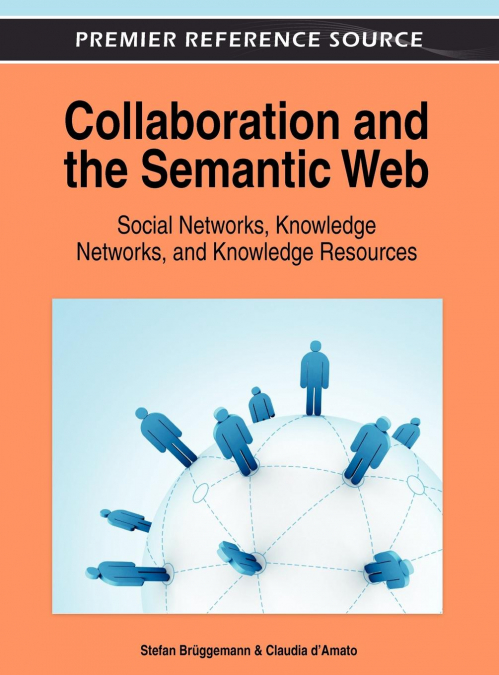
  • Collaboration and the Semantic Web
    Collaborative working has been increasingly viewed as a good practice for organizations to achieve efficiency. Organizations that work well in collaboration may have access to new sources of funding, deliver new, improved, and more integrated services, make savings on shared costs, and exchange knowledge, information and expertise. Collaboration and the Semantic Web: Social Net...
  • Resource Allocation in Next-Generation Broadband Wireless Access Networks
    With the growing popularity of wireless networks in recent years, the need to increase network capacity and efficiency has become more prominent in society. This has led to the development and implementation of heterogeneous networks. Resource Allocation in Next-Generation Broadband Wireless Access Networks is a comprehensive reference source for the latest scholarly research o...
  • Advanced Topics in Information Technology Standards and Standardization Research, Volume 1
    Kai Jakobs
    ...
  • Data Warehouses and OLAP
    ...
  • Selected Readings on Database Technologies and Applications
    Terry Halpin
    Education and research in the field of database technology can prove problematic without the proper resources and tools on the most relevant issues, trends, and advancements. Selected Readings on Database Technologies and Applications supplements course instruction and student research with quality chapters focused on key issues concerning the development, design, and analysis ...

Otros libros del autor

  • Modificação dos protocolos LEACH e LCM de RSSF baseados em clustering
    Dipa Halder / Mohamad Ismat Kadir
    A redução da energia é o principal problema dos protocolos de encaminhamento. Nesta tese, alargámos dois protocolos de encaminhamento baseados em clusters para melhorar o tempo de vida do sistema de redes de sensores sem fios. Os dois protocolos aqui estudados são: Low-Energy Adaptive Clustering Hierarchy (LEACH) e Link Aware Clustering Mechanism. O LEACH não tem em conta a ene...
    Disponible

    53,60 €

  • Modifizierung der Clustering-basierten LEACH- und LCM-Protokolle von WSNs
    Dipa Halder / Mohamad Ismat Kadir
    Energieeinsparung ist das Hauptproblem bei Routing-Protokollen. In dieser Arbeit haben wir zwei clusterbasierte Routing-Protokolle erweitert, um die Lebensdauer von drahtlosen Sensornetzwerken zu verbessern. Die beiden hier untersuchten Protokolle sind: Low-Energy Adaptive Clustering Hierarchy (LEACH) und Link Aware Clustering Mechanism. LEACH berücksichtigt bei der Auswahl des...
    Disponible

    53,60 €

  • Modification des protocoles LEACH et LCM de WSN basés sur le clustering
    Dipa Halder / Mohamad Ismat Kadir
    La réduction de l’énergie est le problème majeur des protocoles de routage. Dans cette thèse, nous avons étendu deux protocoles de routage basés sur les grappes afin d’améliorer la durée de vie des réseaux de capteurs sans fil. Les deux protocoles étudiés ici sont : Low-Energy Adaptive Clustering Hierarchy (LEACH) et Link Aware Clustering Mechanism. Le protocole LEACH ne tient ...
    Disponible

    53,60 €