AA.VV
 Librería Samer Atenea
 Kálamo Books
 Librería Elías (Asturias)
 Librería Kolima (Madrid)
 Librería Proteo (Málaga)
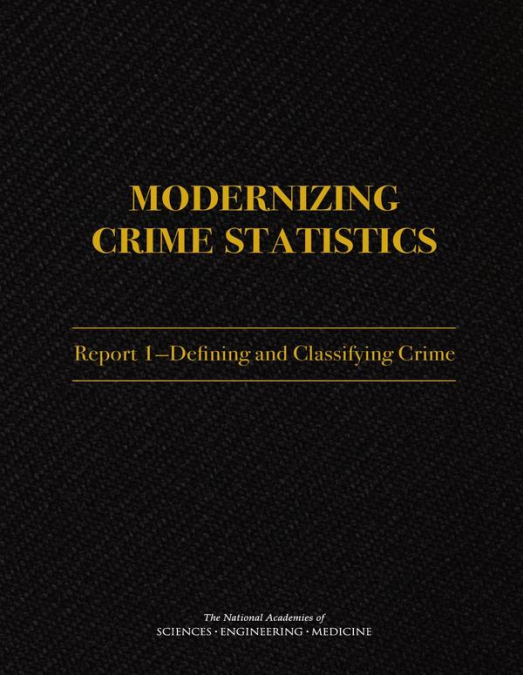
To derive statistics about crime – to estimate its levels and trends, assess its costs to and impacts on society, and inform law enforcement approaches to prevent it – a conceptual framework for defining and thinking about crime is virtually a prerequisite. Developing and maintaining such a framework is no easy task, because the mechanics of crime are ever evolving and shifting: tied to shifts and development in technology, society, and legislation.Interest in understanding crime surged in the 1920s, which proved to be a pivotal decade for the collection of nationwide crime statistics. Now established as a permanent agency, the Census Bureau commissioned the drafting of a manual for preparing crime statistics—intended for use by the police, corrections departments, and courts alike. The new manual sought to solve a perennial problem by suggesting a standard taxonomy of crime. Shortly after the Census Bureau issued its manual, the International Association of Chiefs of Police in convention adopted a resolution to create a Committee on Uniform Crime Records—to begin the process of describing what a national system of data on crimes known to the police might look like.The key distinction between the rigorous classification proposed in this report and the ’classifications’ that have come before in U.S. crime statistics is that it is intended to partition the entirety of behaviors that could be considered criminal offenses into mutually exclusive categories. Modernizing Crime Statistics: Report 1: Defining and Classifying Crime assesses and makes recommendations for the development of a modern set of crime measures in the United States and the best means for obtaining them. This first report develops a new classification of crime by weighing various perspectives on how crime should be defined and organized with the needs and demands of the full array of crime data users and stakeholders.