 Librería Samer Atenea
 Librería Aciertas (Toledo)
 Kálamo Books
 Librería Perelló (Valencia)
 Librería Elías (Asturias)
 Donde los libros
 Librería Kolima (Madrid)
 Librería Proteo (Málaga)
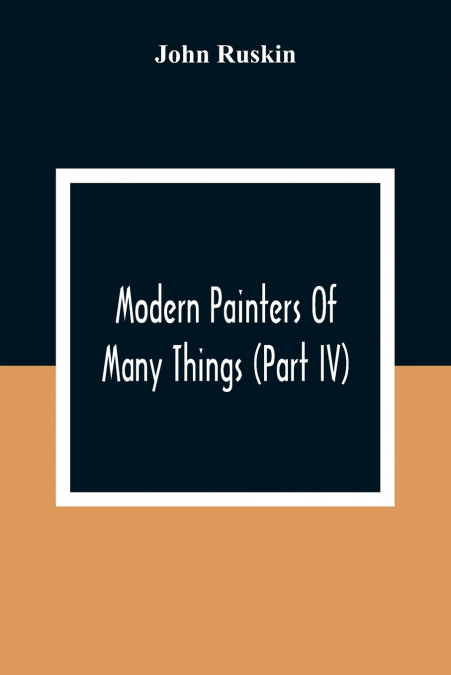
Modern Painters Of Many Things (Part Iv) by John Ruskin crackles with moral urgency and aesthetic insight. A masterclass in critical observation. Ruskin turns his uncompromising eye to the practice and purpose of painting, assembling a sequence of nineteenth-century essays that interrogate taste, technique and the social role of art. These pages pair close painting aesthetics analysis with fearless commentary on art and society themes, bridging early visual arts theory and lived cultural debate in victorian england culture. Fresh to the modern reader, the essays serve as both careful criticism and lively prose: forensic about brushwork, humane about artists, and alive to how images shape public life.Historically, this work sits at the centre of nineteenth-century british art discourse and has shaped generations of how we think about representation and moral value in art - a clear landmark among john ruskin works and classic art literature. Students of art history will find foundational ideas to trace; art appreciation readers will take pleasure in the vivid descriptions and persuasive arguments. Ruskin’s language and method have continued to inform debates about representation, conservation and museum practice, so the essays work as both historical document and living argument. Accessible to a curious general reader yet rich enough for specialists, it belongs in any art history collection and on the shelf of classic-literature collectors who cherish the texture of nineteenth-century essays.Republished by Alpha Editions in a careful modern edition, this volume preserves the spirit of the original while making it effortless to enjoy today - a heritage title prepared for readers and collectors alike. This presentation frames Ruskin for contemporary conversation, highlighting how his concerns about taste, labour and the social life of images still resonate. Perfect for students of art history and curious readers alike who return to classic art literature and seek fresh context.