 Librería Samer Atenea
 Kálamo Books
 Librería Elías (Asturias)
 Librería Kolima (Madrid)
 Librería Proteo (Málaga)
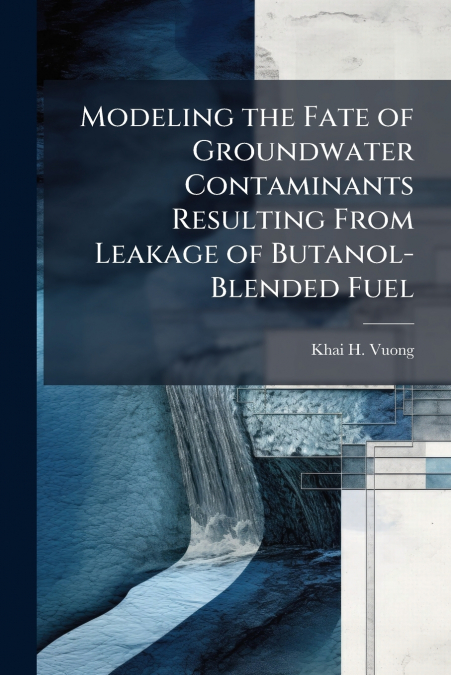
Fuel spills and leaks from storage tanks can contaminate groundwater. Typically in groundwater, hazardous aromatic hydrocarbons like benzene are attenuated through natural processes. However, it is possible that adding butanol to gasoline will interfere with these natural attenuation processes, so that spills and leaks of alternative fuels containing biobutanol may result in more persistent hazardous aromatic hydrocarbon plumes. This effect has already been observed with ethanol, which is currently added to gasoline. A numerical model was developed to simulate the subsurface fate and transport of butanol-blended fuel to assess the potential impacts of butanol on the natural attenuation of benzene. The model incorporated advection, dispersion, sorption, and biodegradation of contaminants in groundwater. The biodegradation of benzene and butanol was modeled using dual Monod kinetics with degradation occurring under aerobic and anaerobic (sulfate-reducing as well as methanogenic) redox conditions. Model simulations indicated that spills of butanol-blended gasoline resulted in benzene plumes that were longer and more persistent than plumes which resulted from spills of gasoline alone. Electron acceptors (oxygen and sulfate) are more available for biodegradation of benzene in fuel without butanol. The presence of butanol decreased the availability of electron acceptors--limiting benzene’s degradation and causing longer plumes.This work has been selected by scholars as being culturally important, and is part of the knowledge base of civilization as we know it. This work was reproduced from the original artifact, and remains as true to the original work as possible. Therefore, you will see the original copyright references, library stamps (as most of these works have been housed in our most important libraries around the world), and other notations in the work.This work is in the public domain in the United States of America, and possibly other nations. Within the United States, you may freely copy and distribute this work, as no entity (individual or corporate) has a copyright on the body of the work.As a reproduction of a historical artifact, this work may contain missing or blurred pages, poor pictures, errant marks, etc. Scholars believe, and we concur, that this work is important enough to be preserved, reproduced, and made generally available to the public. We appreciate your support of the preservation process, and thank you for being an important part of keeping this knowledge alive and relevant.