
Inicio > Matemáticas y ciencia > Biologia, ciencias de la vida > Mikroskopie der Nahrungs- und Genußmittel aus dem Pflanzenreiche
Mikroskopie der Nahrungs- und Genußmittel aus dem Pflanzenreiche

Mikroskopie der Nahrungs- und Genußmittel aus dem Pflanzenreiche

C. Griebel / Josef Möller

108,13 €
IVA incluido
Disponible
Editorial:
Springer Nature B.V.
Año de edición:
1928
Materia
Biologia, ciencias de la vida
ISBN:
9783642504303
108,13 €
IVA incluido
Disponible

Selecciona una librería:

  • Librería Samer Atenea
  • Librería Aciertas (Toledo)
  • Kálamo Books
  • Librería Perelló (Valencia)
  • Librería Elías (Asturias)
  • Donde los libros
  • Librería Kolima (Madrid)
  • Librería Proteo (Málaga)

In vielen Fallen ist das Mikroskop das einzige Mittel zur Erkennung und Reinheitspriifung zerkleinerter Pflanzenteile, in anderen fiihrt es wenigstens rascher zum Ziel als die chemische Analyse. Fiir Laboratorien, die sich mit der Priifung und Begutachtung von vegetabilischen Stoffen (Lebensmitteln, Arzneidrogen, Faserstoffen usw. ) zu befassen haben, ist daher das Mikroskop seit langem ein unentbehrliches Instrument. Aber nicht immer findet es die ihm gebiihrende weitgehende Anwendung bei der analytischen Tatigkeit ill Laboratorium. Manche Chemiker haben vielmehr immer noch eine ausgespro­ chene Abneigung gegen den Gebrauch des Mikroskopes, und zwar deswegen, weil ihnen die richtige Deutung des mikroskopischen Bildes haufig groBe Schwie­ rigkeiten macht oder iiberhaupt nicht gelingt. Zum Teil mag dies mit der Ein­ stellung auf die chemisch-analytische Tatigkeit zusammenhangen, die sich ge­ wohnlich nach einem bestimmten System durchfiihren laBt. Eine solche planmaBige Ermittelung der Bestandteile eines vegetabilischen Pulvers - etwa im Sinne einer qualitativen chemischen Analyse - ist aber leider nicht moglich. Der einzige Weg, der geeignet ist, dem Analytiker die erforderlichen Kenntnisse zu vermitteln, ist eine systematische Untersuchung aller derjenigen Objekte, die erfahrungsgemaB Gegenstand der mikroskopischen Priifung sind. Der Anfanger muB daher zunachst die unzerkleinerten Objekte mikroskopisch zergliedern und sie in allen Einzelheiten ihres Baues kennen­ lernen, damit er sie spater aus ihren Bruchstiicken rekonstruieren, d. h. dia­ gnostizieren und fremdartige Elemente als solche erkennen kann. Von dies em Gesichtspunkte aus sind die folgenden Blatter abgefaBt.


Artículos relacionados

  • Viral Replication Complexes
    Viruses are obligate intracellular parasites that need to co-opt a living cell’s machinery for replication. At the heart of the viral replication machinery are the nucleic acid polymerases, which are responsible for efficiently copying the viral genome. This process must often be coordinated with other viral processes, including protein translation and viral packaging. The poly...
    Disponible

    99,07 €

  • Advances in Flavivirus Research
    The flaviviruses are composed almost entirely of arthropod-borne viruses, a subset of which are responsible for millions of cases of human disease each year. Among these viruses are dengue virus—a scourge throughout the tropical regions of Asia and the Americas; yellow fever virus—the “original” hemorrhagic fever virus; and the recently emerged Zika virus. While the flaviviruse...
    Disponible

    51,85 €

  • Brain Asymmetry of Structure and/or Function
    Lesley J. Rogers / Lesley JRogers
    This edited book brings together research reports on the asymmetry of brain function in various species, including humans, dogs, birds, lizards and bees. As shown in a wide range of species, and, as we now know, not solely in humans, the left and right sides of the brain process information in different ways and control different responses or patterns of behaviour. Since this d...
    Disponible

    51,71 €

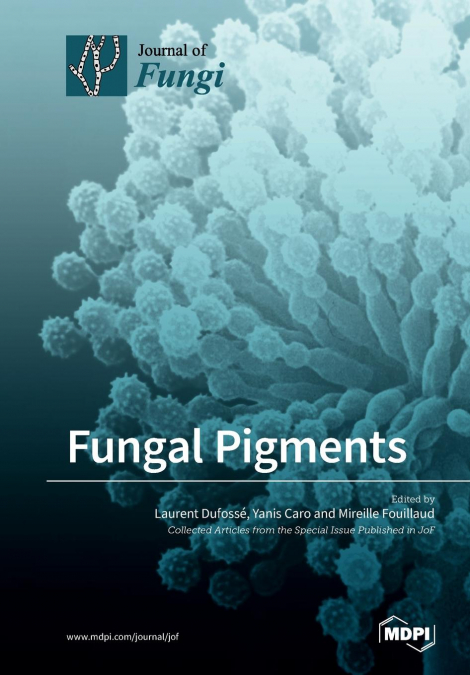
  • Fungal Pigments
    With the impact of globalization in research trends, the search for healthier life styles, the increasing public demand for natural, organic, and ‘clean labelled’ products, as well as the growing global market for natural colorants in economically fast-growing countries all over the world, filamentous fungi started to be investigated as readily available sources of chemically d...
    Disponible

    43,80 €

  • The Epithelialto- Mesenchymal Transition ( EMT ) in Cancer
    Joëlle Roche
    The epithelial-to-mesenchymal transition (EMT) is a highly dynamic process with multiple transitional states, by which epithelial cells can convert into a mesenchymal phenotype. This process involves loss of cellular adhesion and cellular polarity, and an improvement in migratory and invasive properties. It occurs during normal embryonic development, tissue regeneration, organ ...
    Disponible

    67,86 €

  • The Biology and Treatment of Myeloid Leukaemias
    There has been an observed decrease in the global mortality from cancer, mostly atributable to improved, particularly early, detection and prevention. For many carcinomas and leukaemias in adults, once the disease has reached a certain stage there are no therapies that are able to erradicate the cancer cells and cure patients. There has been progress in the treatment of acute m...
    Disponible

    51,85 €