
Inicio > Tecnología, ingeniería, agricultura > > Química industrial > Microwave-assisted Extraction for Bioactive Compounds
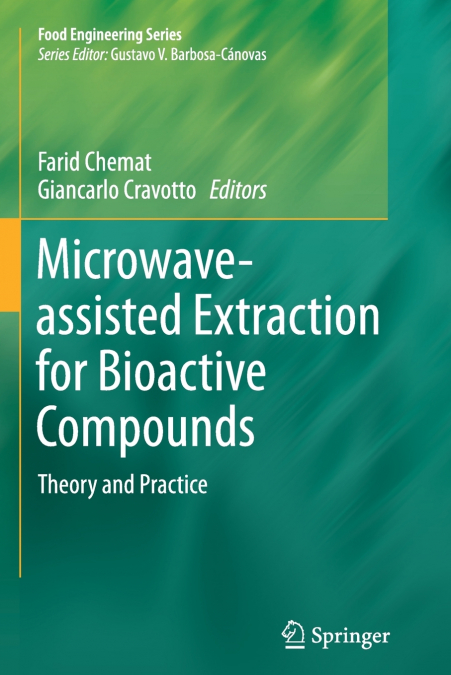
Microwave-assisted Extraction for Bioactive Compounds

Microwave-assisted Extraction for Bioactive Compounds


148,43 €
IVA incluido
Disponible
Editorial:
Springer Nature B.V.
Año de edición:
2015
Materia
Química industrial
ISBN:
9781489973610
148,43 €
IVA incluido
Disponible

Selecciona una librería:

  • Librería Samer Atenea
  • Librería Aciertas (Toledo)
  • Kálamo Books
  • Librería Perelló (Valencia)
  • Librería Elías (Asturias)
  • Donde los libros
  • Librería Kolima (Madrid)
  • Librería Proteo (Málaga)

With increasing energy prices and the drive to reduce CO2 emissions, food industries are challenged to find new technologies in order to reduce energy consumption, to meet legal requirements on emissions, product/process safety and control, and for cost reduction and increased quality as well as functionality. Extraction is one of the promising innovation themes that could contribute to sustainable growth in the chemical and food industries. For example, existing extraction technologies have considerable technological and scientific bottlenecks to overcome, such as often requiring up to 50% of investments in a new plant and more than 70% of total process energy used in food, fine chemicals and pharmaceutical industries. These shortcomings have led to the consideration of the use of new 'green' techniques in extraction, which typically use less solvent and energy, such as microwave extraction. Extraction under extreme or non-classical conditions is currently a dynamically developing area in applied research and industry. Using microwaves, extraction and distillation can now be completed in minutes instead of hours with high reproducibility, reducing the consumption of solvent, simplifying manipulation and work-up, giving higher purity of the final product, eliminating post-treatment of waste water and consuming only a fraction of the energy normally needed for a conventional extraction method. Several classes of compounds such as essential oils, aromas, anti-oxidants, pigments, colours, fats and oils, carbohydrates, and other bioactive compounds have been extracted efficiently from a variety of matrices (mainly animal tissues, food, and plant materials). The advantages of using microwave energy, which is a non-contact heat source, includes more effective heating, faster energy transfer, reduced thermal gradients, selective heating, reduced equipment size, faster response to process heating control, faster start-up, increased production, and elimination of process steps. This book will present a complete picture of the current knowledge on microwave-assisted extraction (MAE) of bioactive compounds from food and natural products. It will provide the necessary theoretical background and details about extraction by microwaves, including information on the technique, the mechanism, protocols, industrial applications, safety precautions, and environmental impacts.
Artículos relacionados

  • Quantitative Structure-Activity Relationships in Drug Design, Predictive Toxicology, and Risk Assessment
    Kunal Roy
    Quantitative structure-activity relationships (QSARs) represent predictive models derived from the application of statistical tools correlating biological activity or other properties of chemicals with descriptors representative of molecular structure and/or property. Quantitative Structure-Activity Relationships in Drug Design, Predictive Toxicology, and Risk Assessment discus...
  • Chemical Compound Structures and the Higher Dimension of Molecules
    Gennadiy Vladimirovich Zhizhin
    Originally, scientists believed that molecules were three-dimensional; however, studies have proven that geometric dimensions are continuous. Therefore, molecules are able to have higher dimensions which influences how they interact with other molecules leading to advances in various fields including nanomedicine, nanotoxicology and quantum biology. Chemical Compound Structures...
  • CHEMICAL THERMODYNAMICS, 2ND EDITION
    Byung Chan Eu / BYUNG CHAN EU & MAZEN AL-GHOUL / EU BYUNG CHAN / Mazen Al-Ghoul
    This book enables the reader to learn, in a single volume, equilibrium and nonequilibrium thermodynamics as well as generalized forms of hydrodynamics for linear and nonlinear processes applied to various hydrodynamic flow processes — including chemical oscillation phenomena and pattern formations, shock wave phenomena, sound wave propagations, and Liesegang pattern formation, ...
  • CARBOHYDRATE CHEMISTRY
    ALEN RAIMO / Raimo Alen
     This book presents a comprehensive approach to the versatile and fascinating field of carbohydrate chemistry. It covers, besides the colorful historical perspective within the utilization of carbohydrates and their derivatives, all modern aspects on their properties, nomenclature, uses, and natural occurrence as such or as residues in a variety of biologically active molecules...
  • Recent Developments in Geopolymers and Alkali-Activated Materials
    Sujeong Lee
    We are compiling and publishing a collection of the latest research papers in the fields of Geopolymer and Alkali-Activated Materials (AAM). This compilation includes eight original research and two review papers covering a diverse range of topics, including various raw materials, manufacturing processes, and applications in the realms of Geopolymer and AAM. The publication aim...
  • Introduction to Chemical Engineering Fluid Mechanics
    William M. Deen
    ...