
Inicio > Sociedad y ciencias sociales > Sociedad y cultura: general > Mexico and the Post-2015 Development Agenda
Mexico and the Post-2015 Development Agenda

Mexico and the Post-2015 Development Agenda

Rebecka Villanueva Ulfgard

132,23 €
IVA incluido
Consulta disponibilidad
Editorial:
Springer Nature B.V.
Año de edición:
2017
Materia
Sociedad y cultura: general
ISBN:
9781137591418

Selecciona una librería:

  • Librería Samer Atenea
  • Librería Aciertas (Toledo)
  • Kálamo Books
  • Librería Perelló (Valencia)
  • Librería Elías (Asturias)
  • Donde los libros
  • Librería Kolima (Madrid)
  • Librería Proteo (Málaga)

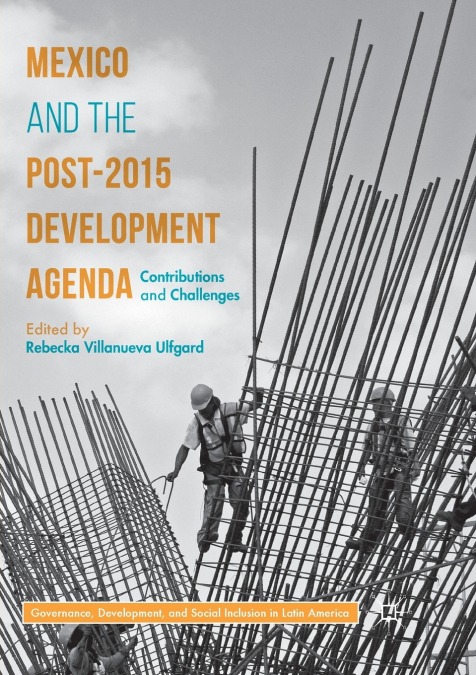
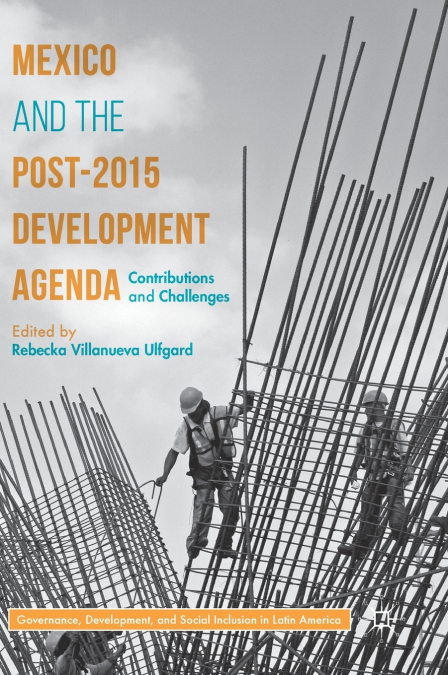
 This book explores how and why Mexico’s approach to the 2030 Agenda for Sustainable Development and Sustainable Development Goals (SDG) implementation with the López Obrador administration is unsustainable and non-transformative, overshadowed by his vision of Mexico’s 'Fourth Transformation'. Approached as a super mantra revolving around 'Republican Austerity' and 'First, the poor', it provides original analysis of structural and conjunctural challenges facing Mexico as regards People-, Planet-, and Peace-centered development. The book reveals the promise 'First, the poor' is inconsistent with data on Mexico’s poverty reduction (SDG1). Despite record-high spending on social programs and unmatched coverage, the recent tendency of improvement in tackling poverty is rather ambiguous from the perspective of multidimensional poverty. The book covers access to clean energy (SDG7), resilient infrastructure and sustainable industrialization (SDG9), and safeguarding biodiversity (SDG15) by examining three megaproject case studies: the oil refinery Dos Bocas, the Interoceanic Corridor of the Isthmus of Tehuantepec, and the Maya Train, generating concern with the economic, environmental, and social dimensions of sustainable development. The prospects for an ’enabling environment’ for SDG implementation are hampered by persistently high levels of homicides and impunity (SDG16). Turning Mexico’s Armed Forces into ’first development partner of choice’ is problematized as regards their reach in infrastructure megaprojects and social welfare programs, in the overall context of the ’de-risking state’ favoring private capital. The result, as determined by Villanueva Ulfgard, has led Mexico further astray from sustainable and transformative development.

Artículos relacionados

  • The Gandhian Iceberg
    Chris D Moore-Backman
    The Gandhian Iceberg presents a bold, new interpretation of Gandhian nonviolence from the rare perspective of an author who is equal parts writer, scholar, and frontlines practitioner. The book faces the current crisis of climate change and the intensification of social unrest around the world, and calls for a new convergence of serious, spiritually-rooted US nonviolence activi...
    Disponible

    11,52 €

  • Contemporary Developments in Child Protection
    Nigel Parton
    Volume 1 "Policy Changes and Challenges" takes as its central theme the ongoing and challenging issues which child protection agencies have to address and the policy and practice initiatives that are developed to try and address these. The volume includes papers on: the relationship between the decline in the rate of ‘unnatural’ deaths and the growth of concern about child abus...
  • Diversity in Information Technology Education
    Goran Trajkovski
    ...
  • Model-Driven Software Development
    Model-driven software development (MDSD) drastically alters the software development process, characterized by a high degree of innovation and productivity. However, quality assurance application in the domain of software models and model-driven software development is still in an emergent phase. Model-Driven Software Development: Integrating Quality Assurance provides in-depth...
  • Evidence-Based Practice in Nursing Informatics
    Andrew Chasin
    Because of the constant advances and dynamics within the nascent field of nursing informatics, many nurses struggle in practice as they continue to try and apply habitual communication practices in the new environment without any critical reflection on, and adaptation of, those practices. Evidence-Based Practice in Nursing Informatics: Concepts and Applications serves as a valu...
  • Actor-Network Theory and Technology Innovation
    Arthur Tatnall
    About 25 years ago, the first developments of ANT (Actor-Network Theory) took place, but it wasn’t until much later that researchers began to take it seriously. In the late 1990s, ANT began to take hold in the scientific community as a new and exciting approach to socio-technical research and social theory. Actor-Network Theory and Technology Innovation: Advancements and New Co...

Otros libros del autor

  • Mexico and the Post-2015 Development Agenda
    Rebecka Villanueva Ulfgard
     This book explores how and why Mexico’s approach to the 2030 Agenda for Sustainable Development and Sustainable Development Goals (SDG) implementation with the López Obrador administration is unsustainable and non-transformative, overshadowed by his vision of Mexico’s 'Fourth Transformation'. Approached as a super mantra revolving around 'Republican Austerity' and 'First, the ...
    Disponible

    133,91 €