
Inicio > Sociedad y ciencias sociales > Educación pedagogía > Meeting Basic Learning Needs in the Informal Sector
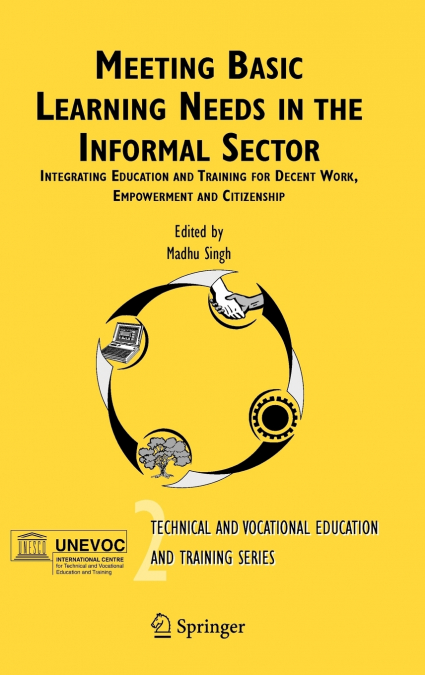
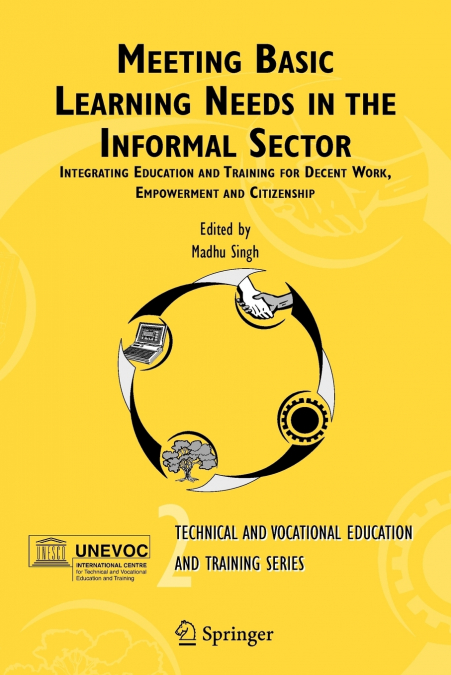
Meeting Basic Learning Needs in the Informal Sector

Meeting Basic Learning Needs in the Informal Sector

M. Singh

134,04 €
IVA incluido
Disponible
Editorial:
Springer Nature B.V.
Año de edición:
2010
Materia
Educación pedagogía
ISBN:
9789048168620
134,04 €
IVA incluido
Disponible

Selecciona una librería:

  • Librería Samer Atenea
  • Librería Aciertas (Toledo)
  • Kálamo Books
  • Librería Perelló (Valencia)
  • Librería Elías (Asturias)
  • Donde los libros
  • Librería Kolima (Madrid)
  • Librería Proteo (Málaga)

In advancing the vision of adult learning articulated at the International Conference on Adult Education (CONFINTEA V) held in Hamburg in 1997, the UNESCO Institute for Education has been conducting studies on the different areas and dimensions of ’Adult Learning and the Changing World of Work’. One question that has been central to this area is: What constitutes adult learning for those who traditionally secure their survival in the informal economy, as well as for those school leavers and dropouts who are forced to work in this sector? In answering this question, the informal sector or popular economy may be defined in various ways, but there is an increasing recognition that it is a phenomenon that has come to stay and that government policies aimed at economic and social development, including national education and training policies and programmes, should target those who work in this sector. In particular, basic education and continuing education and training are being seen as key to empowering people and as crucial to strategies for reducing poverty. Moreover, there is a growing awareness that education is a human right of fundamental siginificance to promoting decent work and humane living conditions. It is in view of such considerations that UIE and the ILO planned to conduct studies in South Asia (Nepal, Bangladesh, India) to develop an understanding of the quality provision of education and skills development in and for the informal sector.
Artículos relacionados

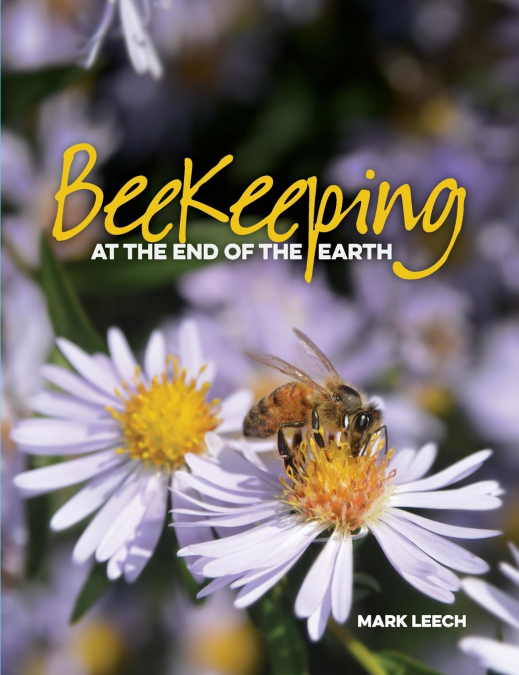
  • Beekeeping At The End Of The Earth
    Mark David Leech
    Beekeeping at the End of the Earth, an essential read for learning about beekeeping in a cool temperate climate with a focus on Tasmania our island home.  One hundred beekeepers one hundred different ways to keep bees.Beekeeping At The End Of The Earth is a practical insight into cool climate beekeeping with a focus on Tasmania, our island home.Richly illustrated with unique di...
    Disponible

    45,16 €

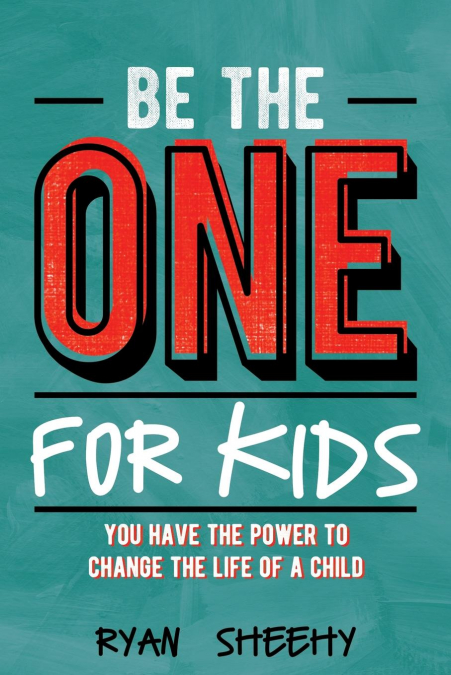
  • Be the One for Kids
    Ryan Sheehy
    One person can make a difference.That person can be you. “I want to show others that one person can make the difference in a child’s life. I want all educators, parents, coaches, and everyone in between to know they have power to Be the One for Kids.” —Ryan Sheehy If you ever feel like you’re all alone or think that no one gets you, just imagine how your students feel. Kids wan...
    Disponible

    27,99 €

  • Handbook of Research on E-Learning Standards and Interoperability
    As the e-learning industry continues to expand and the methods and tools necessary to create and maintain content and infrastructure applications become more complicated, there is an inherent need for these applications to interoperate and exchange data in order to better support the needs of learners and educators. Handbook of Research on E-Learning Standards and Interoperabil...
  • Teaching in the Knowledge Society
    Antonio Cartelli
    ...
  • Enhancing Learning Through Human Computer Interaction
    Elspeth McKay
    ...
  • Learning Objects for Instruction
    Pamela Taylor Northrup
    ...

Otros libros del autor

  • Meeting Basic Learning Needs in the Informal Sector
    M. Singh
    In advancing the vision of adult learning articulated at the International Conference on Adult Education (CONFINTEA V) held in Hamburg in 1997, the UNESCO Institute for Education has been conducting studies on the different areas and dimensions of ’Adult Learning and the Changing World of Work’. One question that has been central to this area is: What...