
Inicio > > Ciencias de la computación > Inteligencia artificial > Mathematical Foundations of Trustworthy AI
Mathematical Foundations of Trustworthy AI

Mathematical Foundations of Trustworthy AI

Aizierjiang Aiersilan

46,08 €
IVA incluido
Disponible
Editorial:
Ezhar Press
Año de edición:
2026
Materia
Inteligencia artificial
ISBN:
9798996081806
46,08 €
IVA incluido
Disponible

Selecciona una librería:

  • Librería Samer Atenea

  • Kálamo Books
  • Librería Elías (Asturias)
  • Librería Kolima (Madrid)
  • Librería Proteo (Málaga)

Mathematical Foundations of Trustworthy AI: Theory, Algorithms, and Engineering Principles offers a systematic, textbook-style treatment of the mathematics behind safe, fair, private, and reliable machine learning. It brings together, under a single cover, the core theoretical results from constrained optimization, statistical learning theory, and differential geometry that underpin robustness, fairness, privacy, explainability, causality, and safety in modern AI systems.The book is organized into five parts and a comprehensive appendix:Part I - Foundations & Theory: notation, the necessity of trust, and statistical learning theory (concentration inequalities, VC dimension, Rademacher complexity, PAC learning, algorithmic stability, double descent).Part II - Robustness, Fairness, Privacy: adversarial attacks (FGSM, PGD, C&W, AutoAttack) and certified defenses via randomized smoothing; group, individual, and causal fairness with impossibility theorems (Kleinberg-Chouldechova); differential privacy with composition, Rényi DP, and DP-SGD accounting.Part III - Interpretability & Causality: Shapley values, LIME, integrated gradients, concept-based XAI; structural causal models, the do-calculus, counterfactuals, front-door adjustment, and algorithmic recourse.Part IV - Distributed Learning & Decision Making: federated learning (FedAvg, FedProx, Byzantine robustness); safe reinforcement learning (CMDPs, control barrier functions, RLHF, DPO); out-of-distribution detection and conformal prediction.Part V - Engineering, Governance, Frontiers: formal verification of neural networks, MLOps for trustworthy AI, AI governance; Lipschitz and monotonic networks, robust statistics, shuffle-model privacy; trustworthy agentic AI and open research directions.Appendices supply mathematical prerequisites, extended proofs, reference Python implementations, evaluation metrics, and a glossary of key terms.Throughout, trust is treated as a quantifiable property rather than a slogan: every informal desideratum is reduced to mathematical objects with explicit guarantees, sample complexities, or impossibility results. Each theorem is paired with a worked example, a Python implementation, or an evaluation protocol, so the chain from theory to deployable algorithm is never left implicit. Each chapter includes worked problems and exercises.Intended for graduate students, researchers, and practitioners who seek precise mathematical statements, rigorous proofs, and concrete examples in the rapidly evolving field of Trustworthy AI.
Artículos relacionados

  • Artificial Cognition Systems
    ...
  • Cross-Disciplinary Applications of Artificial Intelligence and Pattern Recognition
    Vijay Kumar Mago
    The need for intelligent machines in areas such as medical diagnostics, biometric security systems, and image processing motivates researchers to develop and explore new techniques, algorithms, and applications in this evolving field. Cross-Disciplinary Applications of Artificial Intelligence and Pattern Recognition: Advancing Technologies provides a common platform for researc...
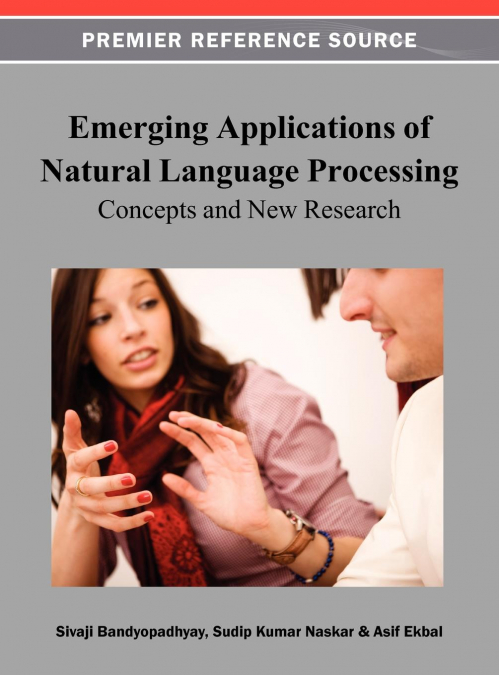
  • Emerging Applications of Natural Language Processing
    Over the last few years, the area of Natural Language Processing has drastically grown in recognition, not only within the research and development community, but also with industry professionals. As NLP continues to be discussed and researched, certain areas continue to grow and mature. As a result, the need for advanced research and information is in high demand. Emerging App...
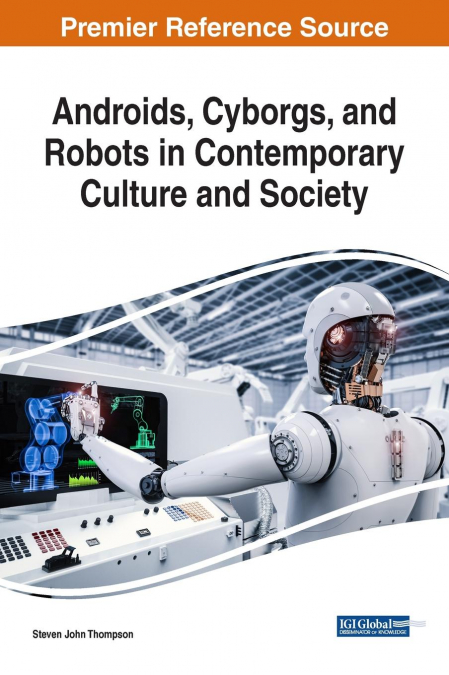
  • Androids, Cyborgs, and Robots in Contemporary Culture and Society
    Steven John Thompson
    Mankind’s dependence on artificial intelligence and robotics is increasing rapidly as technology becomes more advanced. Finding a way to seamlessly intertwine these two worlds will help boost productivity in society and aid in a variety of ways in modern civilization. Androids, Cyborgs, and Robots in Contemporary Culture and Society is an essential scholarly resource that delve...
  • Deep Learning Innovations and Their Convergence With Big Data
    The expansion of digital data has transformed various sectors of business such as healthcare, industrial manufacturing, and transportation. A new way of solving business problems has emerged through the use of machine learning techniques in conjunction with big data analytics. Deep Learning Innovations and Their Convergence With Big Data is a pivotal reference for the latest sc...
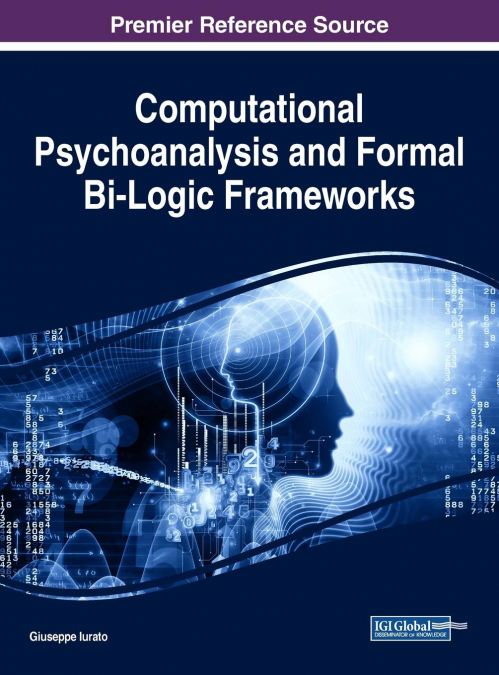
  • Computational Psychoanalysis and Formal Bi-Logic Frameworks
    Giuseppe Iurato
    Computational psychoanalysis is a new field stemming from Freudian psychoanalysis. The new area aims to understand the primary formal structures and running mechanisms of the unconscious while implementing them into computer sciences. Computational Psychoanalysis and Formal Bi-Logic Frameworks provides emerging information on this new field which uses psychoanalysis and the unc...