
Match Game 101

Match Game 101

Match Game 101

A. Ashley Hoff

33,78 €
IVA incluido
Consulta disponibilidad
Editorial:
WHW Press
Año de edición:
2019
Materia
Television
ISBN:
9780990880028

Selecciona una librería:

  • Librería Samer Atenea
  • Librería Aciertas (Toledo)
  • Kálamo Books
  • Librería Perelló (Valencia)
  • Librería Elías (Asturias)
  • Donde los libros
  • Librería Kolima (Madrid)
  • Librería Proteo (Málaga)

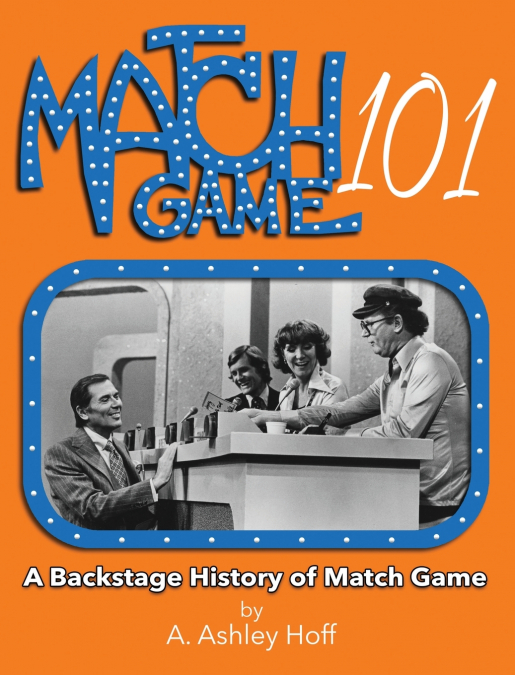
An icon of an era, Match Game had everything: Stars! Prizes! Orange shag carpeting!      The premise was simple: as the host read off a racy fill-in-the-blank statement, two contestants competed to match answers with a panel of six celebrities. But the score was secondary to the banter between the panelists and host. The modern-day equivalent to lunch at the Algonquin Round Table, Match Game has run on American television in six separate incarnations (thus far) beginning on NBC in 1962 and was successfully remade abroad (in Australia and the U.K. the format proved as popular as in the U.S.).      But it was the second U.S. version that proved most popular with American audiences. In this best-known version of Match Game (which ran nine years beginning in 1973) host Gene Rayburn played ringmaster to a circus full of celebrity panelists who tried to match contestants' answers to naughty questions written by a team of comedy writers. While other game shows focused on intellectual stimulation and physical challenges, watching Match Game in the seventies was like being invited to the hottest cocktail party in town. The set was shag-adelic, the humor was cutting-edge, and the celebrity guest panel smoked, bickered and bantered like they were at a party in a friend's living room, rather than in a TV studio.      But it wasn't called the 'Match' Game for nothing, so the panel had to judge contestants' likeliest answers for themselves—knowing when to answer with wit, and when to answer like a nitwit.      Hugely popular in the U.S., it proved just as durable abroad, spawning hit spin-offs in both the U.K. and Australia. When reruns of Match Game  began airing daily on GSN (the Game Show Network) they inspired a growing cult among couch potatoes of all ages.  3
Artículos relacionados

  • COWBOY BEBOP
    Jeremy Mark Robinson
    C O W B O Y  B E B O P THE ANIME TV SERIES AND MOVIE by Jeremy Mark Robinson   Sex + drugs + rock music + comedy + Westerns + crime + drifter lifestyles + space battles + bars + casinos + fashion – and more music – what’s not to like in Cowboy Bebop?! – and how it wittily and cleverly mixes all of those elements, and many more.   This book focusses on the celebrated, hugely ent...
  • Women Pulitzer Playwrights
    Carolyn Casey Craig
    In the first century of the coveted Pulitzer Prizes, only 11 women have won the prize for drama: Zona Gale (1921), Susan Glaspell (1931), Zoe Akins (1935), Mary Coyle Chase (1945), Ketti Frings (1958), Beth Henley (1981), Marsha Norma (1983), Wendy Wasserstein (1989), Paula Vogel (1998), Margaret Edson (1999), and Suzan-Lori Parks (2002). This book is about them and their ...
    Disponible

    56,97 €

  • This Is a Thriller
    Alan Warren
    The late 1950s and early 1960s were the golden years of horror television. Anthology series such as Way Out and Great Ghost Tales, along with certain episodes of Twilight Zone and The Alfred Hitchcock Hour, were among the shows that consistently frightened a generation of television viewers. And perhaps the best of them all was Thriller, hosted by Boris Karloff. In Thrille...
    Disponible

    42,90 €

  • Staging Nationalism
    Kiki Gounaridou
    When a nation wants to reconnect with a sense of national identity, its cultural celebrations, including its theatre, are often tinged with nostalgia for a cultural high point in its history. Leaders often try to create a 'neo-classical' cultural identity. Artificially returning to an imagined pinnacle, however, can fail to take into account new aspects of national identity,...
    Disponible

    57,40 €

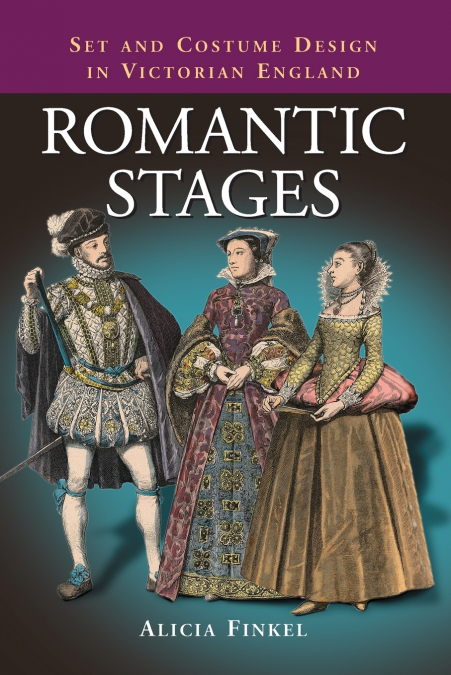
  • Romantic Stages
    Alicia Finkel
    Though Romantic elements in stage design are often thought to have ended with the advent of the Victorian era, they in fact persisted into the second half of the nineteenth century. Romantic stages were used in the productions of many of the most prominent actor-managers of the period, including Madame Vestris, Charles Kean, Wilson Barrett, Henry Irving and Herbert Beerbohm ...
    Disponible

    57,50 €

  • The HATERS’ Guide to New Who
    Mike Sivier
    '’The stories don’t work, you know.’'That’s all it took to set me off. Someone I knew - not a friend - an acquaintance had the nerve, the temerity, the-the-the audacity to tell me that the stories told in each episode of my beloved Doctor Who since the show returned to our TV screens in 2005 ... don’t stand up to scrutiny.'That is how Mike Sivier embarked on a quest to cast a c...
    Disponible

    14,46 €