 Librería Samer Atenea
 Kálamo Books
 Librería Elías (Asturias)
 Librería Kolima (Madrid)
 Librería Proteo (Málaga)
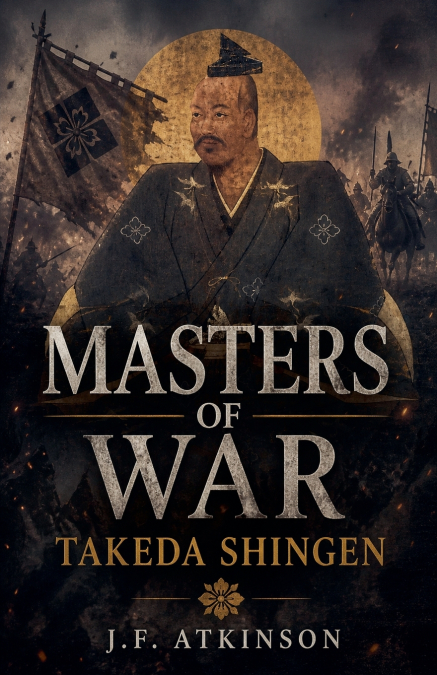
MASTERS OF WAR - TAKEDA SHINGENTiger of KaiDecember 1, 1521 - May 13, 1573 He built an empire from a mountain prison. He forged the finest army in Japan from the poorest province. He came within a season’s march of rewriting history. Then he died and the world changed without him. In the chaos of sixteenth-century Japan, when the Ashikaga shogunate had collapsed and the country’s great lords fought one another for dominance, one commander rose from the most constrained starting position of any major Sengoku daimyō to become the man that Oda Nobunaga, the future unifier of Japan, feared above all others. That man was Takeda Shingen, lord of Kai Province and the self-styled Tiger of Kai, and his story is one of the most remarkable in the history of military command. Born into a landlocked mountain province of limited resources and no coastal access, Shingen seized power from his own father at the age of nineteen in a bloodless coup of such political precision that it announced, to anyone paying attention, the arrival of an extraordinary intelligence. What followed across the next thirty-two years was a sustained demonstration of that intelligence across every dimension of military and political excellence: the systematic conquest of Shinano Province; five legendary battles against his greatest rival, Uesugi Kenshin, on the plain of Kawanakajima; the acquisition of Suruga and its precious coastline; and finally, in the autumn of 1572, the greatest campaign of his career, a three-column march westward that broke the Tokugawa field force at Mikatagahara in an afternoon and opened the road to Kyoto itself. 'When I heard of Shingen’s death, I wept. For I had lost the greatest general in all of Japan, a man whose equal I shall never face again.'- Attributed to Uesugi Kenshin, 1573 But Shingen was never simply a warrior. He was a statesman of the first order, a lawgiver whose legal codes remain among the most sophisticated produced by any Sengoku daimyō, a civil engineer whose flood-control embankments still stand along the Fuji River today, a ruler whose genuine care for his people’s welfare was both morally serious and strategically brilliant. In the Tiger of Kai, the sword and the pen were never in competition. Each made the other stronger.