 Librería Samer Atenea
 Kálamo Books
 Librería Elías (Asturias)
 Librería Kolima (Madrid)
 Librería Proteo (Málaga)
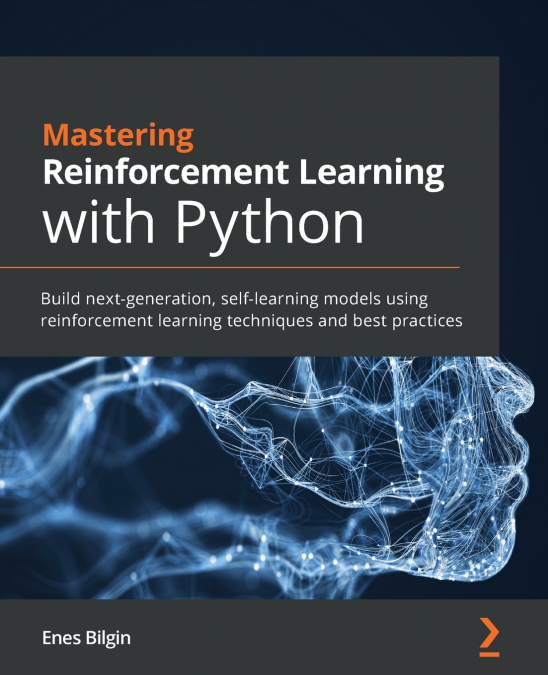
Get hands-on experience in creating state-of-the-art reinforcement learning agents using TensorFlow and RLlib to solve complex real-world business and industry problems with the help of expert tips and best practicesKey Features:Understand how large-scale state-of-the-art RL algorithms and approaches workApply RL to solve complex problems in marketing, robotics, supply chain, finance, cybersecurity, and moreExplore tips and best practices from experts that will enable you to overcome real-world RL challengesBook Description:Reinforcement learning (RL) is a field of artificial intelligence (AI) used for creating self-learning autonomous agents. Building on a strong theoretical foundation, this book takes a practical approach and uses examples inspired by real-world industry problems to teach you about state-of-the-art RL.Starting with bandit problems, Markov decision processes, and dynamic programming, the book provides an in-depth review of the classical RL techniques, such as Monte Carlo methods and temporal-difference learning. After that, you will learn about deep Q-learning, policy gradient algorithms, actor-critic methods, model-based methods, and multi-agent reinforcement learning. Then, you’ll be introduced to some of the key approaches behind the most successful RL implementations, such as domain randomization and curiosity-driven learning.As you advance, you’ll explore many novel algorithms with advanced implementations using modern Python libraries such as TensorFlow and Ray’s RLlib package. You’ll also find out how to implement RL in areas such as robotics, supply chain management, marketing, finance, smart cities, and cybersecurity while assessing the trade-offs between different approaches and avoiding common pitfalls.By the end of this book, you’ll have mastered how to train and deploy your own RL agents for solving RL problems.What You Will Learn:Model and solve complex sequential decision-making problems using RLDevelop a solid understanding of how state-of-the-art RL methods workUse Python and TensorFlow to code RL algorithms from scratchParallelize and scale up your RL implementations using Ray’s RLlib packageGet in-depth knowledge of a wide variety of RL topicsUnderstand the trade-offs between different RL approachesDiscover and address the challenges of implementing RL in the real worldWho This Book Is For:This book is for expert machine learning practitioners and researchers looking to focus on hands-on reinforcement learning with Python by implementing advanced deep reinforcement learning concepts in real-world projects. Reinforcement learning experts who want to advance their knowledge to tackle large-scale and complex sequential decision-making problems will also find this book useful. Working knowledge of Python programming and deep learning along with prior experience in reinforcement learning is required.