Mapping the Afterlife

Mapping the Afterlife

Emma Gee

173,27 €
IVA incluido
Disponible
Editorial:
Oxford University Press
Año de edición:
2020
Materia
Filosofía occidental: antigua, hasta c. 500
ISBN:
9780190670481
173,27 €
IVA incluido
Disponible

Selecciona una librería:

  • Librería Samer Atenea
  • Librería Aciertas (Toledo)
  • Kálamo Books
  • Librería Perelló (Valencia)
  • Librería Elías (Asturias)
  • Donde los libros
  • Librería Kolima (Madrid)
  • Librería Proteo (Málaga)

There are very few accounts of the afterlife across the period from Homer to Dante. Most traditional studies approach the classical afterlife from the point of view of its 'evolution' towards the Christian afterlife. This book tries to do something different: to explore afterlife narratives in spatial terms and to situate this tradition within the ambit of a fundamental need in human psychology for the synthesis of soul (or 'self') and universe. Drawing on the works of Homer, Plato, Cicero, Virgil, and Dante, among others, as well as on modern works on psychology, cartography, and music theory, Mapping the Afterlife argues that the topography of the afterlife in the Greek and Roman tradition, and in Dante, reflects the state of 'scientific' knowledge at the time of the various contexts in which we find it. The book posits that there is a dominant spatial idiom in afterlife landscapes, a 'journey-vision paradigm'--the horizontal journey of the soul across the afterlife landscape, and a synoptic vision of the universe. Many scholars have argued that the vision of the universe is out of place in the underworld landscape. However, looking across the entire tradition, we find that afterlife landscapes, almost without exception, contain these two kinds of space in one form or another. This double vision of space brings the underworld, as the landscape of the soul, into contact with the 'scientific' universe; and brings humanity into line with the cosmos.
Artículos relacionados

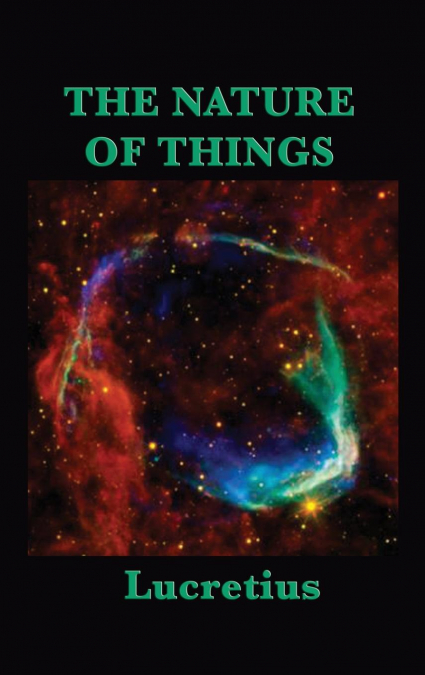
  • The Nature of Things
    Lucretius Lucretius
    De rerum natura (On the Nature of Things) is a 1st century BC didactic poem by the Roman poet and philosopher Lucretius with the goal of explaining Epicurean philosophy to a Roman audience. Lucretius presents the principles of atomism; the nature of the mind and soul; explanations of sensation and thought; the development of the world and its phenomena; and explains a variety o...
    Disponible

    36,76 €

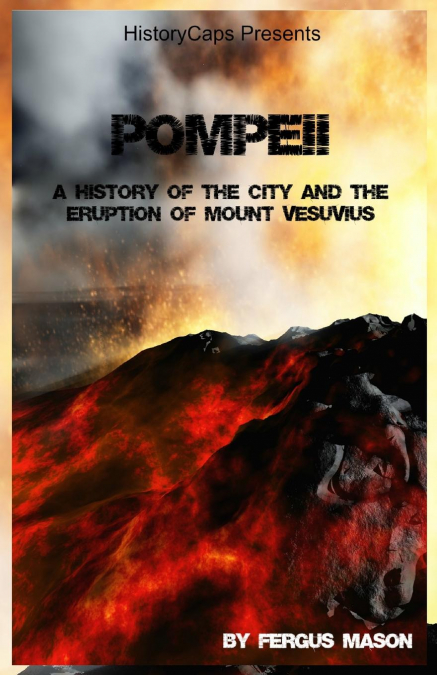
  • Pompeii
    Fergus Mason
    Pompeii was one of most advanced cities of its time; it had a complex water system, gymnasium, and an amphitheater. Despite it's advancements, there was one thing it wasn't ready for: Mount Vesuvius—the volcano that led to its ultimate doom.  The 79 AD eruption of Mount Vesuvius was one of the worst disasters in all of European history. In a near instant, over 15,000 p...
    Disponible

    10,36 €

  • Middle Platonism and Neoplatonism, Volume 1
    Stephen Gersh
    'It is generally agreed that those types of philosophy that are loosely called ’Platonic’ and ’Neoplatonic’ played a crucial role in the history of European culture during the centuries between antiquity and the Renaissance. However, until now no scholar has attempted to describe the evolution of these forms of thought in a single comprehensive academic study.' So writes Stephe...
    Disponible

    179,17 €

  • Middle Platonism and Neoplatonism, Volume 2
    Stephen Gersh
    It is generally agreed that those types of philosophy that are loosely called 'Platonic' and 'Neoplatonic' played a crucial role in the history of European culture during the centuries between antiquity and the Middle Ages. However, until now no scholar has attempted to describe the evolution of these forms of thought in a single comprehensive academic study. Middle Platonism a...
    Disponible

    215,18 €

  • Porphyry’s Commentary on Ptolemy’s Harmonics
    Andrew Barker
    ...
    Disponible

    77,17 €

  • The Roots of Platonism
    John Dillon
    ...
    Disponible

    25,29 €

Otros libros del autor