 Librería Samer Atenea
 Kálamo Books
 Librería Elías (Asturias)
 Librería Kolima (Madrid)
 Librería Proteo (Málaga)
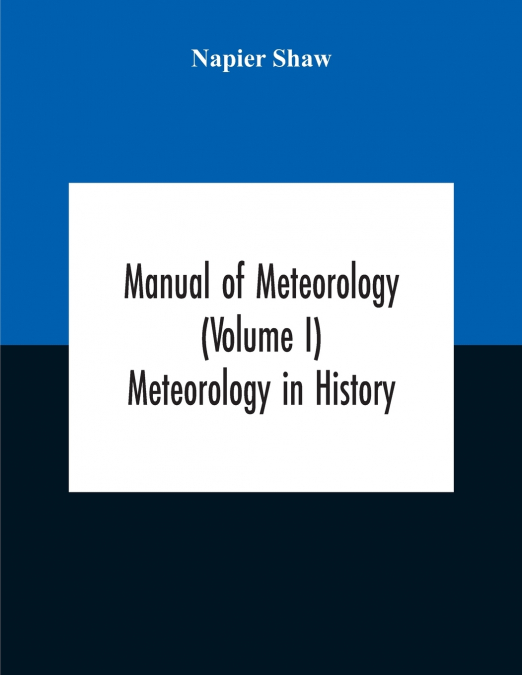
Napier Shaw’s Manual of Meteorology (Volume I), Meteorology in History, maps the origins of systematic weather study. A study of past skies. Part historical meteorology guide, part rigorous scientific reference book, this volume gathers the observations, debates and methods that shaped the field during early twentieth century science. Readers encounter a weather history compendium that traces the evolution of meteorology from simple observational networks to the development of theoretical frameworks, and a precise atmospheric phenomena study that rewards careful reading. Shaw balances technical exposition with lucid prose, so the book serves both as an introductory frame for the curious and a substantive reference within an academic textbook collection. Its methodical summaries, discussion of instruments and attention to context make it valuable to students, researchers and historians tracing the climate science origins of modern practice.Republished by Alpha Editions in a careful modern edition, this volume preserves the spirit of the original while making it effortless to enjoy today - a heritage title prepared for readers and collectors alike. Integral to British scientific history, the Shaw meteorology volume supplies crucial perspective on the evolution of meteorology and the institutional life of early meteorological science. Equally at home on a scholar’s shelf or a collector’s display, this edition honours the original’s rigour while making reading straightforward. As a historical meteorology guide it clarifies how institutions, instruments and ideas converged, providing context still useful to anyone studying the climate science origins of contemporary methods. Its clear organisation suits classroom use and guided reading; libraries and academic collections will find it a natural companion to other classic meteorology texts. Because Shaw foregrounds evidence and method, researchers and historians gain a direct window into how the discipline organised data and argued for theory in an era of formation. Accessible to curious readers yet retaining scholarly depth, it appeals both to casual readers drawn to scientific story and to collectors seeking classic meteorology texts.