Inicio > Matemáticas y ciencia > Química > Química orgánica > MAKING AND BREAKING SYMMETRY IN CHEMISTRY
MAKING AND BREAKING SYMMETRY IN CHEMISTRY

MAKING AND BREAKING SYMMETRY IN CHEMISTRY

MCGLINCHEY MICHAEL J / MICHAEL J MCGLINCHEY

130,33 €
IVA incluido
Consulta disponibilidad
Editorial:
World Scientific Publishing Co Pte Ltd
Año de edición:
2022
Materia
Química orgánica
ISBN:
9789811249655

Selecciona una librería:

  • Librería Samer Atenea
  • Librería Aciertas (Toledo)
  • Kálamo Books
  • Librería Perelló (Valencia)
  • Librería Elías (Asturias)
  • Donde los libros
  • Librería Kolima (Madrid)
  • Librería Proteo (Málaga)

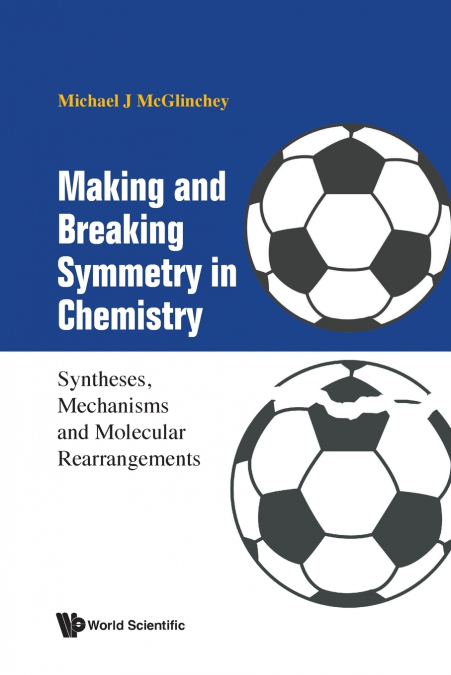
The elucidation of reaction mechanisms generally requires the carefully designed control of molecular symmetry to distinguish between the many possible reaction pathways. Making and Breaking Symmetry in Chemistry emphasises the crucial role played by symmetry in modern synthetic chemistry. After discussion of a number of famous classical experiments, the advances brought about by the introduction of new techniques, in particular NMR spectroscopy, are exemplified in numerous cases taken from the recent literature. Experimental verification of many of the predictions made in Woodward and Hoffmann’s explication of the Conservation of Orbital Symmetry are described. Applications that involve the breaking of molecular symmetry to resolve these and other mechanistic problems in organic, inorganic and organometallic chemistry are presented in the first sections of the book, together with many examples of the detection of hitherto hidden rearrangement processes.Subsequently, under the aegis of making molecular symmetry, examples of the preparation of highly symmetrical molecules found in the organic, organometallic or inorganic domains are discussed. These include Platonic hydrocarbons or boranes, tetrahedranes, cubanes, prismanes, dodecahedrane, fullerene fragments such as corannulene, sumanene or semibuckminsterfullerene, and other systems of unusual geometries or bonding characteristics (Möbius strips, molecular brakes and gears, Chauvin’s carbomers, Fitjer’s rotanes, persubstituted rings, metal-metal multiple bonds, etc.). The text also contains vignettes of many of the scientists who made these major advances, as well as short sections that briefly summarise key features of important topics that underpin the more descriptive material. These include some aspects of chirality, NMR spectroscopy, and the use of isotopic substitution to break molecular symmetry. A brief appendix on point group symmetry and nomenclature is also helpfully provided.


Artículos relacionados

  • Recycled Polymers
    Didier Perrin
    The efficient ecodesign of secondary raw materials from recycled multiphase polymer systems is performed through the study of various things, such as:The compatibility of mixtures of recycled polymers where work on knowledge of the miscibility of mixtures depends on the different rates and the nature of the constituents;The aging of recycled polymers in terms of the structuring...
  • Advanced Nanoscale Materials for Thermoelectric Applications
    This Special Issue covers preparations, measurements, devices, and applications based on thermoelectric nanomaterials and summarizes the latest developments towards highly efficient thermoelectric nanomaterials and thermoelectric devices. ...
  • Repair and Strengthening of Existing Reinforced Concrete Structures
    Andreas Lampropoulos
    It is crucial that we strengthen existing structures worldwide, especially in earthquake-prone areas. Recent earthquakes have highlighted the inadequacy of many existing structures, which have been damaged from previous powerful earthquakes and have been designed without code provisions or according to old code provisions that are now obsolete. Furthermore, the majority of exis...
  • Sol-Gel Technology Applied to Materials Science
    Aleksej Zarkov
    Rapid advances in technologies around the globe necessitate the development of new materials, nanostructures, and multicomponent composites with specific chemical and physical properties that can meet the requirements of modern technologies. Using appropriate synthetic approaches is crucial for the preparation of inorganic materials with designed microstructure and properties. ...
  • Functional Polymer Composites
    Functional polymer composites are showing increasing potential as materials in chemistry and materials science. Polymer composites, including nanocomposites, are made via the incorporation of fillers in polymer matrices and offer many advantages. The properties of polymer composites are further improved via the surface modification of fillers or the matrix phase. Currently, the...
  • Feature Papers in Section Biosensors 2023
    Evgeny Katz
    This reprint, based on the Special Issue, provides a general overview of different biosensors, briefly explaining the general approaches to identifying them, their construction, and their performance. A discussion concerning how the required components of biosensors are combined to perform analytical work is presented. Different signal-transducing mechanisms are discussed, part...

Otros libros del autor

  • MAKING AND BREAKING SYMMETRY IN CHEMISTRY
    MCGLINCHEY MICHAEL J / MICHAEL J MCGLINCHEY
    The elucidation of reaction mechanisms generally requires the carefully designed control of molecular symmetry to distinguish between the many possible reaction pathways. Making and Breaking Symmetry in Chemistry emphasises the crucial role played by symmetry in modern synthetic chemistry. After discussion of a number of famous classical experiments, the advances brought about ...
    Disponible

    72,89 €