
Inicio > Matemáticas y ciencia > Ciencia: cuestiones generales > Historia de la ciencia > Logical Structures for Representation of Knowledge and Uncertainty
Logical Structures for Representation of Knowledge and Uncertainty

Logical Structures for Representation of Knowledge and Uncertainty

Ellen Hisdal

133,19 €
IVA incluido
Disponible
Editorial:
Springer Nature B.V.
Año de edición:
2010
Materia
Historia de la ciencia
ISBN:
9783790824582
133,19 €
IVA incluido
Disponible

Selecciona una librería:

  • Librería Samer Atenea
  • Librería Aciertas (Toledo)
  • Kálamo Books
  • Librería Perelló (Valencia)
  • Librería Elías (Asturias)
  • Donde los libros
  • Librería Kolima (Madrid)
  • Librería Proteo (Málaga)

It is the business of science not to create laws, but to discover them. We do not originate the constitution of our own minds, greatly as it may be in our power to modify their character. And as the laws of the human intellect do not depend upon our will, so the forms of science, of (1. 1) which they constitute the basis, are in all essential regards independent of individual choice. George Boole [10, p. llJ 1. 1 Comparison with Traditional Logic The logic of this book is a probability logic built on top of a yes-no or 2-valued logic. It is divided into two parts, part I: BP Logic, and part II: M Logic. ’BP’ stands for ’Bayes Postulate’. This postulate says that in the absence of knowl­ edge concerning a probability distribution over a universe or space one should assume 1 a uniform distribution. 2 The M logic of part II does not make use of Bayes postulate or of any other postulates or axioms. It relies exclusively on purely deductive reasoning following from the definition of probabilities. The M logic goes an important step further than the BP logic in that it can distinguish between certain types of information supply sentences which have the same representation in the BP logic as well as in traditional first order logic, although they clearly have different meanings (see example 6. 1. 2; also comments to the Paris-Rome problem of eqs. (1. 8), (1. 9) below).
Artículos relacionados

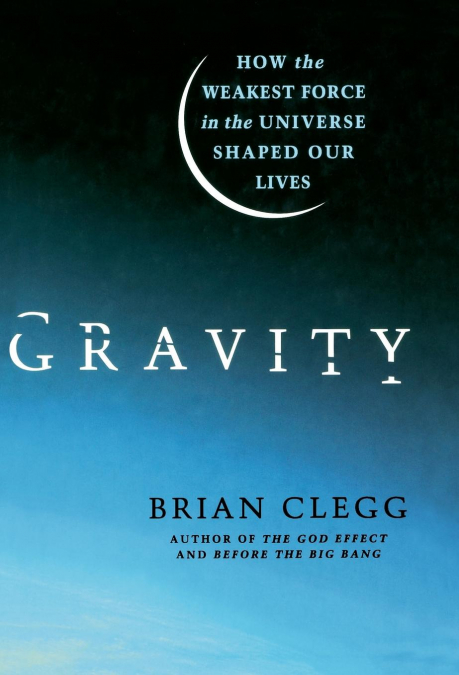
  • GRAVITY
    BRIAN CLEGG
    ...
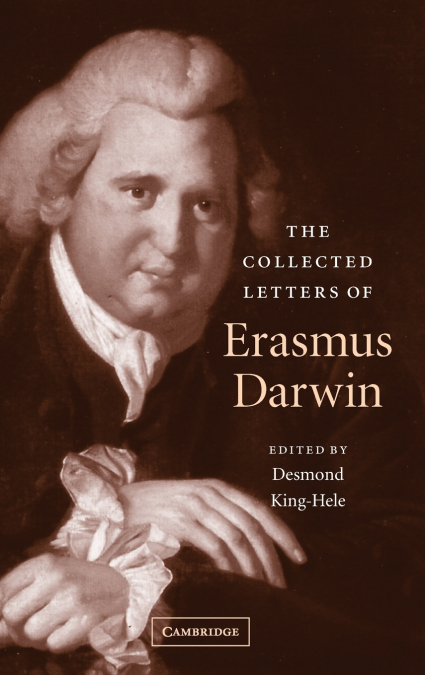
  • Collected Letters of Erasmus Darwin
    Erasmus Darwin
    ...
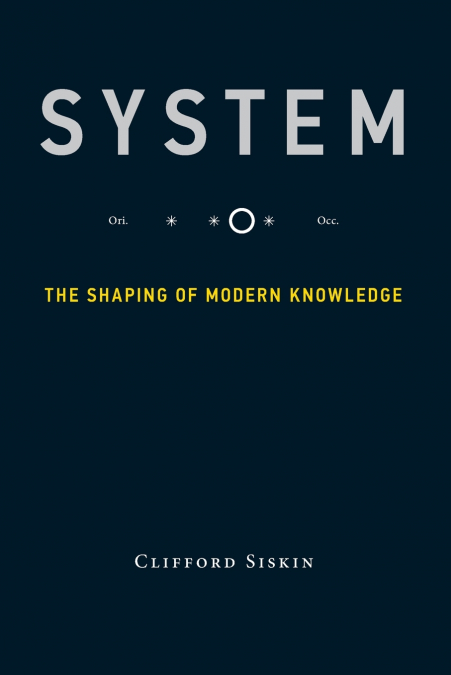
  • System
    Clifford Siskin
    ...
    Disponible

    23,67 €

  • The Science of Roman History
    Walter Scheidel
    How the latest cutting-edge science offers a fuller picture of life in Rome and antiquityThis groundbreaking book provides the first comprehensive look at how the latest advances in the sciences are transforming our understanding of ancient Roman history. Walter Scheidel brings together leading historians, anthropologists, and geneticists at the cutting edge of their fields, wh...
    Disponible

    36,21 €

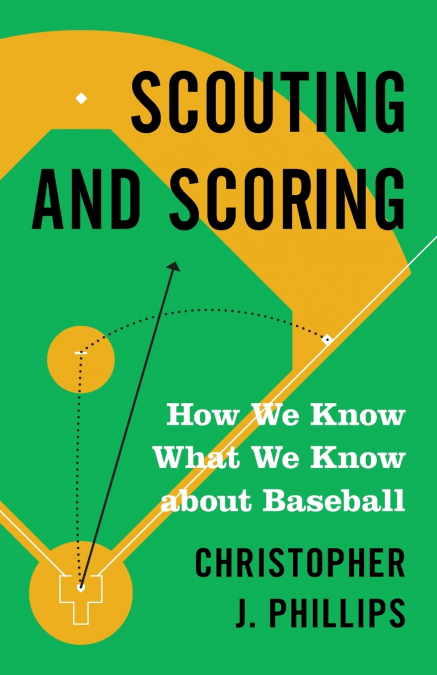
  • Scouting and Scoring
    Christopher J. Phillips
    An in-depth look at the intersection of judgment and statistics in baseballScouting and scoring are considered fundamentally different ways of ascertaining value in baseball. Scouting seems to rely on experience and intuition, scoring on performance metrics and statistics. In Scouting and Scoring, Christopher Phillips rejects these simplistic divisions. He shows how both scouts...
    Disponible

    26,38 €

  • Osservazioni intorno alle vipere
    Francesco Redi
    Redi, con l’aiuto di una penna affilata, rompe gli schemi del suo tempo, sfidando le tradizione aristotelica e ponendo delle solide basi per la nascita della biologia sperimentale. In un connubio di rigore scientifico e eloquenza poetica, l’autore ci conduce attraverso un intricato labirinto di miti e leggende, illuminando la verità con la luce della ragione.  ...
    Disponible

    20,42 €