 Librería Samer Atenea
 Kálamo Books
 Librería Elías (Asturias)
 Librería Kolima (Madrid)
 Librería Proteo (Málaga)
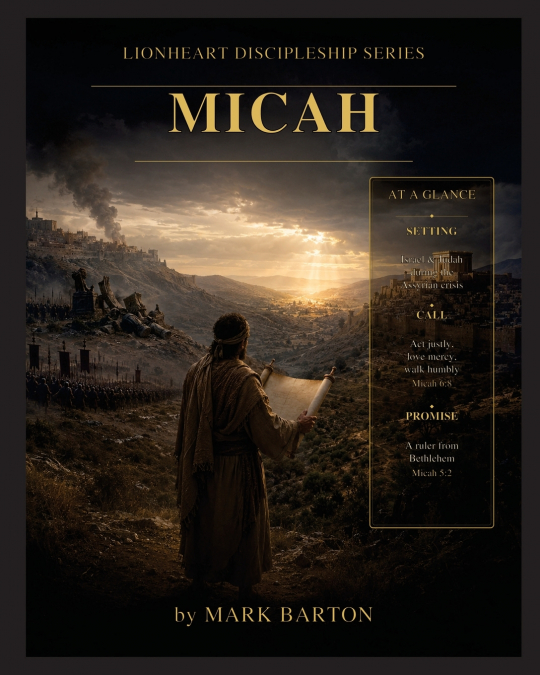
The book of Micah is a prophetic proclamation of both God’s righteous judgment and His steadfast mercy, delivered during the reigns of Jotham, Ahaz, and Hezekiah of Judah, when Assyria threatened the region and moral and spiritual corruption had spread through Israel and Judah. Micah, a prophet from the rural town of Moresheth, speaks with particular concern for ordinary people who were being exploited by powerful landowners, corrupt rulers, dishonest merchants, false prophets, and unfaithful religious leaders. His message moves through three broad cycles of judgment and hope. In chapters 1-2, the LORD comes as a witness against His covenant people: Samaria will fall because of idolatry, and judgment will also approach Jerusalem. Micah does not announce this coldly; he laments, weeps, and mourns because the coming devastation will reach the towns and families of his homeland. He condemns those who devise evil, seize fields and houses, and deprive families of their inheritance, yet the section closes with God’s promise to gather a remnant and lead them like a shepherd. In chapters 3-5, Micah exposes leaders who distort justice, prophets who tailor their messages for personal gain, and priests who teach for profit while presuming that God’s presence guarantees their safety. Because covenant privilege cannot excuse persistent rebellion, Jerusalem and the temple mount will be devastated. Nevertheless, judgment is not God’s final word. Micah looks beyond ruin to a restored Zion, where the LORD will reign, teach the nations His ways, establish justice, and bring peace. From Bethlehem Ephrathah, an apparently insignificant town, will come the promised ruler whose greatness will reach to the ends of the earth and who will shepherd His people in the strength of the LORD-a prophecy Christians understand as fulfilled in Jesus Christ. In chapters 6-7, God brings a covenant lawsuit against His people, reminding them of His saving faithfulness from the exodus onward. Their problem is not a lack of religious activity but hearts and lives estranged from Him. God does not seek extravagant offerings as substitutes for obedience; He has shown His people what is good: 'to act justly and to love mercy and to walk humbly with your God' (Micah 6:8, NIV). Micah then grieves over a society in which violence, deception, corruption, and betrayal have damaged even the closest relationships. Yet he refuses despair: 'But as for me, I watch in hope for the LORD' (7:7). His relationship with God is revealed through courageous obedience, moral clarity, grief over sin and suffering, humble dependence, and confident hope. Micah does not stand above the people as though untouched by their fate; he identifies with their sorrow, confesses the reality of divine discipline, and trusts God to hear, defend, forgive, and restore. The book ends not with human faithfulness, but with God’s incomparable character: He pardons sin, shows compassion, does not remain angry forever, casts sins into the depths of the sea, and remains faithful to the covenant promises given to Abraham and Jacob. Micah therefore presents judgment as the holy response of a just God to idolatry, oppression, and covenant unfaithfulness, while presenting hope as the gracious work of that same God, who preserves a remnant, provides a Shepherd-King, and delights in steadfast love. Its enduring call is not merely to practice outward religion, but to return to the LORD with lives marked by justice, mercy, humility, repentance, and trusting faith.