 Librería Samer Atenea
 Kálamo Books
 Librería Elías (Asturias)
 Librería Kolima (Madrid)
 Librería Proteo (Málaga)
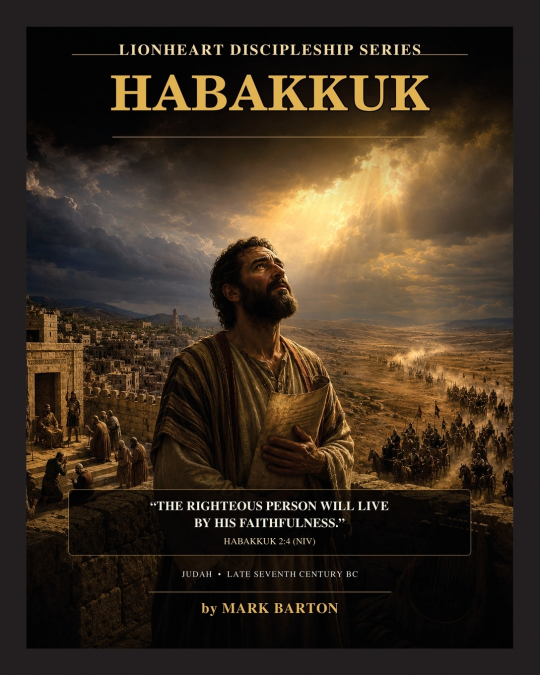
Habakkuk is a prophetic dialogue about trusting God when His ways seem confusing or frightening. Unlike prophets who primarily addressed the people, Habakkuk speaks first to God, bringing Him Judah’s pain and his own questions. The book shows that honest questions, when joined with humility and faith, can deepen a believer’s relationship with God. Habakkuk likely ministered in Judah late in the seventh century BC, possibly during King Jehoiakim’s reign. Assyria was collapsing, Egypt remained powerful, and Babylon was becoming the dominant empire. Judah was marked by violence, injustice, spiritual unfaithfulness, and corrupt leadership. God’s law appeared ineffective because the wicked distorted justice and the righteous suffered. Babylon would invade Judah; Jerusalem and the temple would ultimately be destroyed in 586 BC, and many Judeans would be carried into exile.In chapter 1, Habakkuk asks how long God will tolerate violence and wrongdoing. He is distressed not only by evil but by God’s apparent silence. God replies that He is already acting by raising up the Babylonians, or Chaldeans, to judge Judah. This answer intensifies Habakkuk’s struggle: Babylon is even more ruthless than Judah. How can the holy God use a cruel nation to punish a less wicked one? Habakkuk does not abandon God. He appeals to God’s eternal nature, holiness, justice, and covenant faithfulness, bringing his confusion directly to the One he still trusts.In chapter 2, Habakkuk takes his place like a watchman and waits for God’s answer. God tells him to write the revelation clearly and assures him that it will be fulfilled at the appointed time. Though it seems delayed, it will certainly come. The proud depend upon themselves, but 'the righteous person will live by his faithfulness' (Habakkuk 2:4). God’s people must continue trusting and obeying Him even when His plan is not visible. The New Testament later builds upon this truth about life by faith.God then announces five woes against Babylon. Its greed, exploitation, bloodshed, humiliation, violence, and idolatry will be judged. Babylon may serve God’s purpose, but that does not excuse its cruelty. God remains sovereign over every nation, and no empire is beyond His justice. Human power will fall, but the earth will one day be filled with the knowledge of the Lord’s glory. All the earth must therefore stand in reverent silence before Him.Chapter 3 records Habakkuk’s prayerful response. Remembering God’s mighty acts in Israel’s history, he asks the Lord to renew His work and, in wrath, remember mercy. He poetically portrays God coming in majesty to judge evil and save His people. Habakkuk trembles because severe suffering is approaching, yet he chooses to wait patiently for God to act.The book concludes with a remarkable confession of faith. Even if the fig tree does not bud, crops fail, and the flocks and herds disappear--a picture of total economic devastation--Habakkuk will still rejoice in the Lord, 'God my Savior.' His joy rests not upon favorable circumstances but upon God’s unchanging character. The Lord is his strength and will enable him to walk securely through dangerous places. Habakkuk’s relationship with God moves from anguished questioning, to attentive waiting, to courageous worship. God does not condemn him for asking sincere questions; He corrects Habakkuk’s limited perspective and calls him to trust. Habakkuk is not given an explanation for every sorrow. Instead, he receives a clearer vision of God as holy, sovereign, just, merciful, and faithful. Habakkuk assures suffering believers that God’s silence does not mean His absence, His delay does not mean indifference, and His control of history never compromises His righteousness. Biblical faith does not deny grief or pretend that loss is painless. It remembers who God is and continues trusting Him when visible circumstances offer no reason for hope.