
Inicio > > Ciencias de la computación > Inteligencia artificial > L’intelligenza artificiale ruberà il lavoro agli insegnanti? Metodologie e risorse per resistere umanamente
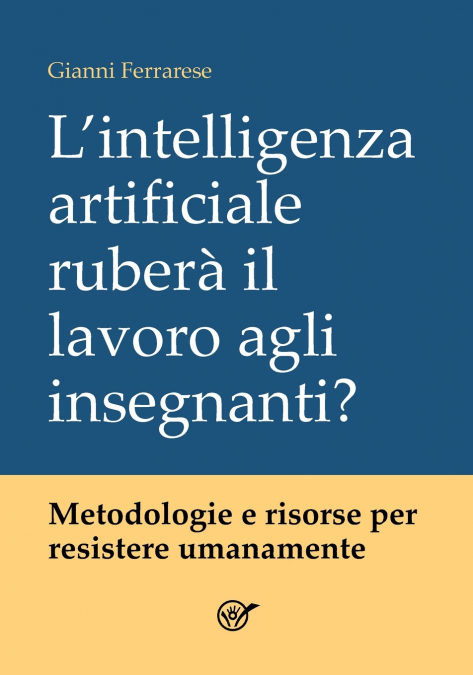
L’intelligenza artificiale ruberà il lavoro agli insegnanti? Metodologie e risorse per resistere umanamente

L’intelligenza artificiale ruberà il lavoro agli insegnanti? Metodologie e risorse per resistere umanamente

Gianni Ferrarese

37,76 €
IVA incluido
Disponible
Editorial:
Borè srl
Año de edición:
2026
Materia
Inteligencia artificial
ISBN:
9791224088899
37,76 €
IVA incluido
Disponible

Selecciona una librería:

  • Librería Samer Atenea

  • Kálamo Books
  • Librería Elías (Asturias)
  • Librería Kolima (Madrid)
  • Librería Proteo (Málaga)

Può un algoritmo sostituire un docente? La domanda non è fantascientifica: è già sul tavolo di ogni istituzione scolastica. Questo volume risponde con una tesi precisa: l’insegnamento umano conserva una propria aura — nel senso benjaminiano di presenza irripetibile — ma questa va consapevolmente costruita e difesa in un ecosistema che spinge verso standardizzazione e automazione.Partendo dalla filosofia della tecnica di Walter Benjamin, dal framework europeo DigCompEdu e dalla pedagogia critica, il libro affronta i temi che attraversano oggi ogni aula: l’uso critico dell’AI generativa, la valutazione autentica nell’era del testo simulato, la personalizzazione algoritmica tra cura e controllo, il curriculum nascosto delle piattaforme, l’etica della sorveglianza digitale. Al centro, una figura: il docente aumentato, che integra l’AI senza esserne sostituito.Articolato in diciannove capitoli e cinque parti, alterna riflessione teorica e sezioni operative, completate da un apparato online con glossario, bibliografia ragionata e schede DigCompEdu. Un libro per docenti, formatori e ricercatori: non un manuale di istruzioni, ma un esercizio di pensiero critico su ciò che vale la pena dife
Artículos relacionados

  • Artificial Cognition Systems
    ...
  • Cross-Disciplinary Applications of Artificial Intelligence and Pattern Recognition
    Vijay Kumar Mago
    The need for intelligent machines in areas such as medical diagnostics, biometric security systems, and image processing motivates researchers to develop and explore new techniques, algorithms, and applications in this evolving field. Cross-Disciplinary Applications of Artificial Intelligence and Pattern Recognition: Advancing Technologies provides a common platform for researc...
  • Emerging Applications of Natural Language Processing
    Over the last few years, the area of Natural Language Processing has drastically grown in recognition, not only within the research and development community, but also with industry professionals. As NLP continues to be discussed and researched, certain areas continue to grow and mature. As a result, the need for advanced research and information is in high demand. Emerging App...
  • Androids, Cyborgs, and Robots in Contemporary Culture and Society
    Steven John Thompson
    Mankind’s dependence on artificial intelligence and robotics is increasing rapidly as technology becomes more advanced. Finding a way to seamlessly intertwine these two worlds will help boost productivity in society and aid in a variety of ways in modern civilization. Androids, Cyborgs, and Robots in Contemporary Culture and Society is an essential scholarly resource that delve...
  • Deep Learning Innovations and Their Convergence With Big Data
    The expansion of digital data has transformed various sectors of business such as healthcare, industrial manufacturing, and transportation. A new way of solving business problems has emerged through the use of machine learning techniques in conjunction with big data analytics. Deep Learning Innovations and Their Convergence With Big Data is a pivotal reference for the latest sc...
  • Computational Psychoanalysis and Formal Bi-Logic Frameworks
    Giuseppe Iurato
    Computational psychoanalysis is a new field stemming from Freudian psychoanalysis. The new area aims to understand the primary formal structures and running mechanisms of the unconscious while implementing them into computer sciences. Computational Psychoanalysis and Formal Bi-Logic Frameworks provides emerging information on this new field which uses psychoanalysis and the unc...