Lincoln and the Sioux Uprising of 1862

Lincoln and the Sioux Uprising of 1862

Lincoln and the Sioux Uprising of 1862

Hank H. Cox / Hank HCox

23,61 €
IVA incluido
Consulta disponibilidad
Editorial:
Turner Publishing Company
Año de edición:
2005
Materia
Historia de América
ISBN:
9781630263706

Selecciona una librería:

  • Librería Samer Atenea
  • Librería Aciertas (Toledo)
  • Kálamo Books
  • Librería Perelló (Valencia)
  • Librería Elías (Asturias)
  • Donde los libros
  • Librería Kolima (Madrid)
  • Librería Proteo (Málaga)

On the bright Sunday morning of August 17, 1862, four Sioux warriors emerged from the Big Woods northwest of St. Paul, Minnesota, on their way home from an unsuccessful hunt. When they came upon the homestead of Robinson Jones, a white man who ran a post office and general store and offered lodging for travelers, the Indians opened fire on the settlers, killing almost all of them. Soon bands of Sioux were rampaging across southwestern Minnesota, attacking farms and trading posts and murdering everywhere they wentósplitting the skulls of men; clubbing children to death; raping daughters and wives before disemboweling them; cutting off hands, breasts, and genitals; and looting whatever could be taken before setting fire to what remained. Perhaps as many as two thousand settlers were brutally massacred, although the number has never been firmly established. Once the uprising was suppressed, 303 Sioux warriors were sentenced to death. The people of Minnesota called for their immediate execution, a sentiment that matched the national mood. Abraham Lincoln suspected that most of those convicted were marginal players in the rebellion and that the worst culprits had escaped, and he carefully reviewed each case before selecting the 39ólater reduced to 38ómen to hang whom he believed to be guilty of the worst crimes. The remainder were committed to life in prison. 'I could not hang men for votes,' he later explained. On December 26 the 38 were simultaneously hanged on a gallows construction especially for them. The Sioux Uprising of 1862, also known as the Dakota War, sounded the first shots of a war that continued for another 28 years, culminating in the massacre of Indian women and children at Wounded Knee in 1890. Lincoln’s death at the hands of John Wilkes Booth ended his intention to reform the government’s Indian policy, and both political parties continued to use the system to reward their supporters, a practice that largely continues to this day.

Artículos relacionados

  • Pan-Africanism and Education
    Kenneth J. King / Kenneth JKing
    This is an analysis of the complex links between Black America and Africa in the period of 1880 to 1945. It examines an extended white attempt to pattern politics and education in colonial Africa upon the example of the U.S. South. This export of United States race relations to Africa was resisted by Black intellectuals in the United States and many of the early nationalists in...
    Disponible

    24,60 €

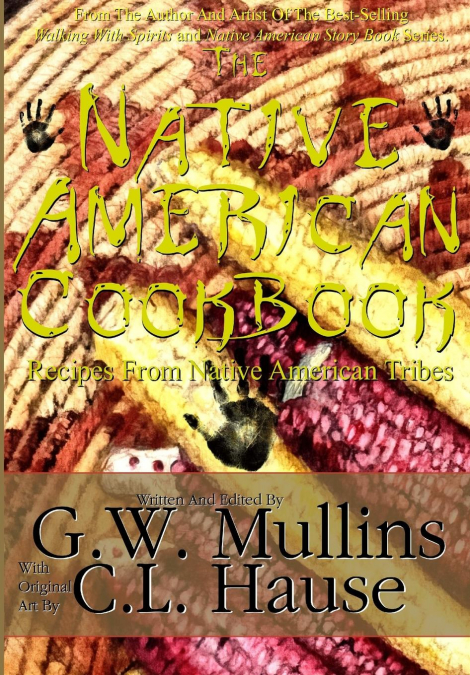
  • The Native American Cookbook Recipes From Native American Tribes
    G.W. Mullins
    Light Of The Moon Publishing along with Author G.W. Mullins and Illustrator / Artist C.L. Hause have joined together to explore Native American Indian Cooking.  More than just a cookbook, this Native American recipe collection offers a look into a forgotten past.  'The Native American Cookbook Recipes From Native American Tribes,' offers a large collection of recipes from and i...
    Disponible

    24,56 €

  • A Public Spirit
    George H. Atkinson
    George Henry Atkinson (1819-89) was a son of New England who arrived in the Oregon Territory in 1848, sent by the American Home Missionary Society. Although his commission from the Society specified that his work was to be ecclesiastical and educational, he took an approach to that assignment which went well beyond his mandate. Well-informed and energetic, he made an impact on ...
    Disponible

    10,45 €

  • North Carolina Women of the Confederacy
    Lucy London Anderson
    Long out of print, this volume of recollections, stories, and verse provides a glimpse of women's lives on the home front-and sometimes in the thick of battle-during the War between the States. Nearly fifty years after the American Civil War, Lucy Worth London Anderson (Mrs. John Huske Anderson) of Fayetteville, N.C., compiled one of the first memorial collections honoring the...
    Disponible

    17,20 €

  • Freedom by a Thread
    Freedom by a Thread: The History of Quilombos in Brazil brings together some of the best scholars in the world working on the history of quilombos (maroon societies) in Brazil from a variety of perspectives and approaches. Over 40 percent of the total volume of captive Africans arrived in Brazil during a 400-year period of legal and contraband transatlantic slaving. If slavery ...
    Disponible

    36,71 €

  • Nashville Baseball History
    Bill Traughber
    Nashville is a Big League city despite never having been home to a major league team. From the Civil War era, to star-studded exhibitions, to outstanding Negro Leagues teams, to some of the great minor league franchises of all time, few cities have as rich a baseball tradition as Nashville, Tennessee.Nashville sports historian Bill Traughber, who has been writing about baseball...
    Disponible

    13,15 €