
Lifestyle and Livelihood Changes Among Formerly Nomadic Peoples

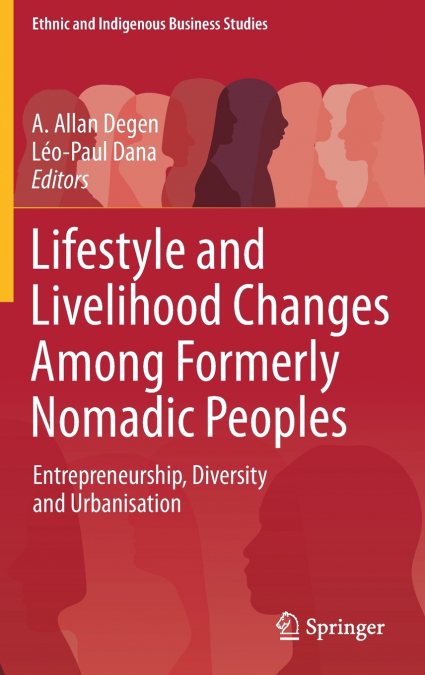
Lifestyle and Livelihood Changes Among Formerly Nomadic Peoples


196,63 €
IVA incluido
Consulta disponibilidad
Editorial:
Springer Nature B.V.
Año de edición:
2024
Materia
Delito y criminología
ISBN:
9783031511417

Selecciona una librería:

  • Librería Samer Atenea
  • Librería Aciertas (Toledo)
  • Kálamo Books
  • Librería Perelló (Valencia)
  • Librería Elías (Asturias)
  • Donde los libros
  • Librería Kolima (Madrid)
  • Librería Proteo (Málaga)

Contemporary policymakers, as their predecessors, continue to view nomadic people as a weak minority, and their way of life and raising livestock as a backward and inefficient paradigm. Wherever nomads are not the dominant group, the trend to settle them continues even today as in the past. This book describes the changes forced upon formerly nomadic groups and how they still attempt to maintain their traditional, social, and cultural practices in their new settings. The book deals with the several modes of livelihood of these communities, including entrepreneurship, and demonstrates the impact of investment-oriented urbanization policies leading to eviction from ancestral lands, and hurdles for nomadic mobility, ultimately threatening their survival. The book illustrates how some groups like the Borana and the Maasai practice livelihood diversity and raise productive livestock, and how other groups migrate to urban centers in search of employment and remit money to family members left in the rural areas. The book aims to raise awareness among the research community, especially those who work on regional and demographic labor policies. It helps in understanding why society needs to help build business and livelihood strategies without harming the values of nomadic groups.


Artículos relacionados

  • Friend Grief in the Workplace
    Victoria Noe
    They’re friends and coworkers, so when they die, it’s not only a personal and professional loss but a challenge: How can you grieve and get your work done, too?In the fifth book in the Friend Grief series, Friend Grief in the Workplace: More Than an Empty Cubicle you’ll meet people whose friends were coworkers, too: in a TV newsroom, a rectory, a Broadway show and on a baseball...
    Disponible

    4,13 €

  • Consequences
    Susan Popoola
    The August riots of 2011 started off in London and spread across different parts of the country. People questioned whether or not the riots were really about the shooting of a young black man by the police. That is open to debate. What is, however, unquestionable is that there are segments of society that are disengaged from the mainstream. While some may believe that this was ...
    Disponible

    11,51 €

  • So You Want a Seat at the Table
    Jeanne Kerr
    So You Want a Seat at the Table, a Practical Guide to Being a True Strategic HR Business Partner is a refreshing approach to a long-debated challenge. It is targeted to new and experienced human resources business partners and human resources leaders who want to expand their ability to think and act strategically. Whether an HR practitioner is in a large or small corporation, n...
    Disponible

    15,31 €

  • Feedback Flow
    Georgia Murch
    Let’s face it, we all want to create a high-performing team, culture, product or service that ripples throughout our business and into the market. But what is required to do this? How do we go about it?So, we do some clever thinking and come up with some strategies to get there.  We improve systems, processes, create new products or services. We implement with some success but ...
    Disponible

    28,56 €

  • Stakeholder Centered Coaching
    Marshall Goldsmith / Sal Silvester
    Executives buy results, not coaching. The problem is that most leadership and executive coaches do not measure the impact of their coaching engagements. They can’t prove that their coaching is actually making a difference. They rely too heavily on coach satisfaction surveys and other methods that simply measure reaction and not change.It doesn’t have to be that way. We can and ...
  • Stakeholder Centered Coaching
    Marshall Goldsmith / Sal Silvester
    Executives buy results, not coaching. The problem is that most leadership and executive coaches do not measure the impact of their coaching engagements. They can’t prove that their coaching is actually making a difference. They rely too heavily on coach satisfaction surveys and other methods that simply measure reaction and not change.It doesn’t have to be that way. We can and ...
    Disponible

    23,43 €