 Librería Samer Atenea
 Kálamo Books
 Librería Elías (Asturias)
 Librería Kolima (Madrid)
 Librería Proteo (Málaga)
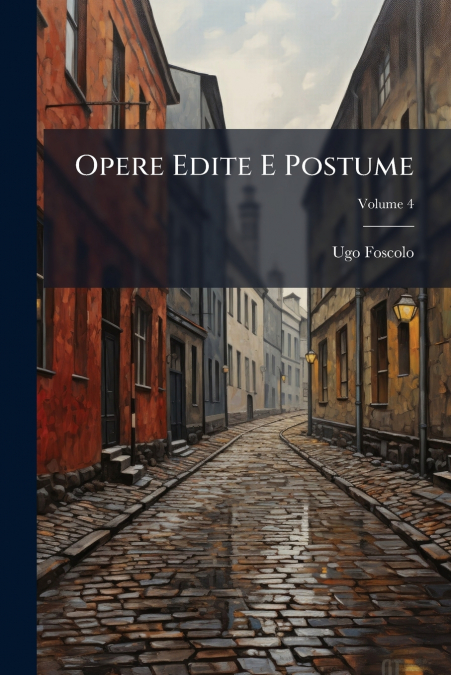
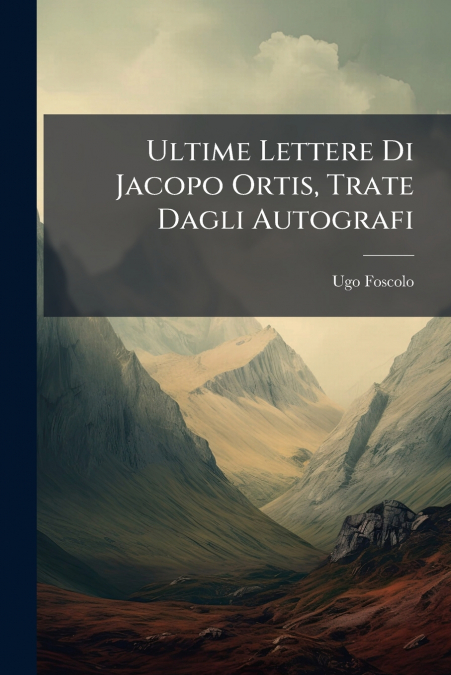
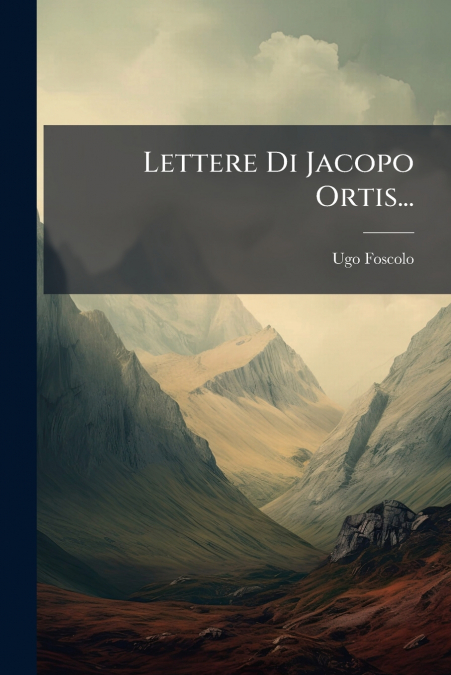
Lettere di Jacopo Ortis (The Letters of Jacopo Ortis) is an epistolary novel by Ugo Foscolo, first published in 1798. It is considered one of the most important works of Italian Romanticism. The novel tells the story of Jacopo Ortis, a young Venetian man who is forced to flee his homeland after Napoleon cedes Venice to Austria. He finds refuge in the Euganean Hills, where he falls in love with Teresa, a woman who is already engaged to another man. Consumed by unrequited love and despair over the political situation in Italy, Jacopo writes a series of letters to his friend Lorenzo Alderani, chronicling his emotional turmoil and philosophical reflections. The novel explores themes of love, death, exile, and the struggle for individual freedom in a time of political oppression. Foscolo’s masterful use of language and his exploration of profound emotional depths have made 'Lettere di Jacopo Ortis' a timeless classic of Italian literature.This work has been selected by scholars as being culturally important, and is part of the knowledge base of civilization as we know it. This work was reproduced from the original artifact, and remains as true to the original work as possible. Therefore, you will see the original copyright references, library stamps (as most of these works have been housed in our most important libraries around the world), and other notations in the work.This work is in the public domain in the United States of America, and possibly other nations. Within the United States, you may freely copy and distribute this work, as no entity (individual or corporate) has a copyright on the body of the work.As a reproduction of a historical artifact, this work may contain missing or blurred pages, poor pictures, errant marks, etc. Scholars believe, and we concur, that this work is important enough to be preserved, reproduced, and made generally available to the public. We appreciate your support of the preservation process, and thank you for being an important part of keeping this knowledge alive and relevant.