
Inicio > Humanidades > Filosofía > Ética y filosofía moral > Les Fondements Ethiques de La Bioethique
Les Fondements Ethiques de La Bioethique

Les Fondements Ethiques de La Bioethique

Les Fondements Ethiques de La Bioethique

Basile Ekanga

45,21 €
IVA incluido
Disponible
Editorial:
iUniverse
Año de edición:
2013
Materia
Ética y filosofía moral
ISBN:
9781491715208
45,21 €
IVA incluido
Disponible

Selecciona una librería:

  • Librería Samer Atenea
  • Librería Aciertas (Toledo)
  • Kálamo Books
  • Librería Perelló (Valencia)
  • Librería Elías (Asturias)
  • Donde los libros
  • Librería Kolima (Madrid)
  • Librería Proteo (Málaga)

Les fondements éthiques de la bioéthique La bioéthique est une discipline très jeune qui n’a pas encore trouvé de bases solides. Elle est née au moment où des nouveaux problèmes, jusque-là inconnus, sont apparus en sciences biomédicales. Les préoccupations de l’éthique médicale étaient totalement tournées vers le médecin en évaluant ce qu’il devait faire et ce qu’il ne devait pas faire face à un(e) malade. La nouvelle donne est que le malade a également quelque chose à dire, surtout s’il s’agit de sa maladie. L’intérêt de ce livre est de montrer justement que la bioéthique a tout intérêt à reposer sur des bases philosophiques éthiques. La bioéthique ne se présente pas comme une panacée. C’est une sorte de starting-block pour mieux cerner les questions éthiques que nous rencontrons spécialement dans les soins de santé, l’environnement et les sciences médicales. Partir d’une base philosophique, c’est rendre clairs des concepts fondamentaux que l’on utilise. Trois concepts que l’on utilise fréquemment en bioéthique sont analysés ici : la loi naturelle, la justice et la conscience. Mais la philosophie se préoccupe également de donner des explications sur nos croyances et sur la nature de la réalité, de l’univers. Il ne s’agit pas uniquement de nous comprendre nous-mêmes et de comprendre ce qui nous entoure, mais il est également question de comprendre chaque personne raisonnable dans ses relations avec les autres. Parmi les courants philosophiques qui sont analysés, il y a le principalisme, l’éthique théologique, les théories déontologiques, l’utilitarisme, et l’éthique de la vertu. ----------------------------------- The ethical Basics of Bioethics Bioethics took shape at a time medical ethics was at a crossroad and could any longer meet new problems which were till then unknown. Medical ethics was chiefly concern with problems physicians ought to do in front of their patients. The new order concedes that the patient has to keep a wary eye on everything relating to his/her health. This book gains its significance in showing that bioethics rests on ethical philosophical foundations. Bioethics is not a cure-all. It is rather a philosophical starting point of reflections that leads to investigating ethical problems in health care, environment and in medical science. One of the main concerns of a philosopher is to scrutinize and clarify used basic concepts. Three mostly used ethical concepts are analyzed, i.e. natural law, justice, and conscience. The philosopher is also concerned with beliefs of man and the nature of the world. The question is not only to understand ourselves as human beings and the world around us, but to understand also each rational person in his/her relations to others. Among the current philosophical trends discussed here are principlism, theological ethics, deontological ethics (Kantianism), utilitarianism, and virtue ethics.
Artículos relacionados

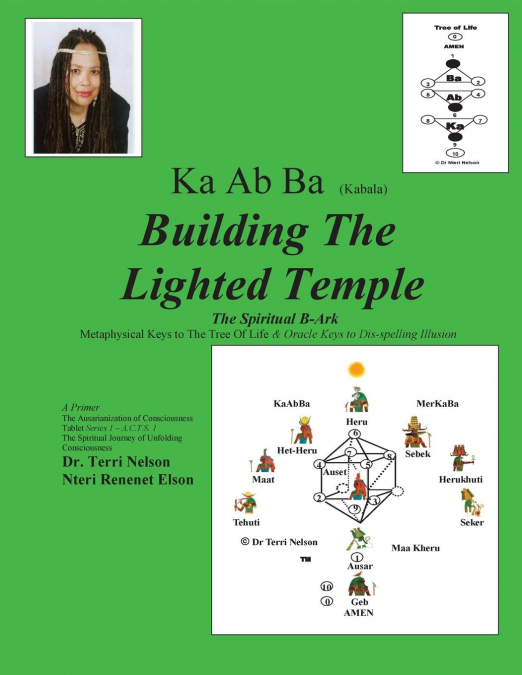
  • Ka Ab Ba Building The Lighted Temple
    Dr Terri R. Nelson / Dr Terri RNelson
    The book KaAbBa Building The Lighted Temple/Metaphysical Keys to the Tree of Life draws a circle that is inclusive of the Afrikan origin of the Ancient Kemetic/Egyptian wisdom. It reveals the undeniable root and link of Ancient Africa to all the religious systems that would develop worldwide. This book is explosive in its power to convey the meaning of KaAbBa, the Medu Neter  (...
    Disponible

    37,41 €

  • Technoethics and the Evolving Knowledge Society
    Rocci Luppicini
    Recently, there has been a major push to rediscover the ethical dimension of technology across the sciences, social sciences, and humanities. Technoethics and the Evolving Knowledge Society: Ethical Issues in Technological Design, Research, Development, and Innovation examines human processes and practices connected to technology embedded within social, political, and moral sph...
  • Kant
    Immanuel Kant
    Kant’s Groundwork of the Metaphysics of Morals is one of the most important works in modern moral philosophy. It belongs beside Plato, Aristotle, Machiavelli, and Hobbes. Here Kant sets out to articulate and defend the Categorical Imperative - the fundamental principle that underlies moral reasoning - and to lay the foundation for a comprehensive account of justice and human vi...
  • On the Duty of Civil Disobedience
    HENRY DAVID THOREAU
    Civil Disobedience argues that citizens should not permit their governments to overrule their consciences, and that they have a duty to avoid allowing their acquiescence to enable the government to make them the agents of injustice. Thoreau was motivated in part by his disgust with slavery and the Mexican-American War, but the sentiments he expresses here are just as pertinent ...
  • Beyond Good and Evil
    Friedrich Nietzsche
    Nietzsche, though primarily a philosopher, wrote widely on art, philology, history, religion, tragedy, culture, and science.  In 1886, at the height of his powers, he published Beyond Good and Evil.  Here he examines much of the best of human thought--dogmatic philosophy, Judeo-Christian morality, science and democracy – and finds it lacking.  Rejecting “slave-morality” he pres...
  • Beyond Good and Evil
    Friedrich Nietzsche
    Nietzsche, though primarily a philosopher, wrote widely on art, philology, history, religion, tragedy, culture, and science.  In 1886, at the height of his powers, he published Beyond Good and Evil.  Here he examines much of the best of human thought--dogmatic philosophy, Judeo-Christian morality, science and democracy – and finds it lacking.  Rejecting “slave-morality” he pres...
    Disponible

    9,99 €

Otros libros del autor

  • L’Interruption Volontaire de Grossesse
    Basile Ekanga
    L’interruption volontaire de grossesse État de la question, suivi du problème de stérilisation Une femme qui prend la décision de faire un avortement engage sa vie et surtout celle de l’enfant se trouvant dans son sein. On ne fait pas un avortement avec comme seul objectif de mettre fin à la vie du fœtus. Il faut toujours faire un lien entre les circonstances vécues par la femm...
    Disponible

    15,68 €

  • A Propos Du Suicide Assiste Et de L’Euthanasie Aujourd’hui
    Basile Ekanga
    A propos du suicide assiste et de l’ euthanasie aujourd’ hui.L’euthanasie reste encore un sujet d’actualité dans nos sociétés modernes. Chaque société essaie d’organiser la coexistence de différentes éthiques, qui, toutes, prétendent avoir une légitime prétention de dire ce qui est bien et ce qui est mauvais. La préoccupation de l’auteur dans ce travail est de poursuivre le déb...
    Disponible

    47,24 €