 Librería Samer Atenea
 Kálamo Books
 Librería Elías (Asturias)
 Librería Kolima (Madrid)
 Librería Proteo (Málaga)
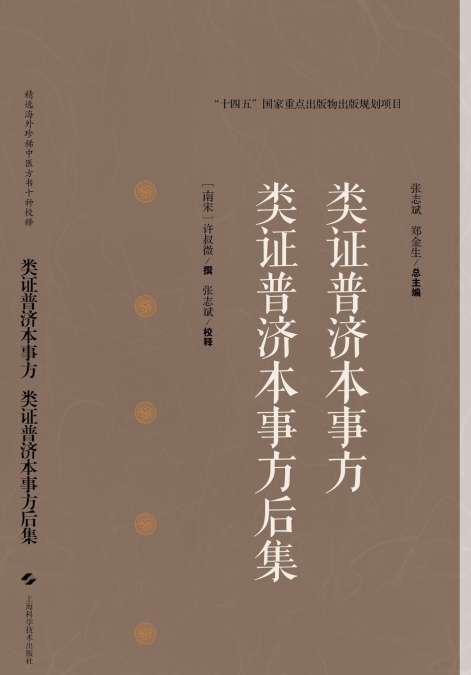
A classic work of collation and annotation of traditional Chinese medicine ancient texts that have been repatriated from overseas.海外回归中医古籍校释经典之作This book comprises two works: Lei Zheng Pu Ji Ben Shi Fang (Classified Formulas Based on Pattern Differentiation for Universal Relief: Collection of Proven Efficacy) and Lei Zheng Pu Ji Ben Shi Fang Hou Ji (Subsequent Collection). These works were compiled by Xu Shuwei of the Song dynasty. Lei Zheng Pu Ji Ben Shi Fang, also known as Pu Ji Ben Shi Fang or simply Ben Shi Fang (referred to as the 'Former Collection' in relation to the Subsequent Collection), consists of 10 volumes. This work is a compilation of formulas that Xu had personally tested and found effective, accompanied by case histories. It was likely published around 1132 (the second year of the Shaoxing era of the Song dynasty). The Subsequent Collection was published several years after the Former Collection. Both collections share the same organizational structure, with diseases and conditions as the main headings, followed by the relevant formulas.The base text used for collation and punctuation of the Former Collection in this edition is the edition printed by the Yu family’s Mingjing Tang in 1253 (the first year of the Baoyou era of the Southern Song dynasty), which is held in the collection of the Archives and Mausolea Department of the Japanese Imperial Household Agency. The base text for the Subsequent Collection is from the former collection of Katada (Kenada); there are almost no surviving copies of the Subsequent Collection in China.Former Collection (10 volumes): The work is organized by disease categories as the main headings, with the relevant formulas listed underneath. Prefacing the text is a 'General Introduction to the Preparation of Medicinals,' which provides a centralized explanation of the processing methods for commonly used herbs-a common feature in Southern Song medical texts. Volumes 1 to 7 cover internal and miscellaneous conditions, including wind stroke, zang-fu organ disorders, consumptive diseases, wind-cold-damp painful obstruction, phlegm-rheum cough and panting, abdominal masses, hernias, regurgitation and vomiting, throat obstruction, generalized edema and fullness, beriberi, intestinal wind and hemorrhoidal fistulas, incised wounds, abscesses and carbuncles, and wandering corpse and ghost attack. Volumes 8 and 9 cover cold damage diseases and seasonal epidemics. Volume 10 covers gynecological and pediatric diseases.Subsequent Collection (10 volumes): The Subsequent Collection follows the same organizational structure as the Former Collection, with disease categories as the main headings and the relevant formulas listed below. Volume 1 treats various deficiency conditions, promotes appetite, and engenders qi and blood. Volume 2 treats various accumulated heat conditions, wind disorders, and other diseases. Volume 3 treats various conditions of qi cold, lower back pain, spleen and stomach disorders, and other diseases. Volume 4 treats various oral, tongue, dental, and eye conditions. Volume 5 treats various cough and panting disorders, scrofula, nasal and ear conditions, and other diseases. Volume 6 treats various carbuncles and furuncles, edema disorders and qi conditions, diarrhea and dysentery, constipation, and other diseases. Volume 7 treats various hemorrhoidal diseases. Volume 8 treats various traumatic injuries, cold-induced malaria, and other diseases. Volume 9 treats various conditions of intestinal wind and alcohol-related dysentery, tapeworm infestation, and various gynecological diseases. Volume 10 treats various pediatric diseases, along with formulas for various miscellaneous conditions.This book serves as a reference for TCM clinical practitioners, researchers in TCM literature, and TCM enthusiasts.本书包括《类证普济本事方》《类证普济本事方后集》两部书。宋许叔微撰《类证普济本事方》,又称