
Inicio > Artes > Arquitectura > Lectures on Architecture and Painting, Delivered at Edinburgh in November 1853
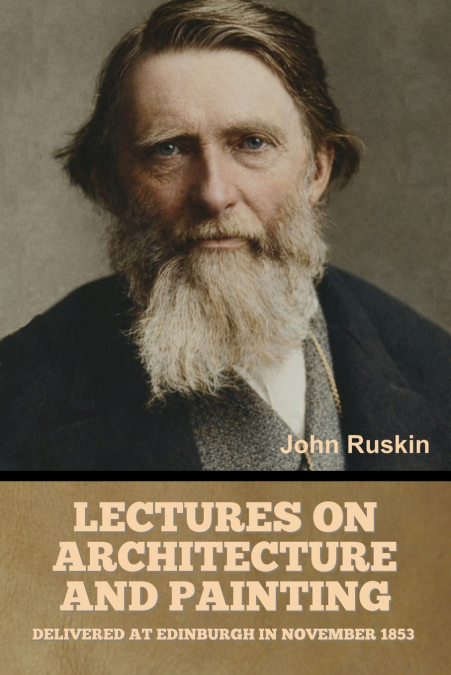
Lectures on Architecture and Painting, Delivered at Edinburgh in November 1853

Lectures on Architecture and Painting, Delivered at Edinburgh in November 1853

John Ruskin

16,82 €
IVA incluido
Disponible
Editorial:
IndoEuropeanPublishing
Año de edición:
2026
Materia
Arquitectura
ISBN:
9798889425786
16,82 €
IVA incluido
Disponible

Selecciona una librería:

  • Librería Samer Atenea

  • Kálamo Books
  • Librería Elías (Asturias)
  • Librería Kolima (Madrid)
  • Librería Proteo (Málaga)

John Ruskin’s Lectures on Architecture and Painting, Delivered at Edinburgh in November 1853 present a passionate defense of art as a moral and spiritual force in society. Ruskin argues that architecture and painting are not merely decorative or technical pursuits, but expressions of a nation’s character and values. He believes that true art reflects the moral health of the people who create it. For Ruskin, beauty is closely connected to truth and goodness; therefore, artists and architects have a responsibility to pursue honesty in their work. He criticizes the growing industrialization of the nineteenth century, suggesting that mechanization and mass production weaken both craftsmanship and the human spirit.In the lectures, Ruskin emphasizes the importance of Gothic architecture as a model of artistic and moral integrity. He admires Gothic buildings because they reveal the individuality and freedom of the craftsmen who created them. Unlike classical architecture, which he sees as rigid and overly focused on perfection, Gothic architecture allows for variation and imperfection, reflecting the humanity of the worker. Ruskin views this freedom as essential to meaningful artistic creation. He also discusses painting, particularly praising artists who remain faithful to nature. He argues that artists should carefully observe and represent the natural world, as nature is a manifestation of divine truth.Ultimately, Ruskin’s lectures call for a return to sincerity, craftsmanship, and moral purpose in the arts. He warns that societies which neglect the spiritual and ethical dimensions of art risk cultural decline. By linking artistic practice to broader social and moral concerns, Ruskin elevates architecture and painting beyond aesthetic enjoyment. His ideas influenced later movements such as the Arts and Crafts Movement, which sought to restore dignity to labor and design. Through these lectures, Ruskin challenges his audience to recognize art as a powerful force shaping both individual character and national identity.About the AuthorJohn Ruskin (1819-1900) was a leading English art critic, writer, and social thinker of the Victorian era. Born in London to a prosperous wine merchant, Ruskin was educated privately and later attended the University of Oxford. From an early age he showed a deep appreciation for art and nature, interests that would shape his life’s work. His eloquent prose and passionate beliefs made him one of the most influential cultural figures of the nineteenth century.Ruskin first gained widespread recognition with the publication of Modern Painters (1843-1860), a multi-volume work in which he defended the painter J.M.W. Turner and argued that artists should remain faithful to nature. He believed that art should express truth and moral purpose rather than merely imitate classical traditions. His ideas challenged established academic standards and helped elevate landscape painting to greater prominence in Britain. Ruskin’s criticism combined detailed observation with broader reflections on beauty, imagination, and spirituality.Beyond art criticism, Ruskin became an outspoken social critic. In works such as Unto This Last (1860) and Sesame and Lilies (1865), he attacked industrial capitalism and argued that economic systems should prioritize human well-being over profit. He was deeply troubled by the social inequalities and environmental damage brought about by industrialization. His social philosophy influenced later reformers, including Mahatma Gandhi, and contributed to movements advocating for social justice and improved working conditions. ...
Artículos relacionados

  • Selected Papers from Building A Better New Zealand (BBNZ 2014) Conference
    This Special Issue includes expanded academic papers selected from the forthcoming BBNZ 2014 Conference.The 2014 Building a Better New Zealand conference was held at The Rendezvous Hotel, Auckland, from 3 September 2014 to 5 September 2014.Themes:•Achieving Better Buildings•Improving the Performance of Materials•Improving the performance of existing buildings•Sustainability•Pro...
  • An Architect’s Guide to Construction
    Brian Palmquist
    After more than 35 years 'in the trenches' as an architect, specialist consultant and now quality director for a large North American construction company, Brian Palmquist has written An Architect’s Guide to Construction in order to share a balanced wealth of knowledge and experience about the construction phase of building projects.Considering both the consultant and contracto...
    Disponible

    21,61 €

  • ETABS 2016 Black Book
    Gaurav Verma
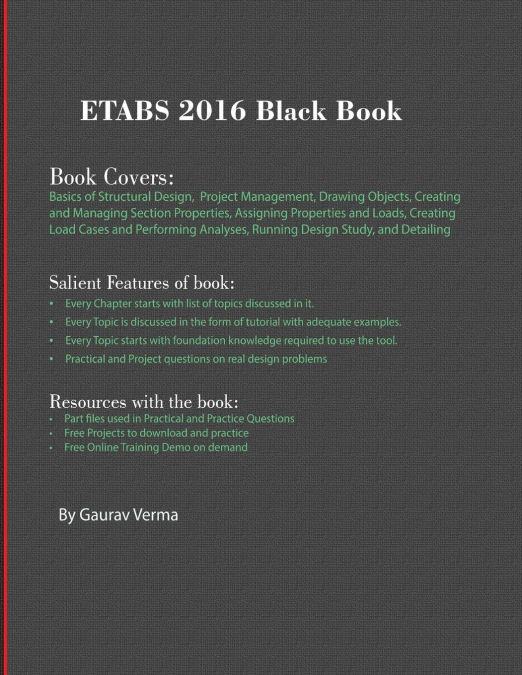
    The ETABS 2016 Black Book, is written to help beginners learn the basics of ETABS structure modeling and analysis. The book follows a step by step methodology. This book explains the designing of structure, assigning various properties to structure, applying different load conditions, and performing analyses. This book also covers the basics of detailing in ETABS. The book cove...
    Disponible

    81,20 €

  • Conservation of Classical Monuments in the Mediterranean Region
    Kalliopi Vacharopoulou
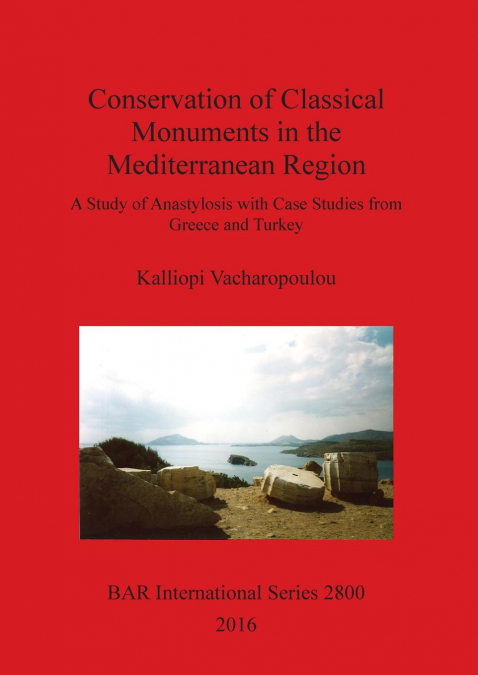
    This work studies the conservation of classical monuments in the Mediterranean region. It focuses on a specific method, anastylosis, and its application to classical monuments. The terminology, philosophy, theoretical principles and technical issues of anastylosis are explored within the wider context of cultural heritage management, through case studies from Greece and Turkey,...
    Disponible

    143,03 €

  • Handbook of Research on Emerging Technologies for Architectural and Archaeological Heritage
    Alfonso Ippolito
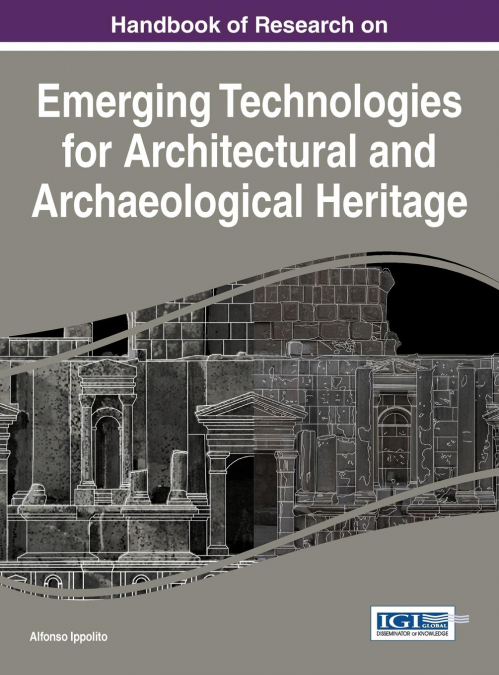
    Cultural heritage is a vital, multifaceted component of modern society. To better protect and promote the integrity of a culture, certain technologies have become essential tools. The Handbook of Research on Emerging Technologies for Architectural and Archaeological Heritage is an authoritative reference source for the latest scholarly research on the use of technological assis...
  • Du potentiel de l’hétéronomie et de l’autonomie en architecture / On the Potential of Heteronomy and Autonomy in Architecture
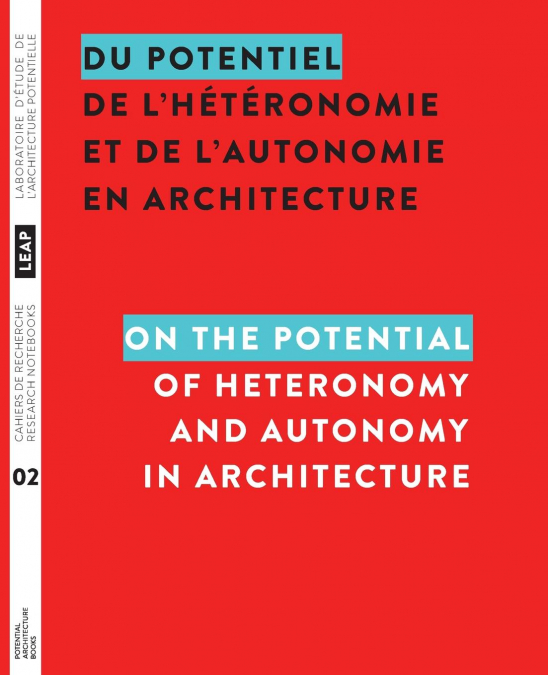
    Cette deuxième édition des Cahiers du Laboratoire d’Étude de l’Architecture Potentielle propose une réflexion sur l’un des problèmes centraux du Mouvement moderne et de la critique postmoderne : la tension entre l’hétéronomie et l’autonomie en architecture.Abordé à l’aide d’un texte peu connu de Stanford Anderson, le thème invitait chacun, chacune à penser l’architecture entre ...
    Disponible

    35,74 €

Otros libros del autor

  • Hasta el último de estos y otros ensayos sobre economía política: Letra Grande
    John Ruskin
    ¿De qué sirve que la riqueza crezca si quienes la crean no pueden prosperar? John Ruskin sostiene que la vida económica debe responder a las necesidades humanas, no solo al lucro.En A este último y otros ensayos sobre economía política, el crítico victoriano dirige su atención al trabajo, la riqueza y las responsabilidades morales que unen a una sociedad. Frente a los supuestos...
  • Sesame and Lilies
    John Ruskin
    What does it mean to read well—and what should education prepare us to become? John Ruskin turns these questions into a passionate challenge to the values of his age.In Sesame and Lilies, two celebrated Victorian lectures connect the cultivation of the mind with the responsibilities of everyday life. Of Kings’ Treasuries argues that books preserve riches of thought that demand ...
  • Sesame and Lilies: Large Print
    John Ruskin
    What does it mean to read well—and what should education prepare us to become? John Ruskin turns these questions into a passionate challenge to the values of his age.In Sesame and Lilies, two celebrated Victorian lectures connect the cultivation of the mind with the responsibilities of everyday life. Of Kings’ Treasuries argues that books preserve riches of thought that demand ...
  • Unto This Last, and Other Essays on Political Economy
    John Ruskin
    What good is growing wealth if the people who create it cannot flourish? John Ruskin makes the case that economic life must answer to human needs, not profit alone.In Unto This Last, and Other Essays on Political Economy, the Victorian critic turns his attention to labour, wealth, and the moral responsibilities that bind a society together. Against the laissez-faire assumptions...
  • The Bible of Amiens
    John Ruskin
    A cathedral is more than a building: it is a community’s beliefs made visible. John Ruskin shows how to read its language of stone.In The Bible of Amiens, Ruskin approaches the great cathedral of northern France as a moral and spiritual document. Its sculptures, porches, and architectural proportions become evidence of the faith and labour that shaped medieval life. His purpose...
  • The Bible of Amiens: Large Print
    John Ruskin
    A cathedral is more than a building: it is a community’s beliefs made visible. John Ruskin shows how to read its language of stone.In The Bible of Amiens, Ruskin approaches the great cathedral of northern France as a moral and spiritual document. Its sculptures, porches, and architectural proportions become evidence of the faith and labour that shaped medieval life. His purpose...