
Inicio > Sociedad y ciencias sociales > Educación pedagogía > Learning for Economic Self-Sufficiency
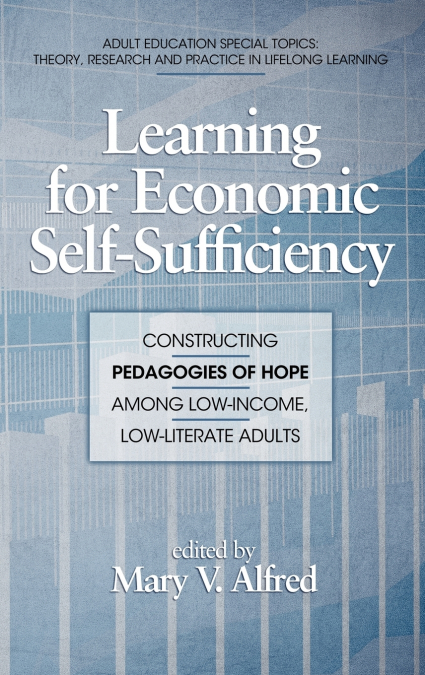
Learning for Economic Self-Sufficiency

Learning for Economic Self-Sufficiency


135,84 €
IVA incluido
Consulta disponibilidad
Editorial:
Emerald Publishing Ltd
Año de edición:
2010
Materia
Educación pedagogía
ISBN:
9781617351112

Selecciona una librería:

  • Librería Samer Atenea
  • Librería Aciertas (Toledo)
  • Kálamo Books
  • Librería Perelló (Valencia)
  • Librería Elías (Asturias)
  • Donde los libros
  • Librería Kolima (Madrid)
  • Librería Proteo (Málaga)

A volume in Adult Education Special Topics: Theory, Research,and Practice in Lifelong LearningSeries Editor: Kathleen P. King, Fordham UniversityIn a most timely volume addressing many of the connections among current fiscal andemployment crises to adult education, Learning for Economic Self-Sufficiency highlights theproblems and challenges that low-literate adults encounter in various environments. Moreover,this book presents strategies for addressing the chronic illiteracy among low-income workers.The power of this volume is that the reader gains a holistic view of the complexities of educatinga population of low-literate adult learners from various life conditions. From language literacyissues in corrections, the workplace and access to higher education, and migrant workers literacylearning barriers, to technology literacies, and consumerism myths, Learning for Economic Self-Sufficiency goes far deeper than prior volumes in exploring the complex scope of issues face by low-income, low-literate adults as theyseek learning for economic self-sufficiency.The overall objective of the book is to help readers explore economic self-sufficiency for low literate and low-income adults fromvarious contexts and the role of adult and higher education in developing these learners for greater economic independence. Noting thatliteracy is only a first step to economic, mental, and physical health as well as responsible citizenship, each chapter provide specificcase examples and recommendations to educators and trainers of adults for creating learning programs and environments to facilitatethe development of a more literate and economically stable population.
Artículos relacionados

  • Beekeeping At The End Of The Earth
    Mark David Leech
    Beekeeping at the End of the Earth, an essential read for learning about beekeeping in a cool temperate climate with a focus on Tasmania our island home.  One hundred beekeepers one hundred different ways to keep bees.Beekeeping At The End Of The Earth is a practical insight into cool climate beekeeping with a focus on Tasmania, our island home.Richly illustrated with unique di...
    Disponible

    45,16 €

  • Be the One for Kids
    Ryan Sheehy
    One person can make a difference.That person can be you. “I want to show others that one person can make the difference in a child’s life. I want all educators, parents, coaches, and everyone in between to know they have power to Be the One for Kids.” —Ryan Sheehy If you ever feel like you’re all alone or think that no one gets you, just imagine how your students feel. Kids wan...
    Disponible

    27,99 €

  • Handbook of Research on E-Learning Standards and Interoperability
    As the e-learning industry continues to expand and the methods and tools necessary to create and maintain content and infrastructure applications become more complicated, there is an inherent need for these applications to interoperate and exchange data in order to better support the needs of learners and educators. Handbook of Research on E-Learning Standards and Interoperabil...
  • Teaching in the Knowledge Society
    Antonio Cartelli
    ...
  • Enhancing Learning Through Human Computer Interaction
    Elspeth McKay
    ...
  • Learning Objects for Instruction
    Pamela Taylor Northrup
    ...