Le culte de Mithra à Rome

Le culte de Mithra à Rome

Matthias Muno

73,38 €
IVA incluido
Disponible
Editorial:
KS OmniScriptum Publishing
Año de edición:
2026
Materia
Filosofía occidental: antigua, hasta c. 500
ISBN:
9786209929892
73,38 €
IVA incluido
Disponible

Selecciona una librería:

  • Librería Samer Atenea

  • Kálamo Books
  • Librería Elías (Asturias)
  • Librería Kolima (Madrid)
  • Librería Proteo (Málaga)

Les mystères de Mithra, une divinité solaire originaire de la région perse, ont connu une grande popularité dans l’Empire romain du Ier au IVe siècle après J.-C. Leurs enseignements et rites secrets étaient pratiqués par de petites communautés cultuelles dans des mithraea, des édifices en forme de grotte spécialement conçus à cet effet. Le motif central du culte et, en même temps, l’acte salvateur fondamental du dieu, à savoir la mise à mort symbolique et rituelle du taureau dans une grotte, apparaît dans tous les contextes mithriaques de l’Empire romain. Dans le présent ouvrage, il s’agit tout d’abord d’explorer les racines du culte de Mithra en dehors de l’Empire romain, en particulier celles de la divinité indo-iranienne Mit(h)ra, ainsi que la pérennité du culte de Mithra à l’époque hellénistique. Une autre partie est consacrée à la genèse des mystères romains de Mithra . Dans ce cadre, le culte de Mithra dans la ville de Rome est considéré comme un exemple remarquable permettant, à partir de vestiges sélectionnés, d’aborder la légende du culte, son organisation et ses rites, ainsi que le mithraeum en tant que lieu de culte. Enfin, le culte de Mithra dans la ville de Rome sera replacé dans un contexte global, à la lumière de la religion et de la vision du monde de l’époque impériale romaine.

Artículos relacionados

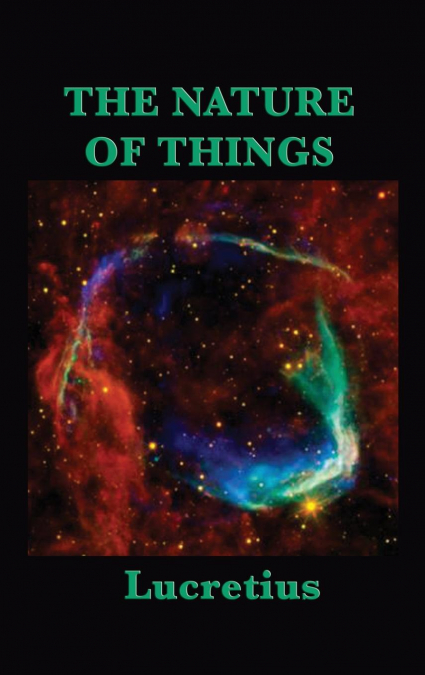
  • The Nature of Things
    Lucretius Lucretius
    De rerum natura (On the Nature of Things) is a 1st century BC didactic poem by the Roman poet and philosopher Lucretius with the goal of explaining Epicurean philosophy to a Roman audience. Lucretius presents the principles of atomism; the nature of the mind and soul; explanations of sensation and thought; the development of the world and its phenomena; and explains a variety o...
  • Pompeii
    Fergus Mason
    Pompeii was one of most advanced cities of its time; it had a complex water system, gymnasium, and an amphitheater. Despite it's advancements, there was one thing it wasn't ready for: Mount Vesuvius—the volcano that led to its ultimate doom.  The 79 AD eruption of Mount Vesuvius was one of the worst disasters in all of European history. In a near instant, over 15,000 p...
    Disponible

    10,36 €

  • Middle Platonism and Neoplatonism, Volume 1
    Stephen Gersh
    'It is generally agreed that those types of philosophy that are loosely called ’Platonic’ and ’Neoplatonic’ played a crucial role in the history of European culture during the centuries between antiquity and the Renaissance. However, until now no scholar has attempted to describe the evolution of these forms of thought in a single comprehensive academic study.' So writes Stephe...
  • Middle Platonism and Neoplatonism, Volume 2
    Stephen Gersh
    It is generally agreed that those types of philosophy that are loosely called 'Platonic' and 'Neoplatonic' played a crucial role in the history of European culture during the centuries between antiquity and the Middle Ages. However, until now no scholar has attempted to describe the evolution of these forms of thought in a single comprehensive academic study. Middle Platonism a...
  • Porphyry’s Commentary on Ptolemy’s Harmonics
    Andrew Barker
    ...
    Disponible

    80,87 €

  • The Roots of Platonism
    John Dillon
    ...
    Disponible

    26,54 €

Otros libros del autor

  • The Mithraic cult in ancient Rome
    Matthias Muno
    The Mysteries of Mithras, a solar deity originally from the Persian region, enjoyed great popularity in the Roman Empire from the 1st to the 4th century AD. Their secret teachings and rites were practised by small cult communities in cave-like mithraea specially designed for this purpose. The central cult motif and, at the same time, the god’s fundamental act of salvation-the s...
    Disponible

    73,38 €

  • O culto a Mitra na Roma urbana
    Matthias Muno
    Os mistérios de Mitra, uma divindade solar originária da região persa, gozaram de grande popularidade no Império Romano entre os séculos I e IV d.C. Os seus ensinamentos e ritos secretos eram praticados por pequenas comunidades de culto em mitreos - edifícios semelhantes a cavernas, concebidos especificamente para esse fim. O motivo central do culto e, ao mesmo tempo, o ato sal...
    Disponible

    73,38 €

  • Kult Mitry w Rzymie
    Matthias Muno
    Misteria Mitry, bóstwa słonecznego wywodzącego się z obszarów perskich, cieszyły się w Imperium Rzymskim od I do IV wieku n.e. ogromną popularnością. Ich tajemne nauki i obrzędy były praktykowane przez niewielkie wspólnoty kultowe w specjalnie do tego celu zaprojektowanych, przypominających jaskinie mitreach. Centralny motyw kultu, a jednocześnie fundamentalny akt zbawczy boga,...
    Disponible

    73,38 €

  • Il culto di Mitra nella Roma antica
    Matthias Muno
    I misteri di Mitra, una divinità solare originaria dell’area persiana, godettero di grande popolarità nell’Impero Romano dal I al IV secolo d.C. I loro insegnamenti e riti segreti venivano praticati da piccole comunità di fedeli in mitrei, strutture simili a grotte appositamente progettate. Il motivo centrale del culto e, al tempo stesso, l’atto salvifico fondamentale del dio, ...
    Disponible

    73,38 €