Layered Violence

Layered Violence

Dominic J. JR. Capeci / Martha Wilkerson

49,72 €
IVA incluido
Disponible
Editorial:
University Press of Mississippi
Año de edición:
1991
Materia
Violencia en la sociedad
ISBN:
9781604733747
49,72 €
IVA incluido
Disponible

Selecciona una librería:

  • Librería Samer Atenea
  • Librería Aciertas (Toledo)
  • Kálamo Books
  • Librería Perelló (Valencia)
  • Librería Elías (Asturias)
  • Donde los libros
  • Librería Kolima (Madrid)
  • Librería Proteo (Málaga)

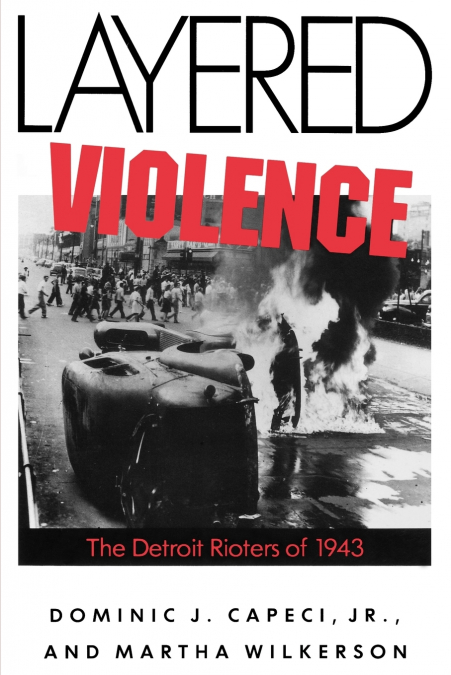
Layered Violence: The Detroit Rioters of 1943by Dominic J. Capeci, Jr. and Martha WilkersonA descriptive profile of the rioters in the bloody civil disorder that devastated sectors of Detroit in 1943In two turbulent outbursts the city of Detroit has been subjected to civil disorder on a massive scale. The greatest of these occurred in 1967, but prior to this the Detroit race riot of 1943 was the most devastating civil disorder in national history. It remains a powerful gauge by which other racial disorders can be measured. Who were the rioters? Why did they riot? In line with George Rude’s call for scholars to identify 'faces in the crowd,' this valuable study describes and analyzes those individuals who rioted in Detroit during June of 1943 and outlines the causes for the riot. The authors draw upon never-before-used police records and court files and combine them with equally original archival data to present several profiles of those who filled the streets of Detroit during the bloody upheaval. The authors find that rioters in 1943 included blacks and whites whose activities have much in common with those of earlier rioters and with prewar interracial and postwar commodity riots, which rarely occurred simultaneously, as they did in Detroit.Unlike other studies of riots, Layered Violence focuses on the identity and motives of the rioters, noting their many diversities, particularly of race, gender, class, and age. It distinguishes between participants of both races and ghetto dwellers who attacked white-owned property. Hence this study, culminating in a comparison of Detroit’s conflagrations in 1943 and 1967, breaks new ground and provides a fresh perspective on past and recent racial bloodshed. The authors’ effective use of close focus on individual rioters reveals a distinct picture of collective violence from one generation of rioters to another as well as a distinct pattern by which violence occurred in layers as individuals entered, exited, and reentered battle zones for varying reasons.The conclusion of Layered Violence places the upheaval of 1943 in the national context of collective violence in the twentieth century and suggests possible directions that racial discord may take in the future. Dominic J. Capeci, Jr. is a professor of history at Southwest Missouri State University.Martha Wilkerson is a retired professor of sociology at Southwest Missouri State University.


Artículos relacionados

  • Going Home
    Heather J. Cuthbertson / Heather JCuthbertson
    Going Home is a workbook for children entering the foster care system. The book will help them understand what is and will be happening to them in a simple and fun way through activities. Going Home will help ease the transition into foster care for children and caregivers alike. The author, Heather J. Cuthbertson was a caseworker for the Oregon Department of Human Services,...
    Disponible

    15,49 €

  • Global Perspectives on Youth Gang Behavior, Violence, and Weapons Use
    Youth violence has become a concern as gangs become a popular option for urban children and teenagers and weapons use among young populations becomes more prevalent. Exploring the psychological motivations and foundations upon which such violence is developed and cultivated can assist in better understanding the modern dilemma of violence, weapons use, and gang behavior among c...
  • The Streets Of Lagrange
    Jimmy Mcphail
    For more than three decades Jimmy McPhail has listened with an ear of disbelief as minority victims and witnesses shared their stories. While the plot and the characters changed, the theme always remained the same. Themes of injustice, hatred and discrimination were the three most reoccurring themes. From verbal and physical abuse, workplace discrimination and even police bruta...
    Disponible

    8,68 €

  • AI Tools and Applications for Women’s Safety
    In an era marked by rapid technological progress, women’s safety remains a pressing concern despite strides toward gender equality. Women continue to grapple with safety challenges in both public and private spaces, enduring harassment, violence, and discrimination driven by entrenched societal norms and modern complexities. Amidst these challenges, harnessing the potential of ...
  • The Punitive Turn in American Life
    Michael S. Sherry
    In 1965, President Lyndon Johnson insisted that “the policeman is the frontline soldier in our war against crime,” and police forces, arms makers, policy makers, and crime experts heeded this call to arms, bringing weapons and practices from the arena of war back home. The Punitive Turn in American Life offers a political and cultural history of the ways in which punishment and...
    Disponible

    37,90 €

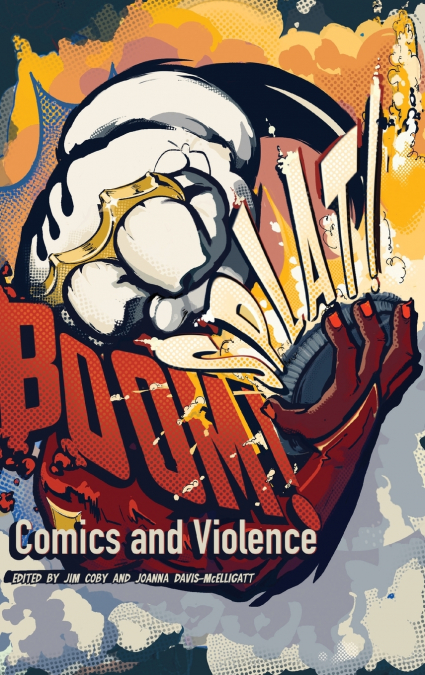
  • Boom! Splat!
    Jim Coby
    Contributions by Lawrence Abrams, Diana Álvarez Amell, Partha Bhattacharjee, Natalja Chestopalova, Jim Coby, Rita Costello, Sam Cowling, Joanna Davis-McElligatt, Elisabetta Di Minico, Kiera M. Gaswint, Vincent Haddad, Kaleb Knoblauch, Christina M. Knopf, Leah Milne, Jacob Murel, Priyanka Tripathi, and Steven S. Vrooman In 1954, the culture, distribution, and content of comics ...