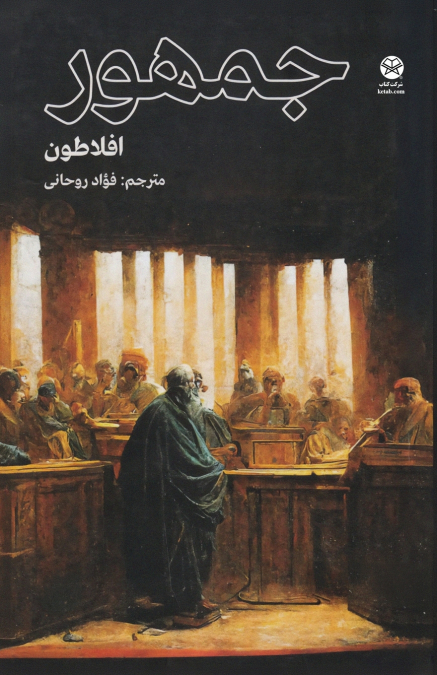
Plato (c. 427-347 BC) / Fuad Rouhani
 Librería Samer Atenea
 Kálamo Books
 Librería Elías (Asturias)
 Librería Kolima (Madrid)
 Librería Proteo (Málaga)
این متن به بررسی درونمایه و پرسشهای بنیادین کتاب جمهور افلاطون میپردازد؛ اینکه آیا این اثر اساساً کتابی سیاسی در باب حکومت مطلوب است، یا رسالهای اخلاقی برای فرد عادل، و یا ستایشی شکوهمند از خرد؟ فارغ از هر تفسیری، یک اجماع کلی وجود دارد: مهمترین درس عملی جمهور این است که انسان باید در زندگی پیرو خرد باشد یا از خردمندترین فرد پیروی کند.بر همین اساس، بهترین جامعه (مدینه) جایی است که حاکم آن دوستدار خرد باشد. با این حال، متن به یک چالش و خطر بنیادی اشاره میکند: وجود شکاف عمیق میان ارزشهای فرد خردمند و عامه مردم، که باعث میشود جامعه تمایلی به پذیرش بهترین حاکمان نداشته باشد. در نهایت، متن با این پرسشهای اساسی پایان مییابد که چگونه میتوان به هماهنگی و توافق رسید، آیا ساختن یک نظام سیاسی آرمانی اصولاً ممکن است و آیا امیدی به دستیابی به سعادت در این مسیر وجود دارد یا خیر.The text explores the central themes of Plato’s Republic, questioning whether it is primarily a political treatise on the ideal state or a moral guide on individual justice and the pursuit of wisdom. Regardless of the interpretation, there is a general consensus that the book’s vital practical lesson is that individuals should live by reason or follow the wisest among them.Consequently, the ideal city-state (Polis) must be ruled by a lover of wisdom (a philosopher-king). However, a profound danger arises from the deep chasm between the values of the wise and those of the general public, making it highly unlikely for the masses to willingly accept such rulers. The text concludes by raising fundamental questions about how harmony can be achieved, whether an ideal political system is genuinely possible, and if the Republic offers any real hope for a life of true happiness.