 Librería Samer Atenea
 Kálamo Books
 Librería Elías (Asturias)
 Librería Kolima (Madrid)
 Librería Proteo (Málaga)
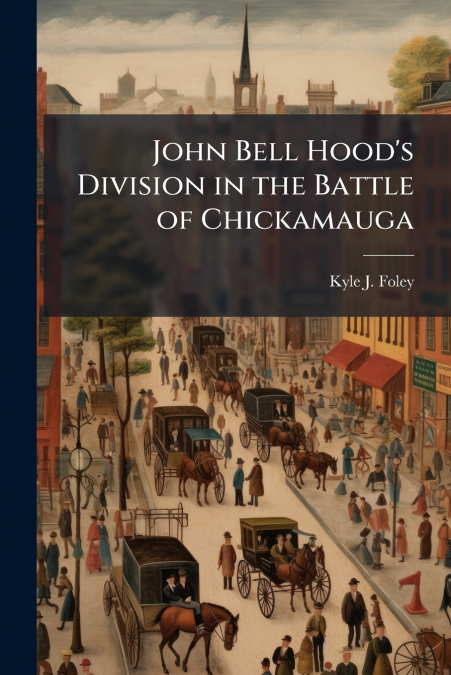
This thesis is a historical analysis and assessment of Major General John Bell Hood’s Division during the Battle of Chickamauga. In early July 1863, the Confederate Army suffered two major defeats, Vicksburg and Gettysburg, where the division suffered many casualties, including Hood. Hood’s Division earned a reputation as the best division in the Army of Northern Virginia. This division was selected to reinforce General Braxton Bragg’s Army of Tennessee, and his campaign to defeat the Federal Army of the Cumberland, under the command of Major General William Rosecrans. Their reputation preceded them with high expectations. Chickamauga was the division’s first major battle in the western theater. The thesis begins with brief pre-Chickamauga biographies of Hood and his brigade commanders; Brigadier General Evander McIver Law, Brigadier General Henry L. Benning, and Brigadier General Jerome B. Robertson. Next, the circumstances that brought the division to the Battle of Chickamauga and their journey to northern Georgia will be discussed. Thereafter, a close examination of the engagements conducted from 18-20 September 1863 will be discussed. Finally, an analysis will be presented to how the leaders of Hood’s Division performed during the Battle of Chickamauga, and draws conclusions as to the proximate causes of their performances. These causes focus on the divisional leaders and their decisions.This work has been selected by scholars as being culturally important, and is part of the knowledge base of civilization as we know it. This work was reproduced from the original artifact, and remains as true to the original work as possible. Therefore, you will see the original copyright references, library stamps (as most of these works have been housed in our most important libraries around the world), and other notations in the work.This work is in the public domain in the United States of America, and possibly other nations. Within the United States, you may freely copy and distribute this work, as no entity (individual or corporate) has a copyright on the body of the work.As a reproduction of a historical artifact, this work may contain missing or blurred pages, poor pictures, errant marks, etc. Scholars believe, and we concur, that this work is important enough to be preserved, reproduced, and made generally available to the public. We appreciate your support of the preservation process, and thank you for being an important part of keeping this knowledge alive and relevant.