 Librería Samer Atenea
 Kálamo Books
 Librería Elías (Asturias)
 Librería Kolima (Madrid)
 Librería Proteo (Málaga)
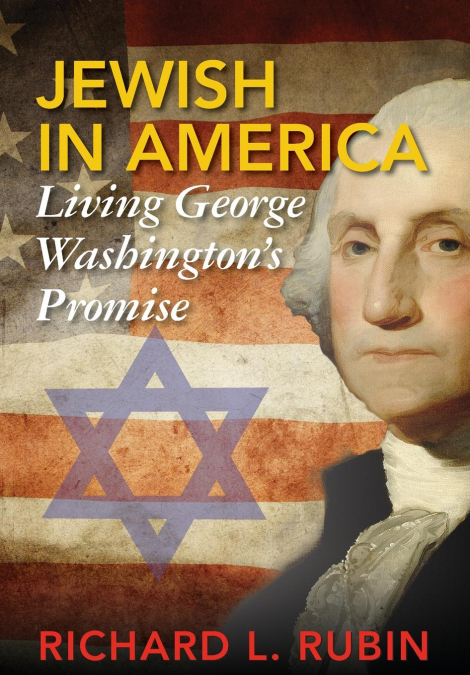
In a 1790 letter to the Touro Synagogue in Rhode Island, President George Washington promised that America’s Jews would always enjoy the full rights, privileges, and protections of U.S. citizenship. Since that auspicious beginning, Jews have flourished in America as they have nowhere else in the modern world. The last half-century in particular has been a kind of “Golden Age” for American Jews, during which they have achieved unprecedented levels of social acceptance, professional success, and political and cultural influence. But has all that come at the expense of Jewish distinctiveness? Many Jewish leaders today would answer yes. They point to declining religious observance and rising rates of intermarriage as evidence that Jewish Americans are losing a sense of themselves as Jews, and that they are no longer passing on a sense of Jewish identity to their children and grandchildren. But in Jewish in America: Living George Washington’s Promise, Richard L. Rubin offers a less pessimistic view. Though it is true, he writes, that the majority of Jews in our country have been in some sense “Americanized,” they continue to be shaped by Jewish history, culture, and religion in ways that affect everything from their social attitudes to their child-rearing methods to their voting patterns. Moreover, as products of a “fusion” between uniquely American values and characteristically Jewish ones, they are distinct not only from non-Jewish Americans but from Jews in other lands. It is this “hybrid” Jewish identity that they must continue to cultivate, and bequeath to future generations. Delving deep into Jewish history and drawing on the latest social-science research, Rubin provides answers to many intriguing questions. For instance: Why have Jews fully embraced, as few Gentiles have, the Protestant ideals of pluralism and tolerance woven into our Constitution? How did the Jewish experience of oppression, persecution and genocide lead to the disproportionate involvement of American Jews in the civil rights movement and other socially liberal causes? What accounts for Jewish prominence in academia, business, the medical and legal professions, the arts, and other fields—and what can this teach non-Jewish Americans, especially those from historically marginalized groups? But Jewish in America doesn’t ignore the situation of Jews elsewhere in the world—such as in France, where anti-Semitic terrorism is on the rise, and in perpetually embattled Israel. What responsibility, Rubin asks, do American Jews bear toward their brethren abroad? Is it time for Jews to leave Europe? And finally, does America have a claim equal to Israel’s as a Jewish “promised land” and place of refuge? Insightful and original, Jewish in America will challenge readers to see Jewish Americans as distinctively Jewish and distinctively American, possessing an identity that reflects both their ancient heritage and their adoptive nation. Richard L. Rubin was for 27 years a professor of political science at Swarthmore College, where he taught courses on the intersection of race, ethnicity, and public policy, as well as on the political culture of American Jews. His academic career was preceded by notable success as a businessman, and he has devoted his retirement to writing, study, and various charitable causes.