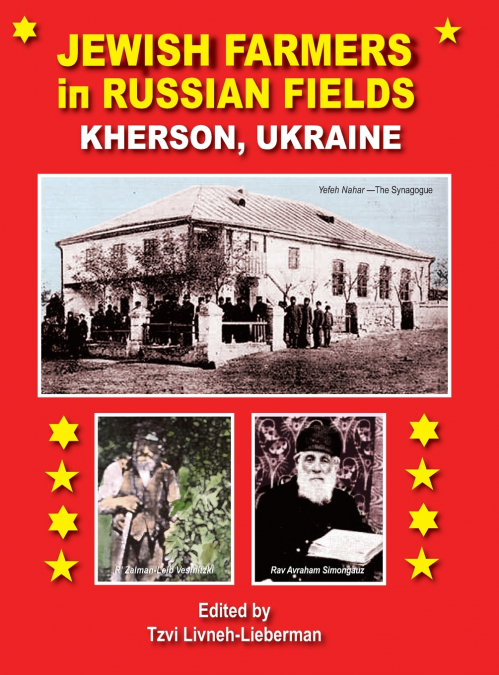

Jewish Farmers in Russian Fields

Jewish Farmers in Russian Fields

Moshe Kutten

52,97 €
IVA incluido
Disponible
Editorial:
JewishGen
Año de edición:
2024
Materia
Historia social y cultural
ISBN:
9781954176973
52,97 €
IVA incluido
Disponible

Selecciona una librería:

  • Librería Samer Atenea
  • Librería Aciertas (Toledo)
  • Kálamo Books
  • Librería Perelló (Valencia)
  • Librería Elías (Asturias)
  • Donde los libros
  • Librería Kolima (Madrid)
  • Librería Proteo (Málaga)

In the history of Jewish people in the diaspora, the tale of the agricultural settlement of Jews in Southern Ukraine is unique and distinct. The story of this movement, with its colonies, enterprises, struggles, and achievements is being told in this book. There were other attempts at Jewish settlements before the establishment of Israel. They all lasted for limited periods and ceased to exist because their settlers abandoned their settlements. That movement flourished until the day when the torrents of destruction and annihilation descended upon them.During the beginning of the 19th Czar Alexander I, issued a decree forbidding the Jews from leasing taverns and inns, which meant the expulsion of hundreds of thousands of Jews from the villages in the Pale of Settlement. There was only one positive clause in that decree: The proposal included allocations of land and budgets for that purpose. About 65,000 acre were allocated initially for the Jewish settlers. This was virgin land and was not considered to be very fertile. There was no drinking water there, and the closest cities were 200-400 kilometers away.Wave after wave, group after group, the Jewish settlers wandered from the northern areas of the Pale of settlements southward to Kherson. Their journey was very long, extremely tough, and full of life dangers. The prairies of Southern Ukraine are seeded with thousands of graves of people who did not make it. The settlers had to endure horrific conditions after arriving until their fields produced enough for them to make a living. Most settlers were pious and Hasidic Jews and the spoken language (including the language taught in the schools) was Yiddish.The settlement movement has gone through several periods of prosperity and crises, flourishing and decline, waves of incoming settlers, and a period when the independently owned villages were converted to government kolkhozes by the Soviets.Before WW II, the population of the 500 settlements (by then, they were all kolkhozes) contained about 25,000 Jewish families (or about 150,000 people). They constituted a direct continuation of the 140 years of Jewish settlement. The Nazis flooded Russian prairies and wiped out the annihilated and demolished an enterprise of five generations of Jewish pioneering farmers.
Artículos relacionados

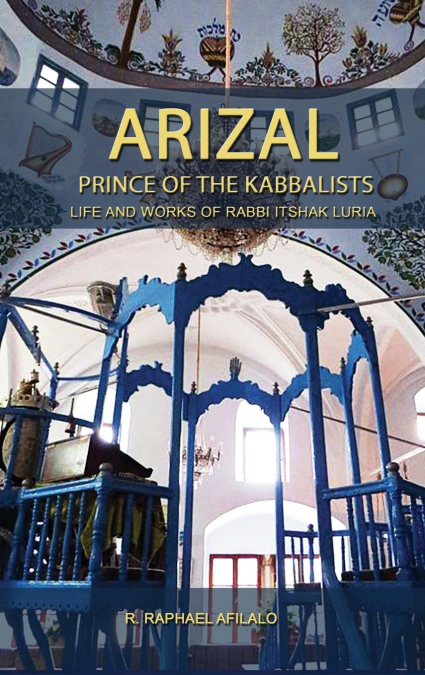
  • Arizal
    Raphael Afilalo
    The Ari overflowed with Torah. He was expert in Scripture, Mishnah, Talmud, Midrash, Maaseh Bereishit and Maaseh Merkavah. About all the different levels of prophecy, their details and from which level the prophets had their revelations.  He understood the whistling of the trees, the grass and stones, the language of the birds and other animals, the conversations of angels, the...
    Disponible

    20,44 €

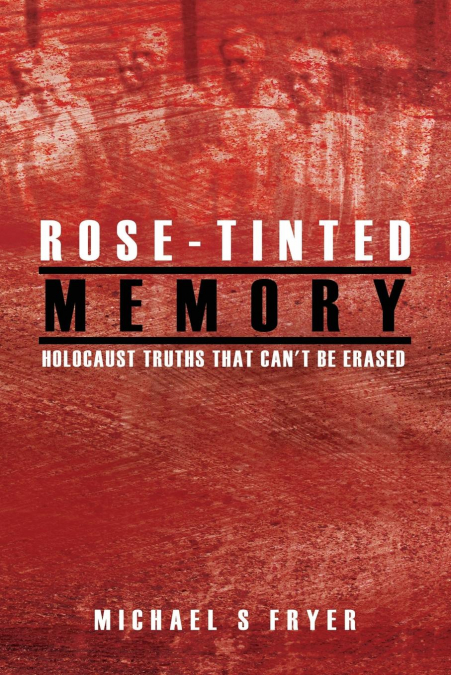
  • Rose-tinted Memory
    Michael S Fryer
    “Those who deny Auschwitz would be ready to remake it”.  ~ Primo Levi, Holocaust survivor and author Seventy years after the mass murder of the Jews of Europe, Holocaust denial and Holocaust revisionism are creeping into our overall perception of what actually happened.Christendom has not ‘denied’ Holocaust, but it has attempted to create a memory of Holocaust which suggests th...
    Disponible

    8,84 €

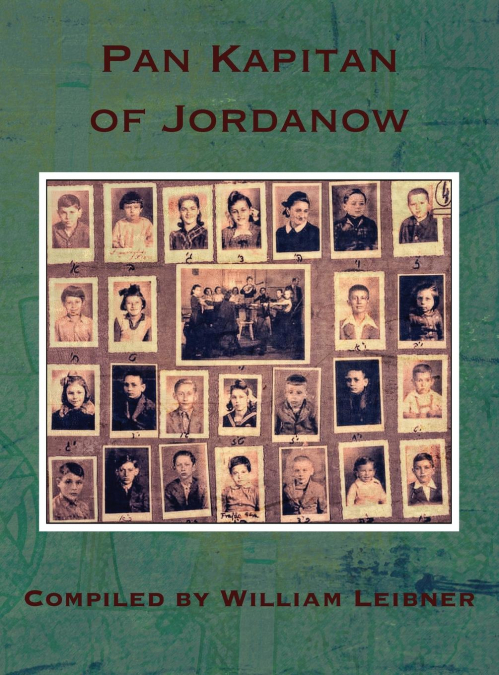
  • Pan Kapitan of Jordanow
    William Leibner
    Yeshayahu Drucker devoted a good part of his life to rescuing Jewish children from non-Jewish homes. Many parents had given their children to Polish neighbors for safekeeping during the war. Unfortunately most of the parents did not survive the Shoah. At the end of the war, there was no one to claim the children and they remained with the “adopted” Polish families. Following hi...
    Disponible

    28,35 €

  • Holy Dissent
    Glenn Dynner
    BThe religious communities of early modern Eastern Europe—particularly those with a mystical bent—are typically studied in isolation. Yet the heavy Slavic imprint on Jewish popular mysticism and pervasive Judaizing tendencies among Christian dissenters call into question the presumed binary quality of Jewish-Christian interactions. In Holy Dissent: Jewish and Christian Mystics ...
    Disponible

    62,96 €

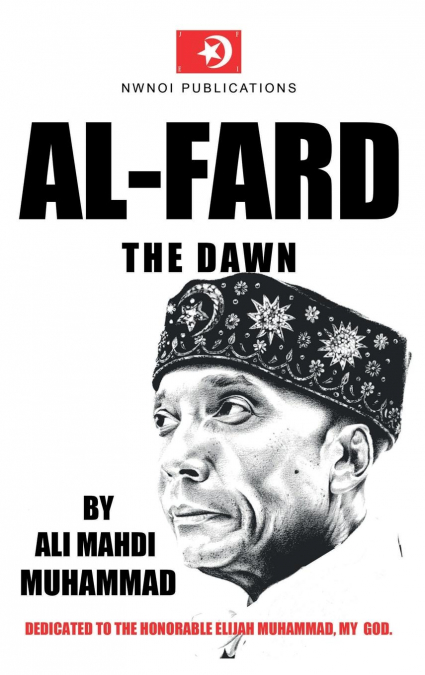
  • AL-FARD
    Ali Mahdi Muhammad
    The Al-Fard, or the The Dawn, has captured the early rays of Our history. This history is essential if we are to be brought face to face with the One true and living God of the universe. The purpose of this writing is to bring the reader step by step, one degree at a time to the reality of God in person. The teachings of Our Father elevates the believer to the level of Godhood ...
    Disponible

    23,17 €

  • Wild Things. Nature and the Social Imagination
    HISTORIES OF HUMAN CONSTRUCTIONS OF NATUREWild Things: Nature and the Social Imagination assembles eleven substantive and original essays on the cultural and social dimensions of environmental history. They address a global cornucopia of social and ecological systems, from Africa to Europe, North America and the Caribbean, and their temporal range extends from the 1830s into th...
    Disponible

    112,73 €

Otros libros del autor

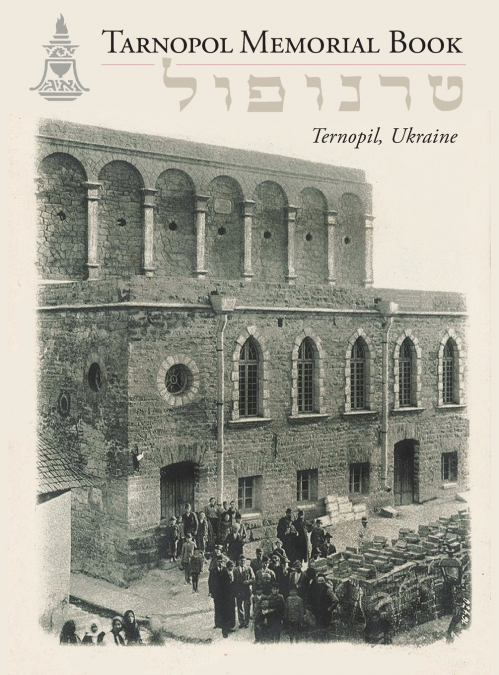
  • Tarnopol Volume (Ternopil, Ukraine)
    Moshe Kutten
    Tarnopol is a city in western Ukraine roughly 80 miles east of Lviv. During its history, it changed hands several times. It was annexed to Austria in 1772 as part of Galicia and remained under Austrian rule until 1918 when the empire collapsed. During World War I the city passed from German and Austrian forces to Russia several times. For a brief time at the end of 1918, it was...
    Disponible

    56,94 €