 Librería Samer Atenea
 Kálamo Books
 Librería Elías (Asturias)
 Librería Kolima (Madrid)
 Librería Proteo (Málaga)
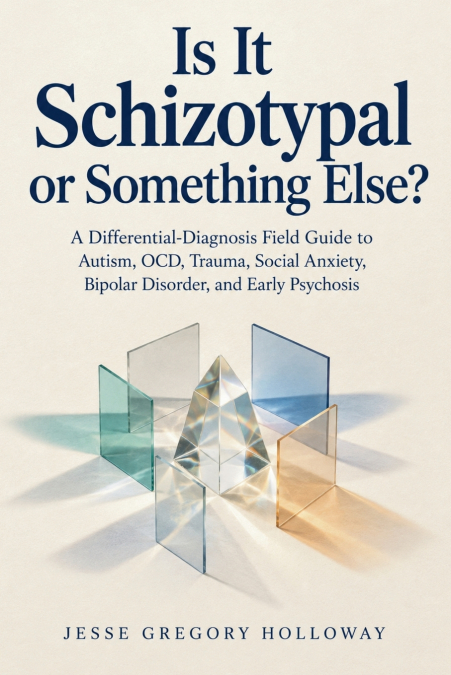
When Similar Symptoms Point in Different Directions Social withdrawal can arise in autism, social anxiety, trauma-related conditions, and schizotypal personality disorder. Unusual beliefs may resemble obsessions, suspicious interpretations, or emerging psychosis. A symptom list identifies possibilities, but it seldom explains what the person is experiencing, when it began, or what changed. A Practical Guide to Differential Assessment Is It Schizotypal or Something Else? helps mental health professionals, clinical trainees, and advanced students examine the distinctions between STPD and autism spectrum disorder, obsessive-compulsive disorder (OCD), trauma-related disorders, social anxiety disorder, bipolar disorder, and early psychosis. Rather than assigning a label from isolated traits, it develops a structured method built on developmental history, symptom chronology, context, reality testing, social experience, and functional change. Inside the Book The chapters show how to describe ideas of reference, unusual perceptual experiences, intrusive thoughts, suspiciousness, mood episodes, and social avoidance with greater precision. They explain why childhood development matters, when several conditions may be relevant, and how to record evidence that supports or challenges a working formulation. Fictional longitudinal cases demonstrate how additional information can change the assessment. Printable history forms, comparison tables, and documentation worksheets help organize clinical reasoning and prepare for appropriate referral or further evaluation. What Makes This Guide Different Its central method is the history-experience-decision sequence: establish the immediate concern; reconstruct development and change; clarify the person’s actual experience; compare plausible explanations; and document what remains uncertain. The approach separates descriptive observations from diagnostic conclusions and explains the limitations of screening tools. It treats uncertainty as information to be managed, rather than a reason to make premature judgments. Who Will Benefit This book is for readers who work in mental health assessment, are preparing for psychiatry or psychology training, teach psychopathology, or need a focused reference for overlapping diagnostic presentations. It is also written clearly enough for patients and family members who want to understand the questions involved in a professional evaluation. A Clearer Basis for the Next Decision For readers who need an organized way to consider STPD alongside commonly confused conditions, this field guide provides clinical questions, worked examples, and practical records that can support careful conversations and assessment planning. It is an educational resource, not a stand-alone diagnostic instrument or substitute for qualified evaluation.