 Librería Samer Atenea
 Kálamo Books
 Librería Elías (Asturias)
 Librería Kolima (Madrid)
 Librería Proteo (Málaga)
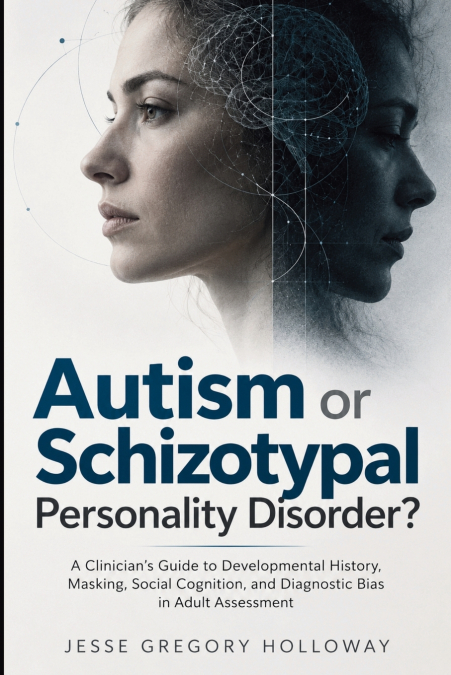
When familiar symptoms lead to difficult questions An adult may have few close relationships, an unusual communication style, or difficulty interpreting social situations. Those observations can raise questions about autism spectrum disorder, schizotypal personality disorder, or other explanations. A careful assessment must look beyond similarities in behavior to consider developmental history, cognitive-perceptual experiences, context, and the limits of the available evidence. A focused guide for adult assessors Autism or Schizotypal Personality Disorder? examines this challenging differential through a practical, evidence-informed clinical approach. It explains how to investigate lifelong patterns, reconstruct childhood information when records are missing, and explore social communication, sensory differences, suspiciousness, unusual beliefs, and perceptual experiences without treating any single feature as decisive. From observations to clinical formulation The book uses a five-domain framework to organize assessment questions and compare competing explanations. Readers will find guidance on recognizing masking and compensation, addressing diagnostic bias in assessments of adult women, interpreting screening measures cautiously, and evaluating possible coexisting or alternative conditions. Fictional case studies, interview prompts, evidence-integration worksheets, and report-writing examples show how these principles can inform everyday clinical reasoning. What makes this book different Rather than offering another general introduction to autism or personality disorders, the book stays with one specific clinical problem: how to investigate overlapping autistic and schizotypal presentations in adults. It connects developmental evidence with current experiences and gives particular attention to contradictory findings, incomplete histories, and decisions that must remain provisional. Its worksheets are practical organizational aids, not validated diagnostic tests. Who this book is for This book is for readers who assess adults with complex neurodevelopmental or psychiatric presentations, including clinical psychologists, psychiatrists, specialist autism assessors, and trainees or supervisors working within multidisciplinary teams. It may also support researchers and other qualified professionals who need a clearer account of this diagnostic overlap. A more accountable way to assess When a referral presents two plausible diagnostic explanations, the next step is not a shortcut to a label. This guide offers a structured way to ask better questions, weigh evidence, communicate uncertainty, and document conclusions that remain open to appropriate review.