
Inicio > Medicina > Medicina: cuestiones generales > Salud pública y medicina preventiva > Investing in Interventions That Address Non-Medical, Health-Related Social Needs
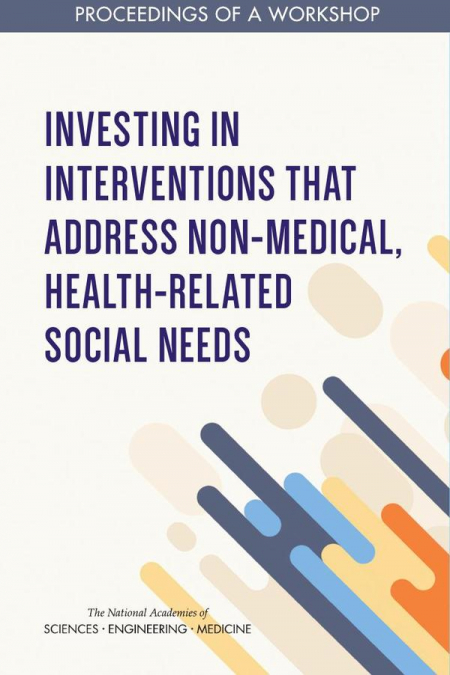
Investing in Interventions That Address Non-Medical, Health-Related Social Needs

Investing in Interventions That Address Non-Medical, Health-Related Social Needs

AA.VV

45,24 €
IVA incluido
Disponible
Editorial:
National Academies Press
Año de edición:
2019
Materia
Salud pública y medicina preventiva
ISBN:
9780309496476
45,24 €
IVA incluido
Disponible

Selecciona una librería:

  • Librería Samer Atenea
  • Librería Aciertas (Toledo)
  • Kálamo Books
  • Librería Perelló (Valencia)
  • Librería Elías (Asturias)
  • Donde los libros
  • Librería Kolima (Madrid)
  • Librería Proteo (Málaga)

With U.S. health care costs projected to grow at an average rate of 5.5 percent per year from 2018 to 2027, or 0.8 percentage points faster than the gross domestic product, and reach nearly $6.0 trillion per year by 2027, policy makers and a wide range of stakeholders are searching for plausible actions the nation can take to slow this rise and keep health expenditures from consuming an ever greater portion of U.S. economic output. While health care services are essential to heath, there is growing recognition that social determinants of health are important influences on population health. Supporting this idea are estimates that while health care accounts for some 10 to 20 percent of the determinants of health, socioeconomic factors and factors related to the physical environment are estimated to account for up to 50 percent of the determinants of health. Challenges related to the social determinants of health at the individual level include housing insecurity and poor housing quality, food insecurity, limitations in access to transportation, and lack of social support. These social needs affect access to care and health care utilization as well as health outcomes. Health care systems have begun exploring ways to address non-medical, health-related social needs as a way to reduce health care costs.To explore the potential effect of addressing non-medical health-related social needs on improving population health and reducing health care spending in a value-driven health care delivery system, the National Academies of Science, Engineering, and Medicine held a full-day public workshop titled Investing in Interventions that Address Non-Medical, Health-Related Social Needs on April 26, 2019, in Washington, DC. The objectives of the workshop were to explore effective practices and the supporting evidence base for addressing the non-medical health-related social needs of individuals, such as housing and food insecurities; review assessments of return on investment (ROI) for payers, healthy systems, and communities; and identify gaps and opportunities for research and steps that could help to further the understanding of the ROI on addressing non-medical health-related social needs. This publication summarizes the presentations and discussions from the workshop.

Artículos relacionados

  • Geographic Information Systems and Public Health
    Andrew Curtis
    ...
  • Cases on Healthcare Information Technology for Patient Care Management
    Health care organizations have made investments in health information technologies such as electronic health records, health information exchanges, and many more, which have increased the importance of Health Information Technology studies. Cases on Healthcare Information Technology for Patient Care Management highlights the importance of understanding the potential challenges ...
  • Healthcare Information Technology Innovation and Sustainability
    Joseph Tan
    Healthcare Information Technology Innovation and Sustainability: Frontiers and Adoption presents research in the emerging field on information systems and informatics in the healthcare industry. By addressing innovative concepts and critical issues through case studies and experimental research, this reference source is useful for practitioners, researchers and academics aiming...
  • Social, Economic, and Political Perspectives on Public Health Policy-Making
    Presently, the healthcare industry is grappling with many challenges both nationally and globally, including escalating costs, a move to a preventative care environment and a technology savvy patient with high expectations. To accommodate the changing health demands of the current global population, public healthcare policy must undergo a critical analysis. Social, Economic, an...
  • Modern Concepts and Practices in Cardiothoracic Critical Care
    Adam S Evans / Gregory E Kerr / Insung Chung
    With an increase in admission to intensive care units, medical professionals must search for the best practices and procedures to provide efficient medical care to each patient. Despite medical advances, there is still a need for well-trained cardiovascular intensivists to meet the needs of patients. Modern Concepts and Practices in Cardiothoracic Critical Care brings together ...
  • Reshaping Medical Practice and Care with Health Information Systems
    Ashish Dwivedi
    Technology has become an integral part of our daily interactions, even within the hospitals and healthcare facilities we rely on in times of illness and injury. New technologies and systems are being developed every day, advancing the ways that we treat and maintain the health and wellbeing of diverse populations. Reshaping Medical Practice and Care with Health Information Syst...