
Inicio > Matemáticas y ciencia > Biologia, ciencias de la vida > Investigações sobre a regulação da ressecção do ADN de DSBs induzidas por iões
Investigações sobre a regulação da ressecção do ADN de DSBs induzidas por iões

Investigações sobre a regulação da ressecção do ADN de DSBs induzidas por iões

Tatyana Syzonenko

101,46 €
IVA incluido
Disponible
Editorial:
KS OmniScriptum Publishing
Año de edición:
2025
Materia
Biologia, ciencias de la vida
ISBN:
9786208984229
101,46 €
IVA incluido
Disponible

Selecciona una librería:

  • Librería Samer Atenea
  • Librería Aciertas (Toledo)
  • Kálamo Books
  • Librería Perelló (Valencia)
  • Librería Elías (Asturias)
  • Donde los libros
  • Librería Kolima (Madrid)
  • Librería Proteo (Málaga)

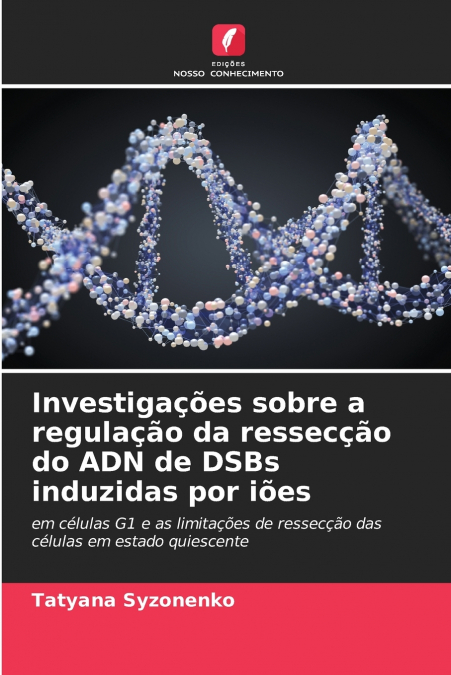
As quebras complexas de cadeia dupla do ADN (DSB) são os danos mais graves no ADN, pois representam um enorme desafio para a célula reparar fielmente, bem como reparar de todo. São conhecidas duas vias principais de reparação para reparar DSBs: a junção clássica de extremidades não homólogas (c-NHEJ) e a recombinação homóloga (HR). A c-NHEJ está disponível em todas as fases do ciclo celular, enquanto a via HR funciona apenas em S/G2 quando a cromátide irmã está disponível como modelo. Além disso, existe outra via de reparação disponível para as células - a junção alternativa de extremidades não homólogas (alt-NHEJ), que pode operar em extremidades de quebra de ADN ressecadas. A ressecção do ADN é um passo importante na decisão da célula sobre qual via de reparação de DSB escolher. A ressecção do ADN ocorre não apenas nas células S/G2, mas também nas células G1 após danos complexos no ADN induzidos por radiação de iões pesados. O objetivo deste trabalho é elucidar o mecanismo de regulação da ressecção em células G1 após irradiação com iões pesados. Ele se concentra especificamente no papel dos fatores reguladores da ressecção RIF1 e BRCA1. Um modelo útil para estudar o mecanismo de limitação da ressecção são as células em estado quiescente, as células G0.
Artículos relacionados

  • Viral Replication Complexes
    Viruses are obligate intracellular parasites that need to co-opt a living cell’s machinery for replication. At the heart of the viral replication machinery are the nucleic acid polymerases, which are responsible for efficiently copying the viral genome. This process must often be coordinated with other viral processes, including protein translation and viral packaging. The poly...
  • Advances in Flavivirus Research
    The flaviviruses are composed almost entirely of arthropod-borne viruses, a subset of which are responsible for millions of cases of human disease each year. Among these viruses are dengue virus—a scourge throughout the tropical regions of Asia and the Americas; yellow fever virus—the “original” hemorrhagic fever virus; and the recently emerged Zika virus. While the flaviviruse...
    Disponible

    51,85 €

  • Brain Asymmetry of Structure and/or Function
    Lesley J. Rogers / Lesley JRogers
    This edited book brings together research reports on the asymmetry of brain function in various species, including humans, dogs, birds, lizards and bees. As shown in a wide range of species, and, as we now know, not solely in humans, the left and right sides of the brain process information in different ways and control different responses or patterns of behaviour. Since this d...
    Disponible

    51,71 €

  • Fungal Pigments
    With the impact of globalization in research trends, the search for healthier life styles, the increasing public demand for natural, organic, and ‘clean labelled’ products, as well as the growing global market for natural colorants in economically fast-growing countries all over the world, filamentous fungi started to be investigated as readily available sources of chemically d...
    Disponible

    43,80 €

  • The Epithelialto- Mesenchymal Transition ( EMT ) in Cancer
    Joëlle Roche
    The epithelial-to-mesenchymal transition (EMT) is a highly dynamic process with multiple transitional states, by which epithelial cells can convert into a mesenchymal phenotype. This process involves loss of cellular adhesion and cellular polarity, and an improvement in migratory and invasive properties. It occurs during normal embryonic development, tissue regeneration, organ ...
    Disponible

    67,86 €

  • The Biology and Treatment of Myeloid Leukaemias
    There has been an observed decrease in the global mortality from cancer, mostly atributable to improved, particularly early, detection and prevention. For many carcinomas and leukaemias in adults, once the disease has reached a certain stage there are no therapies that are able to erradicate the cancer cells and cure patients. There has been progress in the treatment of acute m...
    Disponible

    51,85 €

Otros libros del autor

  • Indagini sulla regolazione della resezione del DNA delle DSB indotte da ioni
    Tatyana Syzonenko
    Le rotture complesse del doppio filamento del DNA (DSB) sono il danno più grave al DNA in quanto rappresentano una sfida enorme per la cellula, sia in termini di riparazione fedele che di riparazione in generale. Sono note due vie principali di riparazione delle DSB: la classica giunzione non omologa dei filamenti (c-NHEJ) e la ricombinazione omologa (HR). Il c-NHEJ è disponibi...
    Disponible

    101,46 €

  • Badania nad regulacją resekcji DNA w przypadku dwuniciowych pęknięć DNA (DSB) wywołanych jonami
    Tatyana Syzonenko
    Złożone podwójne pęknięcia nici DNA (DSB) są najpoważniejszym uszkodzeniem DNA, ponieważ stanowią ogromne wyzwanie dla komórki, zarówno pod względem wiernej naprawy, jak i samej możliwości naprawy. Znane są dwie główne ścieżki naprawy DSB: klasyczne niehomologiczne łączenie końców (c-NHEJ) i rekombinacja homologiczna (HR). c-NHEJ jest dostępne we wszystkich fazach cyklu komórko...
    Disponible

    101,48 €

  • Untersuchungen zur DNA-Resektionsregulation von ioninduzierten DSBs
    Tatyana Syzonenko
    Komplexe DNA-Doppelstrangbrüche (DSB) sind die schwerwiegendsten DNA-Schäden, da sie für die Zelle eine enorme Herausforderung darstellen, sie vollständig und fehlerfrei zu reparieren. Es sind zwei Hauptreparaturwege zur Reparatur von DSB bekannt: die klassische nicht-homologe Endverknüpfung (c-NHEJ) und die homologe Rekombination (HR). c-NHEJ ist in allen Phasen des Zellzyklus...
    Disponible

    101,46 €

  • Études sur la régulation de la résection de l’ADN des cassures double brin (DSB) induites par les ions
    Tatyana Syzonenko
    Les cassures double brin complexes de l’ADN (DSB) constituent les dommages les plus graves subis par l’ADN, car elles représentent un défi considérable pour la cellule, qui doit non seulement les réparer fidèlement, mais aussi les réparer tout court. Deux voies de réparation principales sont connues pour réparer les DSB : la jonction classique des extrémités non homologues (c-N...
    Disponible

    101,46 €