 Librería Samer Atenea
 Kálamo Books
 Librería Elías (Asturias)
 Librería Kolima (Madrid)
 Librería Proteo (Málaga)
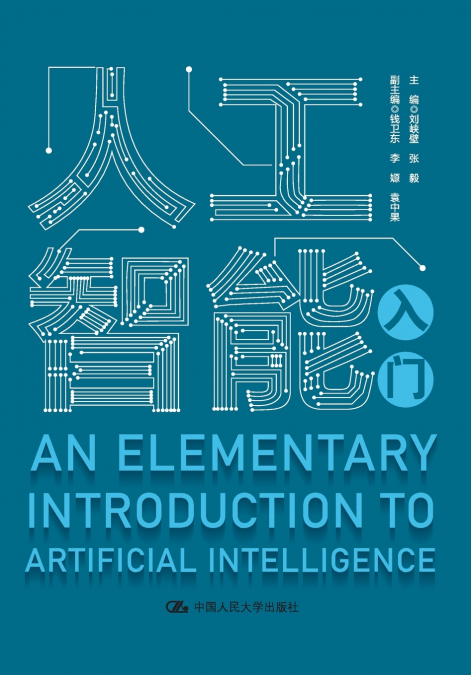
'Artificial intelligence is about understanding (human) ourselves.' Through an original six-part learning framework, the author provides a reference and guide for beginners.人工智能就是认识(人)自己,作者通过独创的6大学习体系,为初学者提供参考和指南。As a beginner-level technical reader on artificial intelligence, this book enables readers to gain foundational AI knowledge, essential AI thinking models, and basic hands-on capabilities. The main topics covered include the relationship between human and artificial intelligence, the definition of AI, the six primary approaches to achieving AI, and practical exercises with intelligent systems. It provides a reference and guide for schools implementing introductory AI education or for readers pursuing self-study in AI technologies.本书是入门阶段的人工智能技术读物,使读者获得人工智能的入门知识和基本的人工智能思维模式与动手能力,主要内容包括人类智能与人工智能的关系、人工智能的定义、人工智能六大实现途径、智能系统的动手实践等,为学校开展人工智能入门教学或者读者自学人工智能技术提供参考和指南。Liu XiabiProfessor and Doctoral Supervisor at the School of Computer Science and Technology, Beijing Institute of Technology; Deputy Director of the Beijing Key Laboratory of Intelligent Information Technology; Council Member of the China Association of Medical Equipment; Member of the Primary and Secondary School Working Committee of the Chinese Association for Artificial Intelligence; Council Member of the Beijing Association for the Promotion of Science and Technology Education. He has long been engaged in the teaching and research of artificial intelligence. His main scientific research interests include machine learning, computer vision, pattern recognition, and medical artificial intelligence. He has published one AI textbook and one monograph, over 60 high-level academic papers, and has led more than 10 national and provincial-level scientific research projects as well as three educational reform projects. He holds 10 national invention patents and has received awards including the Second Prize of Ordnance Science and Technology and the Second Prize of Excellent Textbooks from Ordnance Universities and Colleges. He has been selected for the New Century Excellent Talents Support Program.Zhang YiDistinguished Senior Teacher and Professorate Senior Teacher at the Beijing Academy of Educational Sciences; Director of the Beijing Youth Science and Technology Innovation Academy (Office). The 'Guidance-Interaction-Inquiry' mathematics teaching method she developed and refined won the First Prize of the Beijing Teaching and Education Achievement Award. She is a co-recipient of the Second Prize of the National Science and Technology Progress Award for 'Key Technologies and Applications of Paper-Based Human-Computer Interaction.' She pioneered a responsibility-cultivation practice that encourages primary and secondary school students to deliberate on and propose suggestions for social issues, and has led youth 'Model Chinese People’s Political Consultative Conference (CPPCC)' initiatives. The 'Soaring Cultivation' program she spearheaded has become a nationally influential talent cultivation model and won the First Prize of the Teaching and Education Achievement Award. She directs the Beijing Zhang Yi Innovation Studio, has received the Capital Spiritual Civilization Award, and has been named to the 'Beijing Good People' list. She is recognized as an expert with outstanding contributions and enjoys the Special State Council Allowance.刘峡壁 北京理工大学计算机学院教授、博士生导师,智能信息技术北京市重点实验室副主任,中国医学装备协会理事,中国人工智能学会中小学工作委员会委员,北京科技教育促进会理事。长期从事人工智能的教学与研究