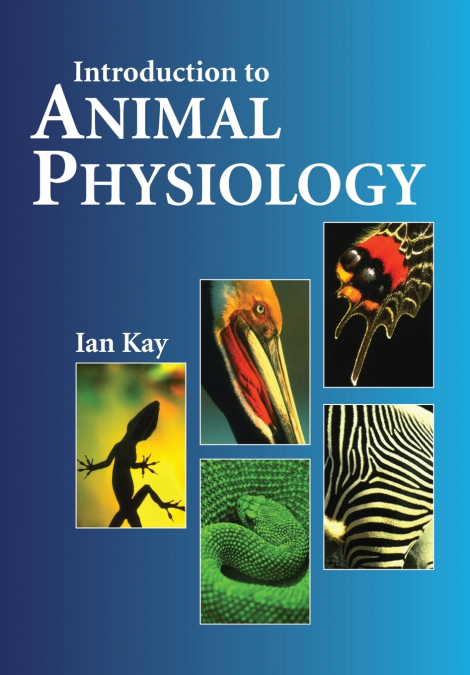

Introduction to Animal Physiology

Introduction to Animal Physiology

Dr Ian Kay

104,47 €
IVA incluido
Disponible
Editorial:
Taylor & Francis Ltd
Año de edición:
1998
Materia
Biología celular (citología)
ISBN:
9781859960462
104,47 €
IVA incluido
Disponible

Selecciona una librería:

  • Librería Samer Atenea
  • Librería Aciertas (Toledo)
  • Kálamo Books
  • Librería Perelló (Valencia)
  • Librería Elías (Asturias)
  • Donde los libros
  • Librería Kolima (Madrid)
  • Librería Proteo (Málaga)

Introduction to Animal Physiology provides students with a thorough, easy-to-understand introduction to the principles of animal physiology. It uses a comparative approach, with a broad spectrum of examples chosen to illustrate physiological processes from across the animal kingdom. The book covers a wide range of topics, including neurons and nervous systems, endocrine function, ventilation and gas exchange, thermoregulation, gastrointestinal function and reproduction. It also present topics that students typically struggle with, including neuronal membrane function, in a logical, structured format, highlighting to core concepts. Simple analogies are used to clarify important facts.
Artículos relacionados

  • Sex and the Origins of Death
    William R. Clark
    ...
    Disponible

    56,65 €

  • The Way of the Cell
    Franklin M. Harold
    ...
    Disponible

    29,88 €

  • Haematopoietic and Lymphoid Cell Culture
    Margaret J. Dallman / Margaret JDallman
    ...
    Disponible

    81,61 €

  • Mitochondria
    Douglas C Wallace / Richard J Youle
    'A subject collection from Cold Spring Harbor perspectives in biology.' ...
  • Organelle and Molecular Targeting
    Drugs must be delivered to the target tissue or, better yet, the target organelles. A more specific target minimizes toxicity and side effects and maximizes therapeutic effect. This book is a comprehensive review of Organelle Targeting. ...
  • How Life is Different
    Vitaly Shubin
    The book examines basic principles of the structure and organization of living organisms and their differences from objects of inanimate nature. It is shown how a single program-information structure permeates all evolutionary stages of life, including the cell, multicellular organisms and humans. ...