 Librería Samer Atenea
 Kálamo Books
 Librería Elías (Asturias)
 Librería Kolima (Madrid)
 Librería Proteo (Málaga)
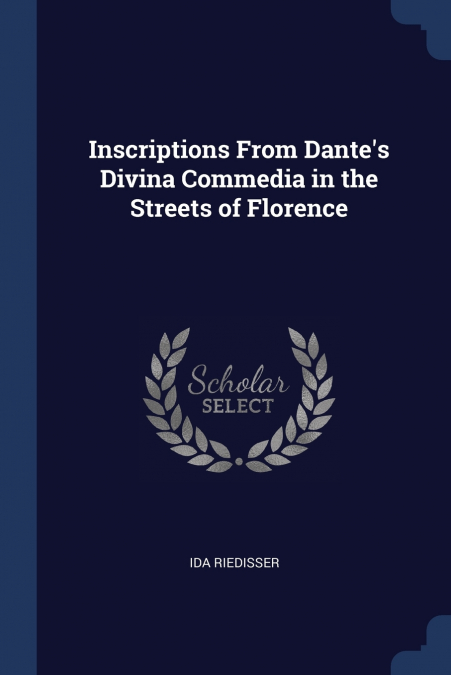
Trace Dante’s presence across Florence. Lines of the Divina Commedia surface in the cityscape. Ida Riedisser’s Inscriptions From Dante’s Divina Commedia In The Streets Of Florence assembles the city’s public epigraphs drawn from the Divine Comedy, revealing how classic italian poetry is woven into stone, facades and civic memory. Part poetry anthology, part florence travel guide, this close, readable compendium treats dante inscriptions not as curiosities but as touchpoints, each entry offering context that links medieval literature to the urban fabric. Concise notes illuminate why particular lines were chosen, where they sit in the cityscape and how they speak to generations of readers and passers-by, making the volume useful to devotees of Divina Commedia studies as well as to anyone curious about literary landmarks in Florence. Rather than burying inscriptions in dense scholarship, Riedisser keeps commentary spare and practical, directing attention to provenance, local meaning and the aesthetic effect of text on architecture, so the book works indoors as a reference and outdoors as a companion on foot.More than a simple guide, the book functions as an art history reference and a compact celebration of italian literary heritage, showing how european literary classics leave visible traces in public space and inform cultural tourism in Italy. Casual readers and travellers will find the entries welcoming and immediate; collectors and scholars of classic italian poetry and medieval literature will value its careful attention to provenance and placement. Republished by Alpha Editions in a careful modern edition, this volume preserves the spirit of the original while making it effortless to enjoy today, a heritage title prepared for readers and collectors alike. Equally suited to a florentine walking tour or to quiet study at home, Riedisser’s work bridges Divina Commedia studies and popular exploration, inviting repeated visits for anyone who loves the layered conversations between text, art and place. Readable and compact, it serves as a thoughtful companion for cultural tourism in Italy and as a reference for anyone tracing literary landmarks in Florence. Whether taken on a florentine walking tour or read quietly as part of Divina Commedia studies, the volume brings European literary classics into fresh focus.